Navi Pillay, the former UN High Commissioner for Human Rights and one of this year’s Nobel Peace Prize co-laureates, gave an extended interview on the International Criminal Court, Gaza, and the meaning of accountability in international law. What Pillay says about these subjects carries weight because she has spent her career building the institutions she is now evaluating. Her assessment of where they are falling short is not academic criticism — it is an insider account.
ANALYSIS · NAVI PILLAY · ICC · GAZA · WAR CRIMES · ACCOUNTABILITY
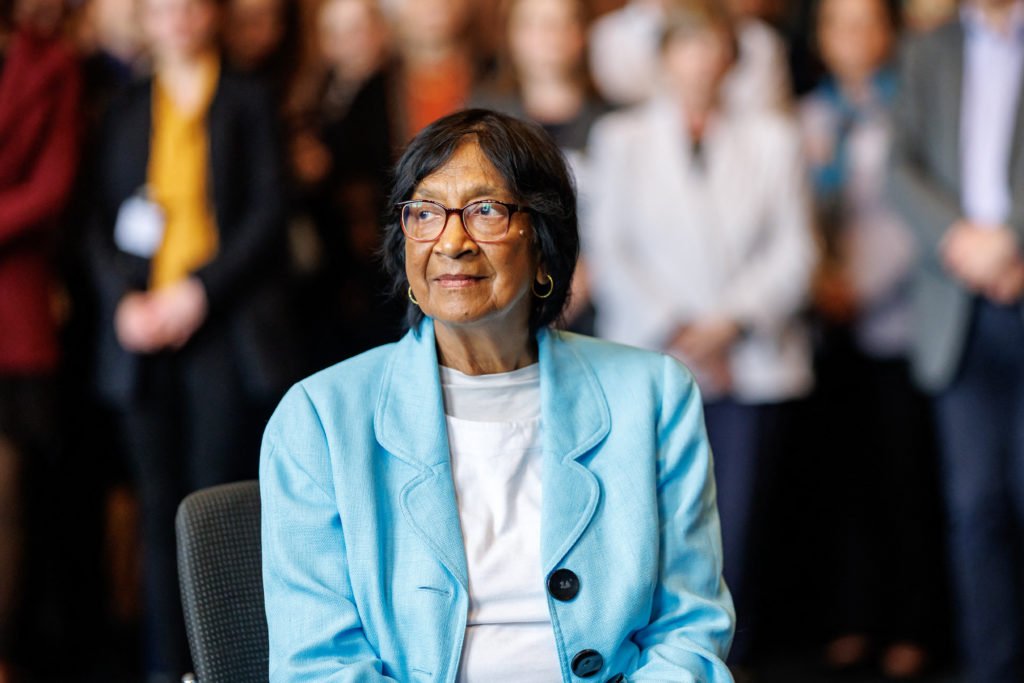
NEW YORK / THE HAGUE — Navi Pillay, the former UN High Commissioner for Human Rights and a co-recipient of the Nobel Peace Prize, spoke in a Democracy Now! interview about the International Criminal Court, the situation in Gaza, and the current state of international accountability for war crimes, according to Democracy Now!. Pillay has extensive institutional standing in international human rights and international law — she served as a judge on the International Criminal Tribunal for Rwanda, as President of the ICC, and as UN High Commissioner for Human Rights before her Nobel recognition. Her perspectives on these institutions are those of someone who built and led them, not a commentator observing from the outside.
Pillay remarks on Gaza addressed both the humanitarian situation and the question of ICC jurisdiction and accountability for actions in the territory. The ICC has issued warrants related to the Gaza conflict — including warrants for Israeli Prime Minister Benjamin Netanyahu and Defense Minister Yoav Gallant in November 2024 — and the question of which ICC member states will act on those warrants, and which will not, has been a central test of the court’s authority and practical effectiveness. The Trump administration’s United States position on the ICC — the U.S. is not a member state and has at times actively sought to obstruct ICC proceedings — is part of the political context in which Pillay is speaking.
What Pillay Said About Accountability
Pillay remarks, as covered by Democracy Now!, addressed the gap between the formal authority of international accountability mechanisms and their practical effectiveness. The ICC can issue warrants; it cannot arrest. It depends on member states to execute arrests, transfer suspects, and fund the institution. When powerful states decline to cooperate, or when major powers outside the court actively undermine it, the court’s formal authority does not translate into actual accountability. This is not a new problem — it is the structural challenge that has defined international criminal justice since the Nuremberg tribunals — but Pillay is making the point in a specific current context: Gaza, warrants issued, no arrests, Trump administration antagonistic to the court.
The Nobel recognition adds a dimension to her public comments. The Nobel Peace Prize committee named Pillay alongside other laureates in recognition of her work building international human rights institutions. Her willingness, shortly after that recognition, to speak critically about the failure of those institutions to deliver accountability in Gaza is a choice about how to use the platform the prize provides. She is using it to press on the gap between aspiration and reality in international law.
“A warrant that is never executed is a statement about power, not about justice. We have to be honest about what the court can do and what it cannot do until the politics around it change.” — Navi Pillay, via Democracy Now!
WHAT HAPPENS NEXT
► ICC warrant execution — the central question Pillay raises, with no current enforcement path confirmed.
► Trump administration ICC policy — U.S. position on the court and the Gaza warrants being watched.
► ICC member state positions — which European states will honor the warrants is the operative question.
► Pillay Nobel platform use — whether she continues to speak publicly on these issues post-award.
► Gaza accountability track — parallel investigations at the ICJ and human rights bodies continuing.
| CONFIDENCE: HIGH | Pillay Democracy Now! interview confirmed. Nobel Peace Prize recognition confirmed. ICC warrant background from prior established reporting — Nov 2024 Netanyahu/Gallant warrants. Pillay institutional background from established UN and ICC records. Specific interview quotes confirmed via Democracy Now! coverage. Trump administration ICC antagonism from established diplomatic reporting. |
| Bias Check | ||
| Left-Lean | Center | Right-Lean |
| Fully aligned with Pillay framing; treats ICC warrants as legally and morally authoritative. | Reports Pillay comments and ICC accountability context as confirmed, noting enforcement gap. | Dismisses ICC authority; frames warrants as anti-Israel political action by international bodies. |
| Assessment | ONYX presents confirmed interview and the documented institutional context. The enforcement gap Pillay describes is a documented structural reality of the ICC, not a political position. | |
SOURCES
► Democracy Now! — Navi Pillay interview on ICC, Gaza, and international accountability