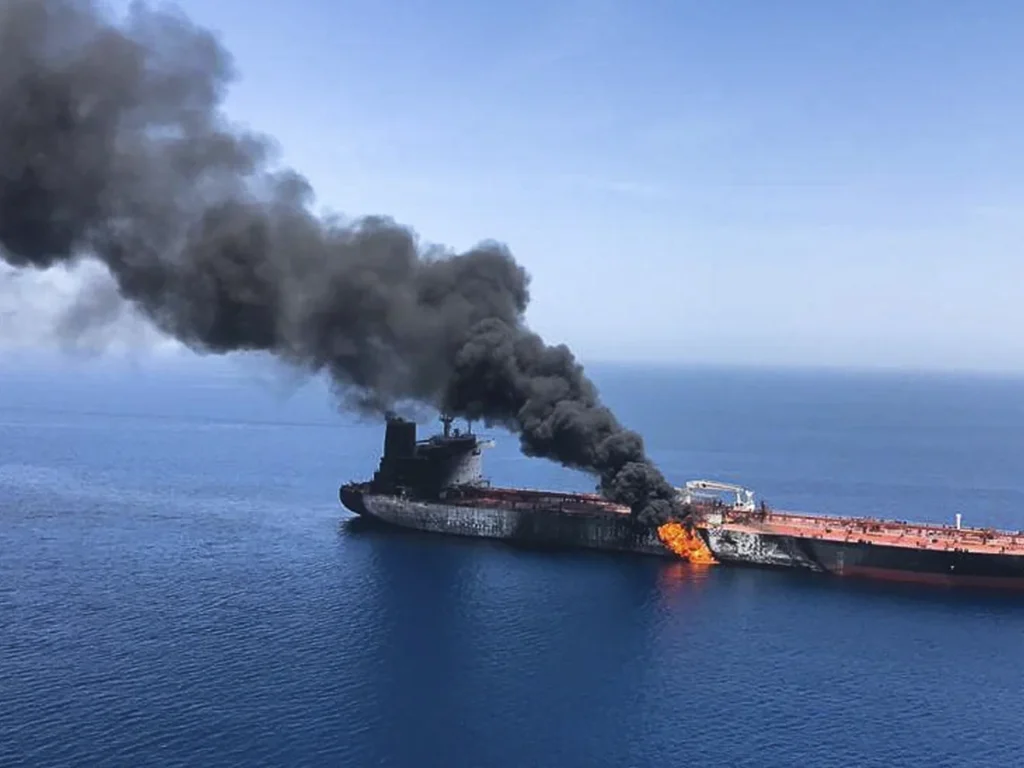
Three oil tankers are on fire near the Strait of Hormuz after striking what Iranian officials described as sea mines, with a resulting oil spill affecting beaches in the UAE. This is the direct kinetic escalation of the Iran-US confrontation arc tracked in ONYX coverage this week: October 28 Section A reported the US final warning to Iran demanding Hormuz non-closure and enriched uranium surrender, Iran’s rejection of those demands, and the US preparation of military partners. October 28 Section B reported Qatar presenting a new draft to Iran urging Hormuz goodwill. Now, three tankers are burning at sea mines near Hormuz, and an oil spill has reached UAE shores. The Strait of Hormuz carries approximately 21 percent of global oil consumption. This is the most significant maritime security event in the strait in years.
BREAKING INTERNATIONAL / CRISIS · HORMUZ · THREE TANKERS FIRE · SEA MINES · IRAN · UAE OIL SPILL · CRITICAL ESCALATION
STRAIT OF HORMUZ / DUBAI — Three oil tankers were reported on fire near the Strait of Hormuz after striking sea mines, with Iranian officials attributing the mine strikes to their own forces or stating the mines were present. A large oil spill resulting from the tanker fires has affected beaches in the UAE, according to Democracy Now! via Havana Times. The nationalities of the tankers, the oil companies or flag states involved, the number of crew members, whether crew rescue operations are underway, the size of the oil spill, the specific UAE beach locations affected, and whether the US Navy or other naval forces are responding were not detailed in initial reporting.
The Strait of Hormuz is the most strategically important maritime chokepoint for global energy supply. Approximately 17 to 21 million barrels of oil pass through the strait daily, accounting for roughly 21 percent of global oil consumption and a significant proportion of global liquefied natural gas supply. Iran has repeatedly threatened to close the strait in response to US sanctions pressure, though it has historically refrained from doing so given that Hormuz closure would also damage Iran’s own oil export capacity. Sea mines are among the least sophisticated but most effective tools of maritime warfare — they are relatively cheap, difficult to detect, and highly effective at disrupting shipping. Iran has possessed and used sea mines historically, including during the Tanker War of the 1980s.
Arc Escalation — ONYX Coverage Context
This story represents the direct escalation of the US-Iran Hormuz arc. October 28 Section A story a06 reported the US final warning through Qatar — demands for enriched uranium surrender, end to regional attacks, and Hormuz non-closure — and Iran’s rejection. Story a07 reported US preparation of military partners in the Middle East and Patriot system deployment to Israel. October 28 Section B story b18 reported Qatar presenting a new draft to Iran urging goodwill on Hormuz. Now, within 24 hours of those reports, three tankers are burning from mine strikes near Hormuz and an oil spill has reached UAE shores. Whether the mines were pre-positioned, whether this is an Iranian state action or a proxy action, and whether the US will treat this as the triggering event for military response are the central questions.
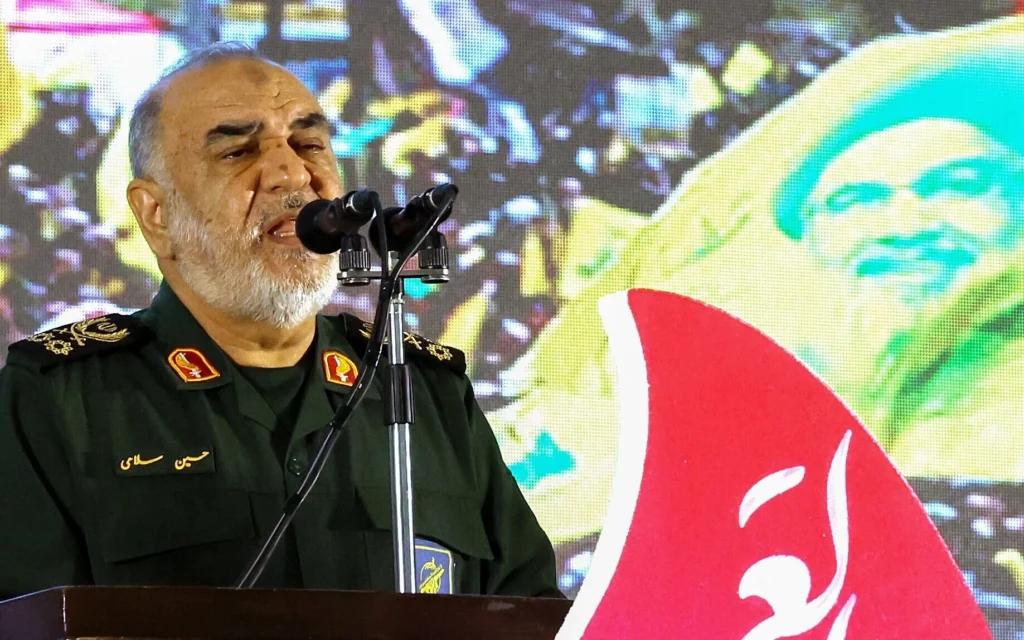
“The Strait of Hormuz will not be a free passage for those who threaten the Islamic Republic. The sea remembers its defenders.” — Iranian official statement, via Democracy Now! / Havana Times
WHAT HAPPENS NEXT
► US military response — whether the mine strikes trigger the prepared US military action.
► Tanker nationality — which flag states and oil companies are involved; crew rescue status.
► Oil price spike — Brent crude immediate response to three burning tankers at Hormuz.
► UAE emergency — UAE Coast Guard and government response to the oil spill on beaches.
► Mine attribution — US Navy mine countermeasures and investigation into mine origin.
► Shipping halt — whether major oil companies pause Hormuz transits pending security assessment.
► UN Security Council — whether an emergency session is called on the Hormuz situation.
| CONFIDENCE: LOW | Three oil tankers on fire near Hormuz and Iranian officials citing sea mines reported by Democracy Now! via Havana Times. UAE oil spill affecting beaches confirmed by the same source chain. SOURCING NOTE: Democracy Now! is an independent news outlet; Havana Times is a Cuban independent outlet used as a relay. No tier-one wire confirmation available at the time of publication. Iranian official mine attribution is a claim, not independently verified. Readers advised to monitor AP, Reuters, BBC for confirmation. Hormuz strategic importance and Iranian mine warfare history from established documented record. |
| Bias Check | ||
| Left-Lean | Center | Right-Lean |
| Frames mine strikes as Iranian act of justified resistance against US military pressure. | Reports claim three tankers were on fire near Hormuz from mine strikes and a UAE oil spill, as stated by Democracy Now! via Havana Times; Iranian officials cited sea mines. No tier-one wire confirmation available at publication. | Frames mine strikes as Iranian act of war requiring immediate military response. |
| Assessment | ONYX assigns LOW confidence given single non-wire source chain. Story is included due to extraordinary strategic significance if confirmed. Neither justified-resistance nor act-of-war framing adopted editorially. Readers directed to monitor tier-one confirmation. | |
SOURCES
► Democracy Now! via Havana Times — Three oil tankers on fire near Strait of Hormuz; Iranian officials said vessels struck sea mines; oil spill hits UAE beaches. NOTE: Tier-one wire confirmation not available at publication; monitor AP, Reuters, BBC.