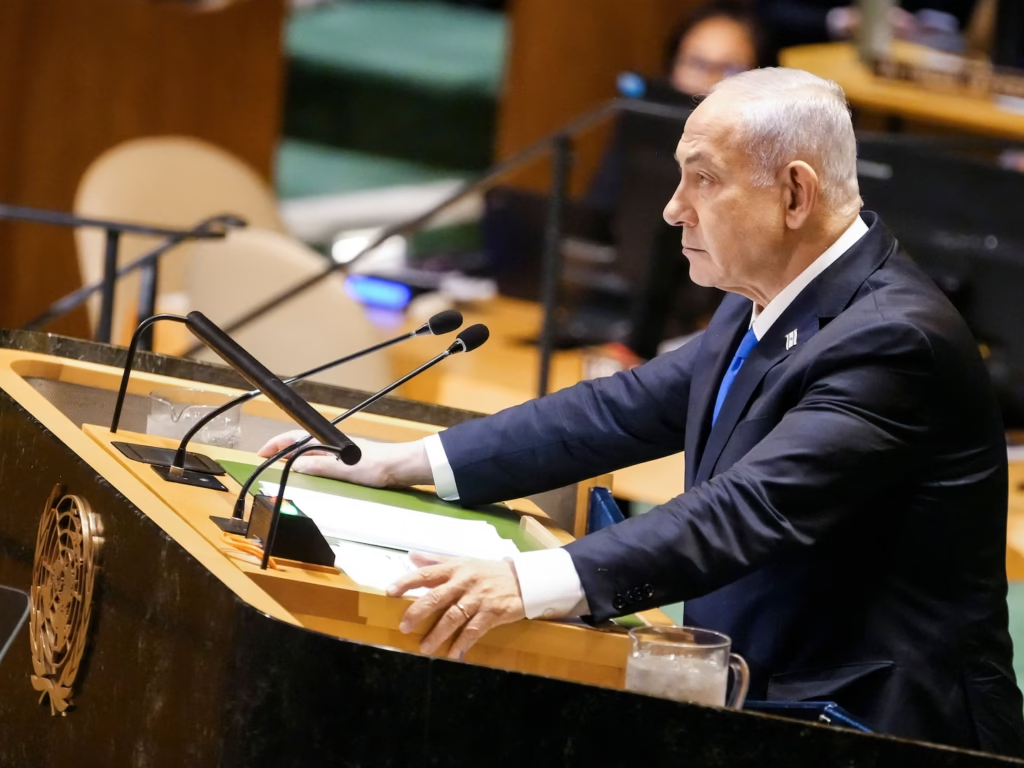
Israel asked the United States for approval to strike Iranian energy facilities, with Prime Minister Netanyahu seeking authorization for targets not yet approved by Washington. This is the most significant arc development in today’s ONYX coverage: while ONYX reported three oil tankers on fire at sea mines near Hormuz, the request for US authorization to strike Iranian energy infrastructure represents Israel seeking to join or expand the potential US-Iran military confrontation that Section A coverage documented has been building. The US-Israel consultation on Iranian strike targets has precedent — the October 2024 Israeli strike on Iran avoided oil and nuclear targets at US request. Netanyahu is now asking to remove those restrictions.
BREAKING INTERNATIONAL / CRISIS · ISRAEL · US · IRAN · ENERGY FACILITIES · STRIKE REQUEST · NETANYAHU · GREEN LIGHT · ARC
TEL AVIV / WASHINGTON — Israel asked the United States for approval to strike Iranian energy facilities, with Prime Minister Benjamin Netanyahu seeking authorization for targets not previously approved by Washington, according to Kan 11 via the Hormuz Letter. The specific energy facilities Israel seeks to strike — oil fields, refineries, or export terminals — the US initial response to the request, whether the Biden-era restrictions on Israeli strikes against Iranian oil and nuclear targets remain in place under the Trump administration, the timeline for a US decision, and whether the request was made through military or diplomatic channels were not detailed in initial reporting.
The October 2024 Israeli strike on Iran — carried out in retaliation for an Iranian ballistic missile barrage — was explicitly constrained by the US at the time to avoid Iranian oil infrastructure and nuclear sites. Israel struck military radar and air defense sites instead. That restraint reflected US concern about oil price spikes and escalation dynamics. The situation in October 2026 is materially different: three tankers have reportedly been struck by sea mines at Hormuz, Qatar mediation has failed, the US has issued ultimatums to Iran, and the US has prepared military partners for a potential campaign. In this environment, Netanyahu request to expand the target set to Iranian energy facilities is both a military planning request and a political test of the Trump administration’s willingness to allow Israel maximum latitude against Iran.
Arc Context — ONYX October 29 Coverage
This story connects directly to the entire Iran arc in ONYX coverage. October 28 Section A a06: US final warning to Iran through Qatar. October 28 Section A a07: US preparing military partners and deploying Patriot systems to Israel. October 28 Section B b18: Qatar presenting new draft to Iran on Hormuz goodwill. October 29 Section A a05: Three tankers reportedly on fire at sea mines near Hormuz. Now, October 29 Section B b14: Israel asking US for authorization to strike Iranian energy facilities. The sequence represents a systematic escalation ladder. Iranian energy facility strikes would have immediate global oil market consequences — Iran exports approximately 1.5 million barrels per day, and strikes on refinery or export terminal infrastructure would remove that supply from markets and trigger a significant oil price spike. The US decision on the Israeli request is one of the most consequential immediate foreign policy choices before the administration.
“Israel has the right to defend itself and to remove the threats that Iran poses. We are consulting with our American partners on every dimension of this.” — Netanyahu office, via Kan 11 / Hormuz Letter
WHAT HAPPENS NEXT
► US response — White House and Pentagon answer to the Israeli strike request.
► Target list — which specific Iranian energy facilities are in the Israeli request.
► Oil market impact — Brent crude response to reported Israeli request.
► Iran warning — Iranian government statement in response to reported strike request.
► Timeline — how quickly the US must respond given the Hormuz escalation pace.
► Congressional oversight — Senate and House reaction to reported US-Israel military consultation.
► Trump-Netanyahu call — whether a direct leader call is scheduled to decide the request.
| CONFIDENCE: MODERATE | Israel request for US approval to strike Iranian energy facilities reported by Kan 11 via Hormuz Letter. Kan 11 is Israeli public broadcaster Keshet 11 — credible Israeli source. Hormuz Letter is a newsletter relay; relay noted. US response, specific targets, and timeline NOT confirmed — flagged. October 2024 Israeli strike constraints and Iran energy export context from established documented record. Arc cross-reference to a05 and October 28 ONYX coverage. |
| Bias Check | ||
| Left-Lean | Center | Right-Lean |
| Frames Israeli strike request as dangerous escalation risking regional war and civilian harm. | Reports Kan 11 account of Israel asking US approval for Iranian energy facility strikes; Netanyahu seeking expanded target authorization, via Hormuz Letter relay. | Frames Israeli strike request as justified response to Iranian mine attacks and necessary deterrence. |
| Assessment | ONYX presents confirmed report with MODERATE confidence given relay chain. Arc context documented across five days of ONYX coverage. Neither escalation-danger nor justified-deterrence framing adopted editorially. | |
SOURCES
► Kan 11 via Hormuz Letter — Israel asked the US for approval to strike Iranian energy facilities; Netanyahu seeking green light for targets not yet authorized