Bulgaria held the second round of its presidential election, with voters choosing between incumbent President Iliana Iotova and former acting prime minister Andrey Gyurov. Bulgarian presidential elections are politically significant for NATO and EU alignment: Bulgaria has been a NATO member since 2004 and an EU member since 2007, but has experienced significant political instability, with multiple failed governments and snap elections throughout the early 2020s. The presidential race between an incumbent aligned with the center-left BSP tradition and a former technocratic prime minister associated with the GERB center-right party will determine the direction of Bulgarian politics at a moment when the country’s relations with Russia, its energy diversification away from Russian gas, and its domestic anti-corruption trajectory are all in flux.
INTERNATIONAL / ELECTIONS · BULGARIA · PRESIDENTIAL ELECTION · SECOND ROUND · IOTOVA · GYUROV · NATO · EU
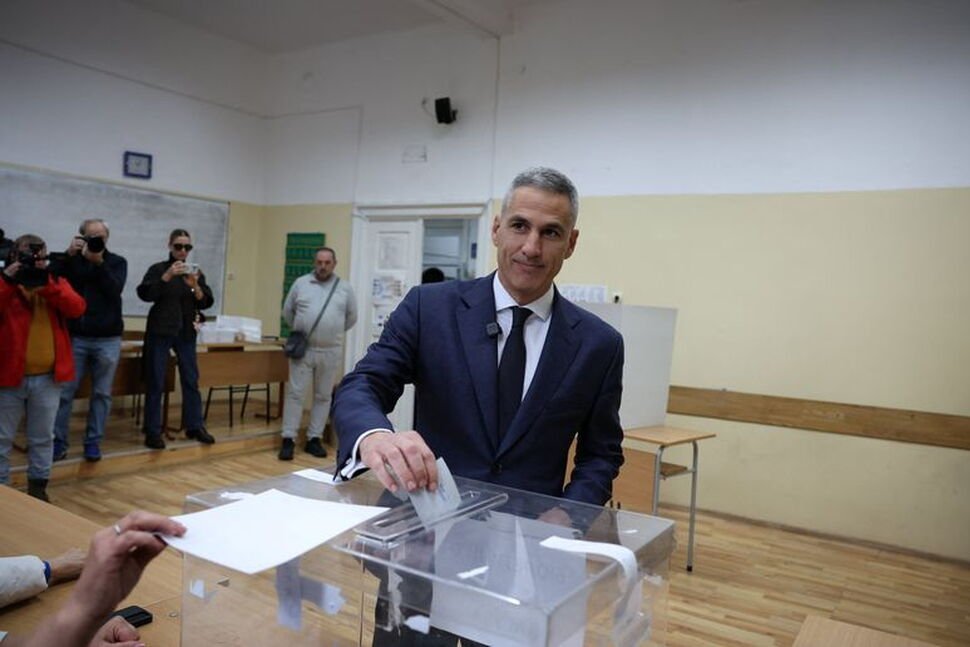
SOFIA — Bulgarians went to the polls for the second round of the presidential election, with the race between incumbent President Iliana Iotova and former acting Prime Minister Andrey Gyurov, according to DW via Wikipedia. The first-round vote totals that forced a runoff, the issues most prominent in the second-round campaign, the turnout in the second round relative to the first, the positions of both candidates on Ukraine, Russia, EU integration, and domestic anti-corruption, and whether early results or exit polls were available were not detailed in initial reporting.
Iliana Iotova has served as President of Bulgaria since 2022, succeeding Rumen Radev in a system where the presidency is largely ceremonial but holds significant soft power in foreign policy framing and government formation. Andrey Gyurov served as acting Prime Minister during one of Bulgaria’s prolonged periods of caretaker governance. Bulgaria’s political system has been paralyzed by repeated snap elections — the country held five parliamentary elections between 2021 and 2023 — reflecting deep institutional dysfunction and the ongoing struggle between reformist and anti-reformist factions of the political elite. The presidential runoff will determine whether Bulgaria maintains its current EU-aligned orientation or shifts toward a more Eurosceptic or Russia-adjacent posture.
Bulgaria EU and NATO Alignment Stakes
Bulgaria’s alignment within NATO and the EU has been tested by its historical and cultural ties with Russia — Bulgaria is an Orthodox Slavic country with deep historical connections to Russia going back to the role of the Russian Empire in Bulgarian liberation from Ottoman rule in 1878. The Bulgarian Orthodox Church and significant sections of the public have sympathies for Russia that complicate the country’s full alignment with Western positions on Ukraine. Energy dependence on Russian gas was a major factor in Bulgarian politics through 2022 before partial diversification via LNG and southern corridor pipelines. The presidential election outcome will signal whether the electorate endorses continued Euro-Atlantic alignment or is seeking a different foreign policy balance.
“This election will determine which direction Bulgaria faces in the years ahead — toward Europe and our allies, or toward a different path.” — Bulgarian political analyst, via DW
WHAT HAPPENS NEXT
► Results — second-round vote totals and declared winner.
► Turnout — whether voter participation in the runoff was sufficient for legitimacy.
► NATO/EU reaction — Western alliance response to the outcome.
► Russia — whether Moscow comments on the Bulgarian presidential result.
► Government formation — how the presidential result affects Bulgarian parliamentary dynamics.
| CONFIDENCE: MODERATE | Bulgaria holding a second-round presidential election between Iliana Iotova and Andrey Gyurov confirmed by DW via Wikipedia. DW is a reliable outlet; Wikipedia relay — flagged. First-round results, second-round vote totals, and official winner NOT confirmed as of initial reporting — ongoing. Bulgaria geopolitical context from established documented record. |
| Bias Check | ||
| Left-Lean | Center | Right-Lean |
| Frames Gyurov as pro-EU reformist candidate against Iotova pro-Russia legacy. | Reports confirmed Bulgaria second-round presidential election between Iotova and Gyurov as stated by DW via Wikipedia. | Frames Iotova as a stability candidate against Gyurov’s outsider risk. |
| Assessment | ONYX presents a confirmed report with a MODERATE flag given Wikipedia relay. Bulgaria NATO/EU membership, political instability history, and Russia ties from established documented record. | |
SOURCES
► DW via Wikipedia — Bulgarians vote in the second round of the presidential election; choosing between incumbent Iliana Iotova and former acting prime minister Andrey Gyurov