Emergency alert applications were disrupted in both countries, with users receiving false warnings of nuclear launches that authorities quickly moved to deny.
CYBERSECURITY · UKRAINE-RUSSIA · EMERGENCY SYSTEMS
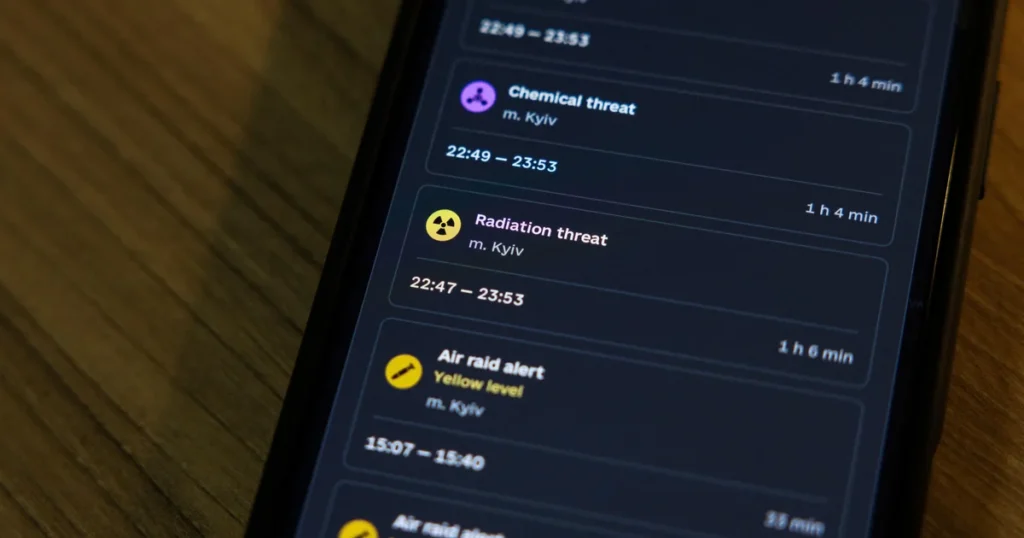
Emergency alert applications in both Ukraine and Russia were disrupted on Tuesday after what authorities in both countries characterized as apparent hacking incidents, with users receiving false notifications warning of nuclear missile launches, according to reporting by the BBC, The Guardian, and 10 Things Global News. Officials in Kyiv and Moscow both moved swiftly to issue public denials, confirming the alerts were fabricated and that no nuclear launch had occurred.
The false alerts triggered brief periods of panic in affected areas before official denials were circulated. Ukraine’s State Service of Special Communications and Information Protection issued an advisory urging citizens to rely only on official government channels for emergency information. Russian authorities similarly characterized the alerts as a provocation and urged calm, though neither side publicly attributed the hack to a specific actor.
Technical and Strategic Dimensions
The simultaneous targeting of emergency alert systems in two adversary nations during an active conflict is a significant escalatory cybersecurity event. Security researchers and analysts quoted by The Guardian noted that compromising emergency notification infrastructure — particularly with nuclear-themed false alerts — is a high-risk tactic designed to generate panic and erode public trust in official crisis communication systems.
The BBC reported that the applications affected appeared to include both official government alert channels and third-party emergency notification services that aggregate official feeds. The simultaneous nature of the disruptions in both Ukraine and Russia raised immediate questions about whether a single threat actor was responsible for both incidents or whether copycat activity had occurred rapidly in the wake of the first breach.
“The alerts were false. There has been no nuclear event. Trust only official channels.” — Ukrainian State Service of Special Communications, November 3, 2026
Implications for Crisis Stability
False nuclear alerts have historically represented some of the most dangerous moments in modern strategic history, with documented cases in both the United States and the Soviet Union where technical false alarms nearly triggered actual retaliatory launches. The deliberate injection of such alerts via hacked civilian applications during a live conflict introduces a new dimension of information warfare risk that goes beyond traditional electronic warfare.
Analysts at 10 Things Global News noted that the incidents underscore vulnerabilities in civilian emergency communication infrastructure that has received less hardening investment than military command and control systems. The incident was expected to trigger emergency security reviews of alert application platforms across NATO member states and other countries with similar civilian notification architectures.
WHAT HAPPENS NEXT
► Digital forensics teams in Ukraine and Russia investigating the source of the hacks
► NATO cybersecurity advisors reviewing member state emergency alert system vulnerabilities
► Third-party app developers facing pressure to harden authentication and integrity checks
► Attribution investigation may reveal state or non-state actor behind the simultaneous disruptions
| CONFIDENCE: HIGH | BBC, The Guardian, and 10 Things Global News each independently reported on emergency alert disruptions with official confirmation from Ukrainian authorities. The false-alert nature was confirmed by government denials in both countries. |
| Bias Check | ||
| Left-Lean | Center | Right-Lean |
| Emphasis on Russian state-sponsored cyberattack narrative; focus on existential risk. | Reports false alerts and official denials factually; notes strategic implications without attribution. | Caution about premature attribution; emphasis on non-state actor possibilities. |
| Assessment | ||
SOURCES
► BBC — False nuclear alerts Ukraine Russia emergency app disruptions, November 3, 2026
► The Guardian — Hacked emergency alert systems Ukraine Russia coverage
► 10 Things Global News — Cybersecurity emergency alert analysis