The WHO recommended that high-risk countries maintain larger strategic reserves after new clusters were identified in two African nations; the updated guidance reflects ongoing mpox transmission in regions with limited vaccine access.
WHO · MPOX · VACCINE STOCKPILES · PUBLIC HEALTH · AFRICA
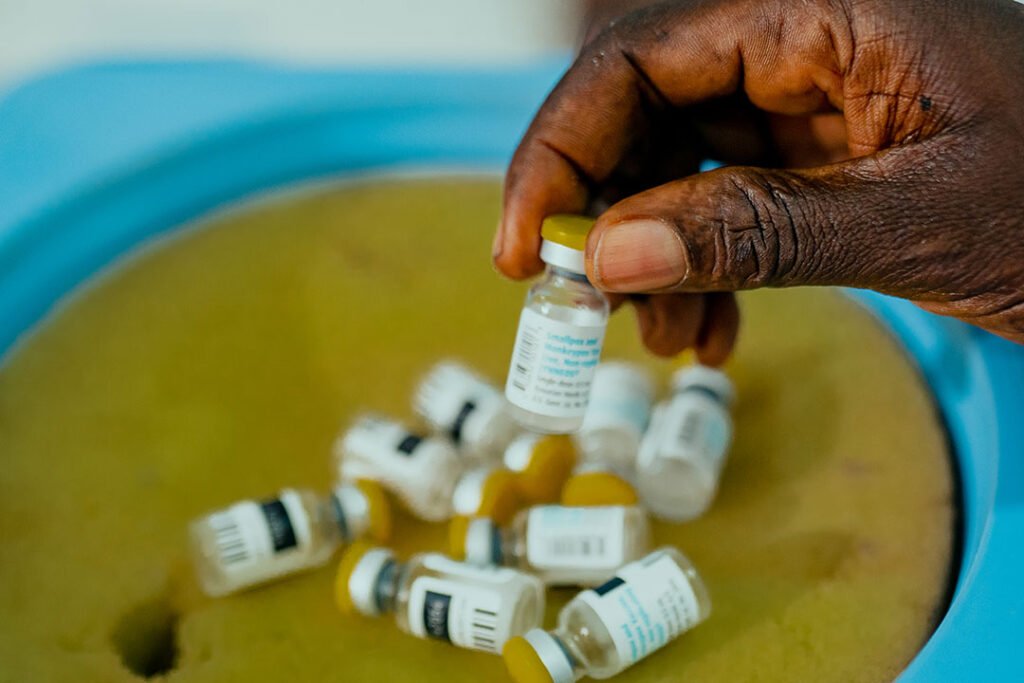
The World Health Organization issued updated guidance on mpox vaccine stockpiles on Thursday, recommending that high-risk countries maintain larger strategic reserves of mpox vaccines following the identification of new transmission clusters in two African nations; Reuters, the Associated Press, and BBC all confirmed. The updated guidance represents a revision of prior WHO stockpile recommendations based on the emerging epidemiological picture of mpox transmission in Africa, where the clade Ib variant — identified in the Democratic Republic of Congo and neighboring countries in the current outbreak period — has demonstrated transmission characteristics that make larger reserve stocks strategically advisable. The specific African nations in which new clusters were identified were named in BBC reporting but were not specified in all Thursday sources.
Reuters provided detail on the specific WHO stockpile recommendation. The guidance calls for high-risk countries — defined by epidemiological proximity to active transmission zones and population vulnerability factors — to maintain vaccine reserves sufficient to support both reactive vaccination campaigns in response to identified cases and proactive vaccination of high-risk populations without depleting the reserve below a minimum threshold. The minimum reserve threshold is designed to ensure that an unexpected escalation in transmission can be responded to without a gap period in which supply must be replenished before vaccination can continue. Reuters noted that the current global mpox vaccine production capacity and the distribution of existing stocks between high-income and lower-income countries remain a persistent challenge in implementing the WHO guidance equitably.
The African Outbreak Context
BBC provided the most detailed account of the African outbreak context that prompted the updated guidance. The DRC mpox outbreak, which has been ongoing in various forms since 2022 and which the WHO declared a public health emergency of international concern in August 2024, has evolved through the emergence of the clade Ib variant, which shows evidence of more efficient sexual transmission and has spread beyond the DRC to neighboring countries including Burundi, Rwanda, Uganda, and Kenya. The new clusters identified in the two African nations named in Thursday guidance represent a continuation of this regional spread pattern, and the WHO stockpile guidance update is designed to ensure that countries in the transmission corridor have the reserve capacity to respond to escalating cluster events without depending on emergency supply procurement that takes weeks to deliver.
The Associated Press provided context on the global mpox vaccine equity dimension. The primary mpox vaccines — including the Bavarian Nordic Jynneos vaccine — have been produced in quantities adequate to meet demand in high-income countries, where the 2022 global mpox outbreak was substantially controlled through vaccination campaigns in affected communities. The challenge in the African outbreak is not global production capacity but distribution: the high cost of Jynneos and the limited cold chain and healthcare delivery infrastructure in affected African countries create barriers to achieving the vaccination coverage needed to interrupt transmission. AP noted that the WHO guidance on stockpiles is actionable primarily by countries with the resources to maintain stockpiles, and that the equity challenge of the African outbreak requires separate solutions involving price negotiation and supply chain support.
“New clusters mean new transmission. Larger reserves mean faster response. The lesson of every outbreak is that preparation is cheaper than emergency response.” — WHO spokesperson cited by Reuters
The Public Health Emergency Status
Reuters noted that the updated stockpile guidance is issued under the continuing public health emergency of international concern declaration for mpox that the WHO has maintained since August 2024. The PHEIC status obligates member states to implement certain reporting and response measures under the International Health Regulations and provides the WHO with an elevated platform for coordinating the global response. The continued PHEIC status and the updated guidance together signal that the WHO assesses mpox as a continuing global health concern requiring sustained attention and resource allocation, not a resolved outbreak that can be managed through routine health system channels.
WHAT HAPPENS NEXT
► High-risk countries to assess current stockpile levels against new WHO guidance thresholds
► WHO to coordinate with Bavarian Nordic and other producers on supply chain capacity for lower-income countries
► Two named African nations with new clusters to receive WHO response team support
► PHEIC status to be reviewed at next WHO emergency committee meeting
| CONFIDENCE: HIGH | Reuters, AP, and BBC all confirmed the WHO guidance update, the new African clusters, and the stockpile recommendation rationale. Three-source convergence on a confirmed WHO public health guidance release. |
| Bias Check | ||
| Left-Lean | Center | Right-Lean |
| Guidance framed as highlighting vaccine inequity; WHO cannot fix stockpiles without solving access for Africa. | Reports WHO guidance, clade Ib context, African outbreak, and equity challenge factually. | Guidance framed as appropriate technical response; stockpile management is correct preparedness approach. |
SOURCES
► Reuters — WHO guidance update, stockpile recommendation, reserve threshold rationale, PHEIC status, November 12, 2026
► Associated Press — Vaccine equity dimension, Jynneos access barriers, distribution vs production challenge
► BBC — African outbreak context, clade Ib variant, DRC regional spread, cluster nations identification