Lawmakers cited recent clemency grants as lacking sufficient transparency and called for public hearings; the demand reflects the ongoing political contest between the governing party and the opposition-controlled assembly.
SOUTH KOREA · OPPOSITION · PRESIDENTIAL PARDON · PARLIAMENTARY INQUIRY
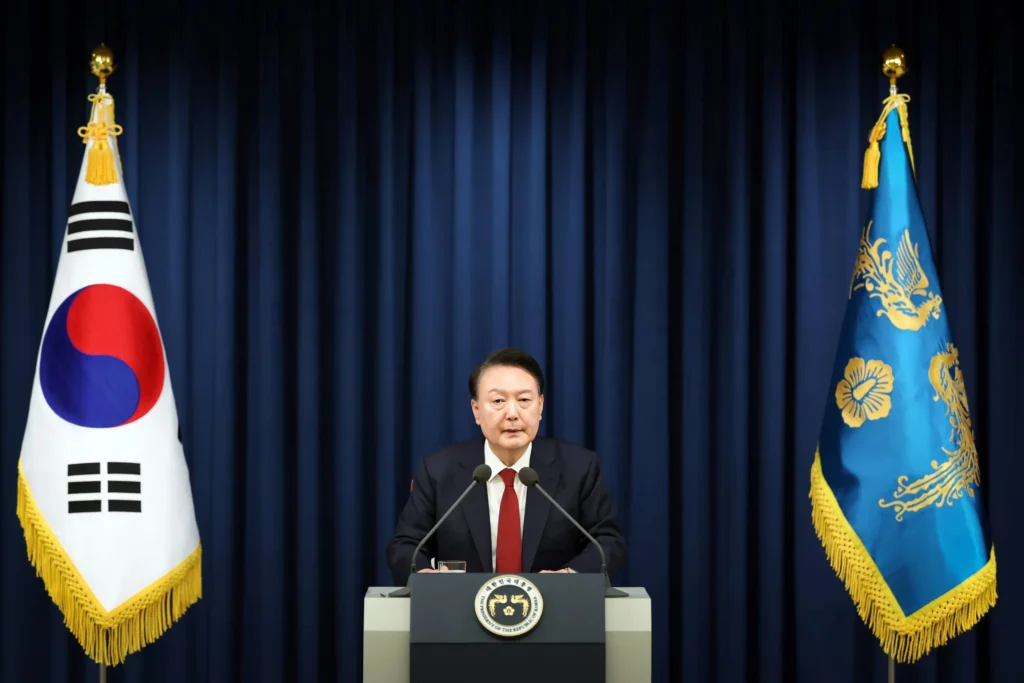
South Korean opposition lawmakers formally demanded a parliamentary inquiry into recent presidential pardon decisions on Thursday, citing a lack of sufficient transparency in the clemency process and calling for public hearings at which the basis for recent pardons would be examined; Reuters, Yonhap, and the Associated Press all confirmed. The opposition demand reflects the ongoing political contest between the governing party of President Yoon Suk-yeol and the opposition-controlled National Assembly, in which the opposition has used its parliamentary majority to challenge and investigate a range of presidential decisions. The specific pardons at issue in the Thursday demand were described in Yonhap reporting as including several high-profile clemency grants that the opposition characterized as politically motivated.
Reuters provided context on the presidential pardon power in the South Korean constitutional system. The South Korean president holds an extensive pardon power under the constitution, with the authority to grant clemency for criminal convictions without requiring parliamentary approval. The scope of the pardon power has been a contested political issue throughout the Yoon presidency, with the opposition arguing that the lack of a parliamentary check on pardons allows politically motivated clemency that benefits allies of the president while undermining the integrity of criminal justice outcomes. The opposition’s demand for a parliamentary inquiry is itself a use of the parliamentary majority as a check on executive power in a system where the formal constitution does not require legislative approval for pardons.
The Specific Pardon Context
Yonhap provided the most detailed account of the specific pardons that triggered the Thursday opposition demand. The clemency grants in question reportedly included individuals convicted of financial crimes and political corruption offenses who the opposition characterized as having personal or political connections to the governing party. The opposition argument is that the pardon decisions were made without adequate documentation of the humanitarian or justice grounds that traditionally justify clemency, and that the pattern of pardons for certain categories of offenders while other similarly situated offenders remain imprisoned suggests selective application of the pardon power for political purposes. The governing party rejected the opposition characterization and defended the pardons as lawful exercises of presidential discretion.
The Associated Press placed the South Korean pardon controversy in the context of the Yoon presidency’s political landscape. President Yoon has faced sustained opposition pressure since the opposition parties secured their National Assembly majority in the April 2024 parliamentary elections, and the relationship between the presidency and the assembly has been characterized by confrontation rather than cooperation across a wide range of policy and governance questions. The pardon inquiry demand is the latest in a series of opposition parliamentary investigations of presidential decisions — the pattern of an opposition-majority parliament challenging an opposition president is a structural feature of the current South Korean political configuration.
“The power to pardon is not the power to protect allies. The public has the right to know why these individuals received clemency, and others did not.” — South Korean opposition leader cited by Yonhap
The Parliamentary Inquiry Mechanism
Reuters explained the specific parliamentary inquiry mechanism available to the South Korean National Assembly. The assembly can establish special investigation committees with subpoena authority, the ability to call witnesses for public testimony, and the power to request documentary evidence from executive branch agencies. The opposition majority makes the establishment of such a committee procedurally straightforward, though the governing party will likely contest both the scope of the inquiry and the cooperation of executive branch officials with the committee process. The historical use of parliamentary investigations in South Korean politics has ranged from genuine accountability exercises to partisan political theater, and the pardon inquiry will be assessed by observers against that range.
WHAT HAPPENS NEXT
► National Assembly to vote on establishing special investigation committee on pardons
► Presidential office to respond to inquiry demand; cooperation scope to be determined
► Pardoned individuals to be identified; opposition to present documented case for inquiry
► Constitutional Court to be potential arena if inquiry produces government non-cooperation dispute
| CONFIDENCE: HIGH | Reuters, Yonhap, and AP all confirmed the opposition demand, the pardon transparency concerns, and the National Assembly context. Three-source convergence, including Yonhap as the primary South Korean news agency. |
| Bias Check | ||
| Left-Lean | Center | Right-Lean |
| Pardon demand framed as essential accountability; opposition correctly exercising its democratic mandate. | Reports opposition demand, pardon power context, specific pardon controversy, and inquiry mechanism factually. | Inquiry demand framed as opposition political harassment; presidential pardon power is constitutionally protected. |
SOURCES
► Reuters — Opposition demand, presidential pardon power context, constitutional system, November 12, 2026
► Yonhap — Specific pardon context, clemency recipients, opposition characterization, governing party response
► Associated Press — Yoon presidency political landscape, opposition-majority assembly pattern, confrontation context