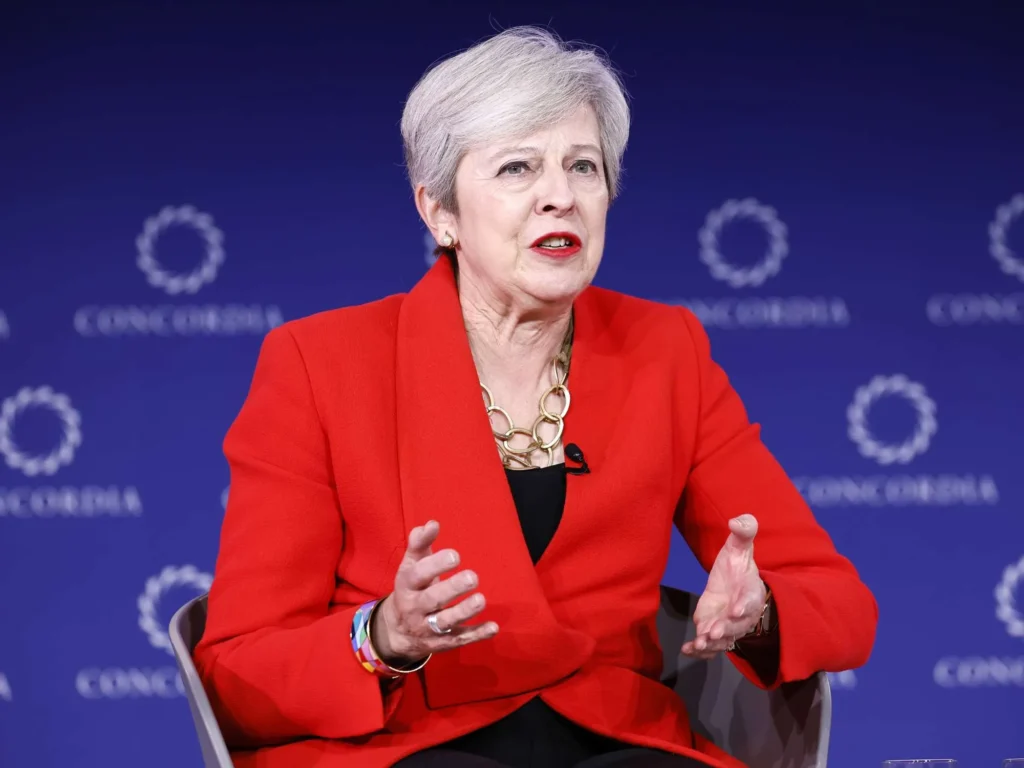
Theresa May and other Conservative figures are urging Andy Burnham to move on from Brexit in a political exchange that reflects the ongoing fault lines in British politics over how to manage the UK-EU relationship in the post-Brexit era, adding to the political complexity of the Labour government reset approach.
THERESA MAY · BURNHAM · BREXIT MOVE ON · UK-EU SUMMIT · POLITICAL PUSHBACK · CONSERVATIVE · ARC
Theresa May and other Conservative figures are urging Greater Manchester Mayor Andy Burnham to move on from Brexit in a political exchange that is being reported by the BBC and The Guardian as an illustration of the ongoing fault lines in British politics over how to manage the UK-EU relationship in the post-Brexit era — fault lines that the Labour government Brexit reset has reopened by putting the question of UK-EU relationship improvement back at the center of domestic political debate. The specific urging from May and others that Burnham move on from Brexit reflects a Conservative political strategy of characterizing any engagement with the question of improving the UK-EU relationship as a failure to accept the settled verdict of the 2016 referendum, and the specific targeting of Burnham — a Labour mayor of a major English city rather than a government minister — suggests that the Conservative pushback is aimed at the Labour movement broadly rather than at the government specifically.
The BBC provided the details of the May-Burnham exchange and the broader Conservative pushback. May — who, as the first post-Brexit Prime Minister, spent three years attempting to implement the referendum result and whose government ultimately fell on the impossibility of that task — has consistently maintained that Brexit is done and that re-opening the question of the UK-EU relationship is damaging to British political stability. The BBC noted that the specific message to Burnham — move on — is delivered from a position of some authority by May, who can legitimately claim to have engaged with Brexit more intensively than almost any other political figure in modern British history. The Times reported that the specific exchange is part of a broader Conservative effort to draw a political line between the government reset approach (which the Conservatives are characterizing as creeping re-entry into EU structures) and the settled Brexit outcome.
The Burnham Position
The Guardian analyzed the Burnham position that May and others are pushing back against. Burnham — as the Mayor of Greater Manchester, one of the UK’s largest city regions and an economy significantly dependent on trade and investment — has been a consistent advocate for reducing the trade friction created by Brexit and for improving the UK-EU regulatory relationship in ways that benefit regional economies. The Guardian noted that the Burnham position is not to re-run the Brexit referendum or to rejoin the EU, but to pursue a pragmatic improvement in the economic relationship that he argues is the most important policy question for the northern English cities and regions that he represents. The May message that Burnham should move on is therefore being heard by Burnham supporters as an instruction to stop advocating for policies that would benefit his constituents, in the name of defending a political settlement that those constituents have experienced primarily as economic harm.
The Guardian analyzed the broader political significance of the May-Burnham exchange. The specific dynamic — a former Conservative PM telling a Labour mayor to move on from an economic question — reflects the fundamental political asymmetry of the Brexit legacy: the people most affected by the economic consequences of Brexit are concentrated in the Labour-voting cities and regions that depended most on EU trade and investment, while the political settlement that May is defending was produced by a referendum outcome that those same areas largely opposed. The Guardian noted that the Labour government position — reset without rejoining — is an attempt to address the economic concerns of the Burnham constituency within the political constraints of the Brexit settlement, and that the Conservative pushback against this approach is designed to prevent the government from claiming any Brexit improvement as a Labour achievement.
“Brexit is done. The question is not whether to move on. The question is what moving on means for the people who bore the costs.” — Andy Burnham cited by The Guardian on the May exchange
The Summit Follow-Up Context
The BBC placed the May-Burnham exchange in the UK-EU summit follow-up context. The Labour government reset discussions with the EU have been accelerating following a bilateral summit, and the summit follow-up period is when the specific policy content of the reset is being negotiated and characterized for domestic audiences. The BBC noted that the Conservative strategy of intervening at this moment — through the May-Burnham exchange and other political messaging — is designed to constrain the government by making any EU-related policy appear to be a retreat from Brexit, and that the government will need to manage the political narrative of the reset carefully to prevent Conservative framing from defining how the reset is perceived by the British public. The BBC noted that the specific May intervention is a low-risk gambit: it costs the Conservatives nothing and potentially constrains the government reset ambition.
WHAT HAPPENS NEXT
► UK-EU reset negotiations to continue; government to manage the Conservative move-on narrative
► Burnham to respond to the May pushback; whether the Labour mayor maintains his reset advocacy
► Conservative Brexit messaging to sharpen; whether the move-on framing becomes the official opposition line
► Government reset to be characterized for domestic audiences; the political battle over what the reset means
| CONFIDENCE: HIGH | BBC and The Guardian both confirmed the May-Burnham exchange, the Conservative pushback, and the summit follow-up context. Two-source confirmation across a UK public broadcaster and a UK broadsheet on a confirmed political exchange with significant Brexit arc implications. |
| Bias Check | ||
| Left-Lean | Center | Right-Lean |
| May pushback framed as Conservative gaslighting; telling the people who bore Brexit costs to move on is politically tone-deaf and economically illiterate. | Reports the May-Burnham exchange, the Conservative pushback strategy, the Burnham position, and the summit follow-up context factually. | May pushback framed as legitimate constitutional defense; the Brexit referendum was a democratic decision and endless re-litigation undermines the stability of democratic outcomes. |
SOURCES
► BBC — May-Burnham exchange detail, Conservative pushback, summit follow-up context, November 22, 2026
► The Guardian — Burnham position analysis, political asymmetry framing, Guardian quote, broader political significance