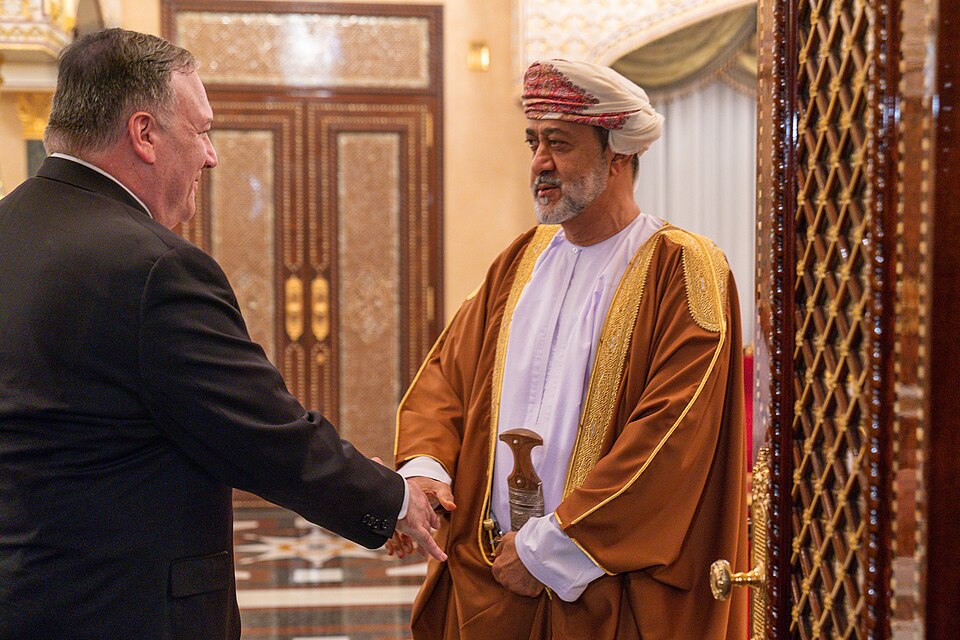
Oman’s role in the Iran-US ceasefire deal is confirmed as central: it hosted the deputy-level talks, developed the Hormuz governance mechanism, and is named as a primary guarantor of the framework. Qatar played a supporting role. The deal that was announced Friday is, in a very real sense, Oman’s diplomatic product — a small Gulf monarchy with 4.9 million people and no military significance produced the architecture for the most consequential Middle East diplomatic deal since the 2015 JCPOA.
WHY OMAN SUCCEEDED WHERE OTHERS COULDN’T
Oman has maintained unbroken diplomatic relations with Iran for more than 40 years — through the Islamic Revolution, the hostage crisis, the Iran-Iraq war, the nuclear standoffs, and now this conflict. No other country in the region has that continuity. That continuity is not symbolic — it means Omani diplomats have direct personal relationships with Iranian counterparts across all agencies, including the IRGC, that no other external actor can replicate.
Oman also has geographic leverage: the Musandam Peninsula — Omani territory — forms the southern shore of the Strait of Hormuz. Any governance mechanism for the strait requires Oman’s cooperation. Iran cannot dictate Hormuz rules unilaterally without Omani agreement. This gave Oman a seat at the table it could not be excluded from.
The US has used Oman as a back-channel to Iran in every significant diplomatic moment since Obama’s back-channel negotiations that preceded the 2015 JCPOA. The current deal was mediated by Oman at the deputy level — specific Omani diplomats whose names will be known to future historians of this conflict.
A country of 4.9 million people with no nuclear weapons, no permanent UN Security Council seat, and no significant military power just negotiated a deal that stopped a war. This is what structural diplomatic advantage looks like.
WHY THIS MATTERS
The Oman-as-architect story is not just historically interesting. It is strategically significant for the future. It means the US cannot conduct effective Iran diplomacy without Omani cooperation. It means any future Iran deal will likely route through Muscat. And it means a country that has invested in 40 years of uninterrupted Iran relationships has a structural diplomatic asset that the US, despite 90 times the military spending, does not have.
| CONFIDENCE: HIGH | Oman’s role as deal host and guarantor is confirmed by Axios. Oman’s geographic position in the strait is established geographic fact. Oman’s 40-year diplomatic relationship with Iran is established historical record. The JCPOA back-channel via Oman is documented from prior reporting. |
SOURCES
▸ Axios — Oman hosting confirmation, Qatar supporting role
▸ Oman geography — Musandam Peninsula and Hormuz position (established fact)
▸ Oman-Iran diplomatic history — established record