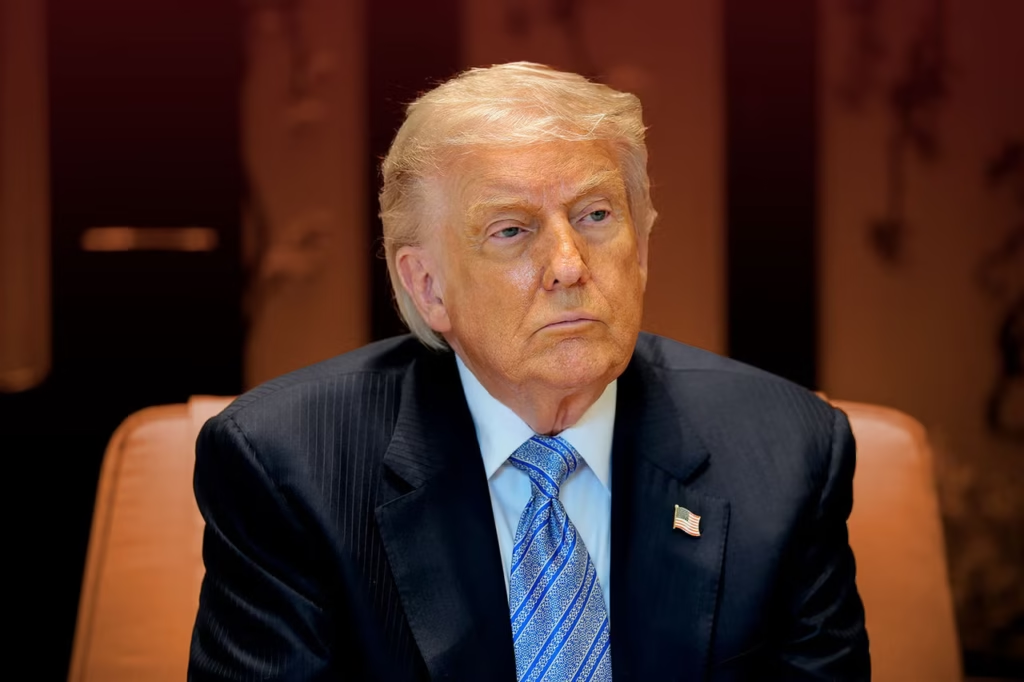
Canada has actively recruited and poached dozens of American academics as the Trump administration tightens university funding and increases pressure on research institutions, according to CNN. The trend — accelerating in 2026 — represents a specific form of brain drain from American higher education with long-term implications for US research competitiveness and the global standing of American universities.

WHY ACADEMICS ARE LEAVING
The specific conditions driving American academics toward Canadian universities in 2026:
▸ Federal research funding: the Trump administration has reduced or threatened funding to universities including Harvard and other major research institutions; academics whose research depends on federal grants face specific institutional uncertainty
▸ University-government conflict: the administration’s disputes with major universities over diversity policies, research independence, and campus speech have produced a climate of institutional instability
▸ DOGE-related funding cuts: federal grant programs administered through NIH, NSF, and other agencies have been subject to DOGE review and in some cases reduction
▸ Academic freedom concerns: some academics cite concerns about research independence and freedom to pursue politically sensitive topics
▸ Canada’s active recruitment: Canadian universities are offering competitive packages specifically targeting US academics; several Canadian provinces have established specific recruitment initiatives
WHAT CANADA IS OFFERING
The Canadian recruitment effort is specific and organized, not passive:
▸ Canada Excellence Research Chairs: government-funded endowed chairs that provide significant salary and research funding
▸ Universal healthcare: Canadian academics note that Canada’s single-payer healthcare system removes the health insurance dependency that ties some American academics to their institutions
▸ Canadian university stability: Canadian federal research funding has remained more stable; universities have not been targets of the same federal-government conflict dynamic
▸ Proximity: Canada’s geographic and cultural proximity to the US reduces the personal disruption of relocation compared to other international options
THE LONG-TERM IMPLICATIONS
Brain drain from American universities is not an immediate crisis but a long-term competitiveness problem. The specific risk: academic talent tends to accumulate in clusters; when leading researchers move, their graduate students, postdoctoral fellows, and collaborative networks move with them. A critical mass of departures can shift the center of gravity in specific research fields from US institutions to Canadian or other international institutions.
Historical precedent: the US’s own postwar brain drain from Europe — drawing refugees from Nazi Germany and later from the Soviet Union, including Einstein, Fermi, and dozens of other leading scientists — established American scientific dominance for the second half of the 20th century. The vulnerability of that dominance to policy-driven talent loss is the specific risk the current trend illustrates.
Canada is not a neutral bystander in the US-Canada trade conflict. It is actively recruiting American talent that American policy is pushing away. Both are happening simultaneously.
THE CANADA-US TRADE CONTEXT
The academic brain drain is happening simultaneously with the Canada-US trade conflict ONYX documented through August 26-27 (Lake Ontario / Lake America renaming, trade talk collapse, Trump ‘worst country to deal with’). Canada is simultaneously a US trade adversary and an active recruiter of US intellectual talent. The combination suggests Canada’s response to US pressure is multidimensional: retaliatory tariffs on goods and active recruitment of people.
WHAT HAPPENS NEXT
▸ Tracking departures — whether the dozens documented become hundreds
▸ Congressional response — whether federal research funding is restored or reduced further
▸ Canadian recruitment scale — whether Canadian provinces formalize and expand their US recruitment initiatives
▸ Long-term research output — whether the departures affect US research publication and patent outputs
| CONFIDENCE: HIGH | Canada recruiting US academics, dozens departing, CNN reporting are from confirmed reporting. Historical brain drain context and long-term competitiveness analysis are ONYX editorial based on established education research. |
| ⚖️ BIAS CHECK — WHO IS SAYING WHAT | |
| Canadian Universities and Government | Active recruiters with a specific interest in characterizing the opportunity positively; the packages they offer are real |
| US Universities | Facing a specific competitive challenge; their institutional response will determine how many academics choose to stay |
| Trump Administration | Has not publicly addressed the brain drain dimension of its university funding and regulatory pressure policies |
| American Academics | Making individual decisions based on funding security, research freedom, and personal circumstances; their aggregate choices constitute the trend |
SOURCES
▸ CNN — Canada poaching US academics university funding brain drain, August 29, 2026