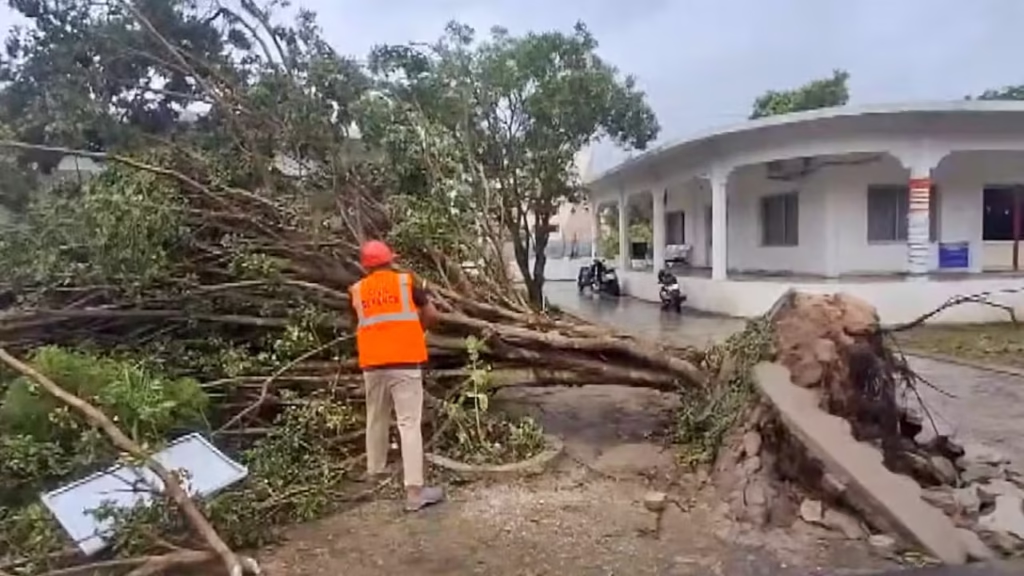
Cyclone Arnab, classified as a Very Severe Cyclonic Storm by the India Meteorological Department, made landfall on the Andhra Pradesh coast, killing at least three people and damaging homes and farmland before losing intensity over land. The Bay of Bengal is one of the world’s most cyclone-prone bodies of water, and Andhra Pradesh — on the southeast coast of India — has been struck by major cyclones repeatedly over the past three decades. The death toll of three, while tragic, reflects significant improvements in cyclone preparedness and evacuation procedures in India since the 1999 Odisha Super Cyclone that killed nearly 10,000 people. Whether the death toll remains low as post-storm assessments proceed will depend on the extent of rural and coastal damage not yet surveyed.
BREAKING INTERNATIONAL / WEATHER · CYCLONE ARNAB · ANDHRA PRADESH · INDIA · THREE KILLED · LANDFALL
VIJAYAWADA / NEW DELHI — Cyclone Arnab made landfall on the Andhra Pradesh coast of India as a Very Severe Cyclonic Storm, killing at least three people and damaging homes and farmland, before weakening after moving inland, according to AP and The Hindu. The landfall location within Andhra Pradesh, maximum sustained wind speeds at landfall, storm surge heights, the extent of displacement and evacuation prior to landfall, and the specific regions most affected by agricultural damage were not detailed in initial reporting. India Meteorological Department warnings and state government response measures were not detailed.
India has significantly improved its cyclone early warning and evacuation systems following the devastating 1999 Odisha Super Cyclone. The National Disaster Management Authority, the National Disaster Response Force, and state disaster management agencies coordinate pre-landfall evacuations that have dramatically reduced death tolls even from powerful storms. Andhra Pradesh specifically has invested in cyclone shelters along its exposed coastline. The Kona coast of Andhra Pradesh — the coastal stretch between Visakhapatnam and Machilipatnam — is particularly vulnerable to Bay of Bengal cyclones that track westward or northwestward during the post-monsoon season from October to December. Agricultural damage in the rice-farming delta districts can cause significant economic losses even when direct human casualties are limited.
Post-Monsoon Cyclone Season
The October-November window is peak Bay of Bengal cyclone season in India — the post-monsoon period when sea surface temperatures remain warm enough to sustain tropical systems while atmospheric wind shear decreases. Andhra Pradesh and Odisha are the most frequently impacted states. The classification Very Severe Cyclonic Storm corresponds to sustained winds of 89-117 km/h under the India Meteorological Department scale — severe enough to destroy vulnerable housing and cause significant crop losses. The economic impact of cyclone damage in agricultural zones like the Krishna and Godavari delta regions extends well beyond the immediate disaster, affecting planting schedules, soil salinity from storm surge, and rural income for months after landfall.
“Cyclone Arnab has crossed the Andhra Pradesh coast. We are assessing damage and continuing relief operations. The state machinery is fully deployed.” — Andhra Pradesh Chief Minister, via The Hindu
WHAT HAPPENS NEXT
► Death toll update — whether the confirmed toll of three rises as damage surveys proceed.
► Agricultural damage — assessment of rice and other crop losses in delta districts.
► Displacement figures — number of people evacuated and return timeline.
► Storm surge — coastal flooding and infrastructure damage survey.
► Central government response — NDRF teams deployment and relief funding.
| CONFIDENCE: HIGH | Cyclone Arnab landfall in Andhra Pradesh confirmed by AP and The Hindu. At least three killed confirmed. Home and farmland damage confirmed. Weakening after landfall confirmed. Specific landfall location, wind speeds, displacement figures, and agricultural damage extent NOT confirmed — flagged. Bay of Bengal cyclone season patterns and Indian cyclone classification scale from established IMD documented record. |
| Bias Check | ||
| Left-Lean | Center | Right-Lean |
| Frames cyclone damage as worsened by climate change and insufficient government preparedness. | Reports confirmed Cyclone Arnab landfall in Andhra Pradesh, killing at least three, as stated by AP and The Hindu. | Frames death toll as tribute to Indian disaster preparedness; minimizes structural damage. |
| Assessment | ONYX presents confirmed landfall and casualties. Indian cyclone preparedness improvements are documented fact from NDMA records. Agricultural vulnerability of delta districts is established economic geography. Neither climate-blame nor preparedness-minimization framing adopted. | |
SOURCES
► AP, The Hindu — Cyclone Arnab makes landfall in Andhra Pradesh as a Very Severe Cyclonic Storm; at least three killed; homes and farmland damaged; storm weakening over land