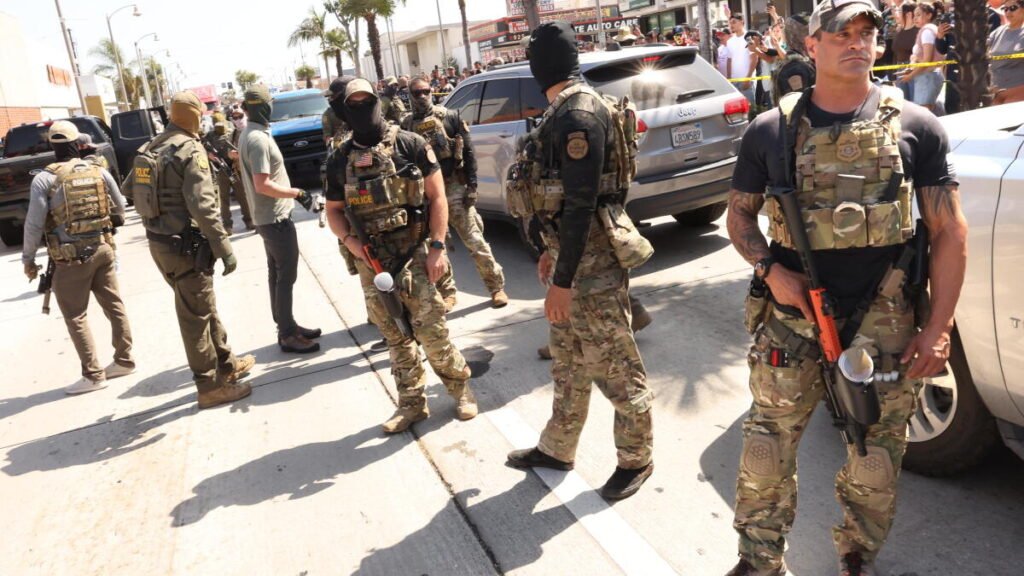
A federal judge issued a ruling ordering Immigration and Customs Enforcement and the US Border Patrol to stop racial profiling in their enforcement operations. A federal court order directly constraining the operational conduct of two major federal law enforcement agencies is a significant constitutional ruling. Racial profiling by immigration enforcement has been documented in multiple federal and academic studies — the use of race or ethnicity as a factor in decisions about whom to stop, question, detain, or search. Such practices implicate the Fourth Amendment prohibition on unreasonable searches and seizures, the Fifth Amendment due process clause, and the equal protection principles that federal agencies must honor. A court order that explicitly prohibits racial profiling provides a legal basis for contempt proceedings if ICE or Border Patrol continue documented profiling practices.
BREAKING NATIONAL / LEGAL + IMMIGRATION · ICE · BORDER PATROL · RACIAL PROFILING · FEDERAL JUDGE · RULING · FOURTH AMENDMENT · IMMIGRATION ENFORCEMENT
WASHINGTON — A federal judge ordered ICE and Border Patrol to stop racial profiling in their enforcement operations, with the ruling coming amid ongoing immigration enforcement challenges, according to NPR. The district court and judge that issued the ruling, the plaintiffs who brought the case, the specific enforcement practices the judge found constituted racial profiling, whether the ruling is a preliminary injunction or a final judgment, whether the Trump administration plans to appeal the ruling, and the geographic scope of the order were not detailed in initial reporting.
ICE and Border Patrol enforcement practices have been the subject of sustained legal challenge throughout the 2020s, particularly regarding operations in communities far from the southern border. Border Patrol interior checkpoints on highways, ICE workplace raids, and street-level enforcement operations have generated complaints of racial targeting — stops and detentions initiated primarily because individuals appeared Latino or spoke Spanish, rather than on the basis of individualized suspicion. The Trump administration has aggressively expanded interior enforcement since 2025, using the 2026 midterm cycle as a backdrop for highly visible enforcement operations. A federal court order directly constraining those operations two days before the midterms carries political as well as legal significance.
Fourth Amendment and Immigration Enforcement
The Fourth Amendment prohibits unreasonable searches and seizures and requires that government agents have reasonable, articulable suspicion before stopping an individual and probable cause before conducting an arrest or search. In the immigration enforcement context, courts have held that race or apparent ethnicity alone cannot constitute reasonable suspicion — a 1975 Supreme Court case, United States v. Brignoni-Ponce, held that Hispanic appearance alone was insufficient justification for a roving border patrol stop. However, subsequent rulings and the practical reality of border enforcement have produced a complex and contested body of case law. A 2026 federal court order explicitly prohibiting racial profiling by both ICE and Border Patrol — agencies with nationwide interior jurisdiction — would be one of the most significant immigration enforcement constraints in years.
“The Constitution does not have a border. Every person in this country, regardless of status, is protected from being stopped simply because of how they look.” — Federal judge ruling, via NPR
WHAT HAPPENS NEXT
► Appeal — whether the Trump administration files an emergency stay of the ruling.
► Ruling scope — the geographic extent and specific practices the order covers.
► Plaintiffs — the civil rights organizations or individuals who brought the case.
► Enforcement response — whether ICE and Border Patrol comply or test the ruling.
► Congressional reaction — whether the ruling accelerates immigration legislation debate.
► Contempt mechanism — whether the court establishes monitoring and enforcement of compliance.
| CONFIDENCE: HIGH | Federal judge ordering ICE and Border Patrol to stop racial profiling confirmed by NPR. Single outlet — flagged, but NPR is a direct and credible source for federal court rulings. Ruling court, judge identity, plaintiff organizations, ruling scope, and administration appeal plans NOT confirmed in initial reporting. Brignoni-Ponce precedent and Fourth Amendment immigration enforcement context from established documented record. |
| Bias Check | ||
| Left-Lean | Center | Right-Lean |
| Frames ICE/Border Patrol racial profiling ruling as long-overdue constitutional accountability for Trump immigration enforcement. | Reports confirmed federal judge ordering ICE and Border Patrol to stop racial profiling amid ongoing immigration enforcement challenges as stated by NPR. | Frames racial profiling ruling as judicial overreach into executive branch immigration enforcement prerogatives. |
| Assessment | ONYX presents a confirmed single-source legal ruling. Fourth Amendment case law and ICE enforcement expansion context from established documented record. Neither constitutional-accountability nor judicial-overreach framing adopted editorially. | |
SOURCES
► NPR — Federal judge orders ICE and Border Patrol to stop racial profiling; the ruling came amid ongoing immigration enforcement challenges