
ONYX has covered the deaths of King Harald V (August 29), Dolly Parton (August 30), Wendell Berry (September 2), and now Gloria Steinem. Each has received the full biographical treatment the life requires. Steinem’s death arrives in a specific 2026 context: she spent 60 years fighting for rights and freedoms that are actively contested in the current policy environment. Covering her legacy is covering a life in direct dialogue with this moment.
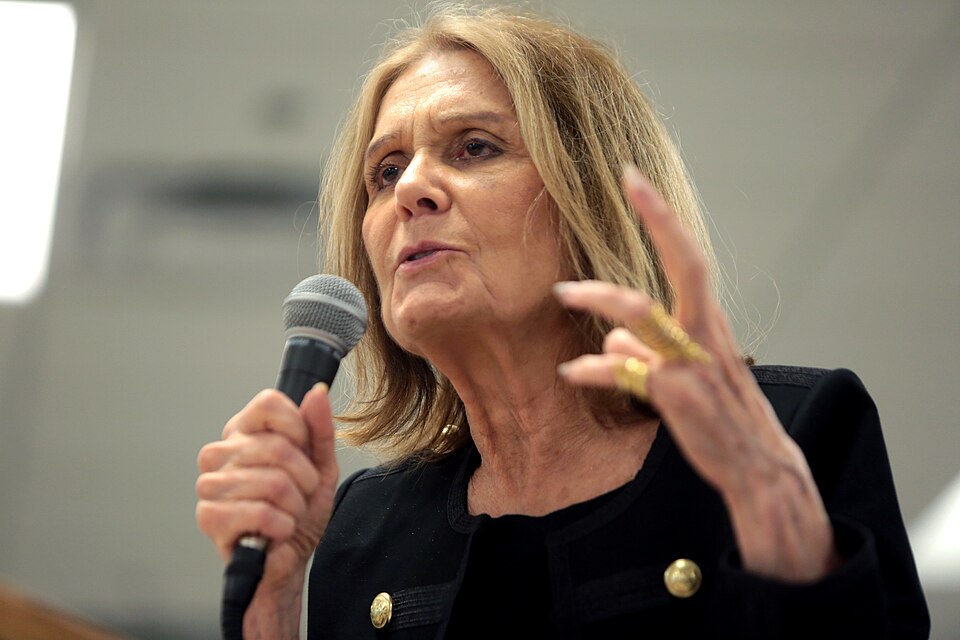
WHO GLORIA STEINEM WAS
Gloria Steinem was born in 1934 in Toledo, Ohio. She died at 92. She became the most publicly recognized figure of the second-wave feminist movement that transformed American society in the 1960s and 1970s, and she continued as an active voice for women’s rights and social justice for the six decades after.
▸ The journalist: Steinem built her public platform through journalism; her 1963 undercover exposé of the Playboy Club — working as a Bunny to document the exploitation of the women employed there — was a landmark piece of immersive accountability journalism that also made her famous
▸ Ms. Magazine: Steinem co-founded Ms. in 1972 as the first nationally distributed feminist magazine; it gave the women’s movement a major-circulation platform at a time when women’s publications were either fashion magazines or homemaking guides; the founding of Ms. was a specific institutional contribution to the movement’s durability
▸ The political organizer: Steinem was a co-founder of the National Women’s Political Caucus (1971), the Women’s Media Center, and multiple other organizations; she organized at the intersection of feminism, civil rights, and anti-war activism
▸ The speechmaker: Steinem’s specific gift was translating complex feminist theory into accessible, quotable, shareable language; her speeches and writing created the common vocabulary of American feminism
THE SPECIFIC IDEAS
Gloria Steinem’s most important specific contributions to American public thought:
▸ The personal is political: the insight that private experiences of inequality — unequal pay, domestic violence, reproductive coercion — are not personal failures but political conditions requiring political solutions; this reframing was transformative
▸ Intersectionality before the word existed: Steinem consistently argued that the women’s movement was strongest when it connected to civil rights, labor rights, and anti-poverty movements; she resisted the whiteness of mainstream feminism
▸ Reproductive freedom as foundational: Steinem understood abortion rights not as a single issue but as the prerequisite for women’s economic and political participation; without control over reproduction, she argued, women cannot plan their education, careers, or lives
▸ Media representation: Steinem was the first person to name, systematically analyze, and publicly challenge the media’s specific role in confining women’s image and ambition; her media criticism preceded and shaped media studies as a field
THE HISTORICAL TRANSFORMATION
The specific transformation Steinem participated in building: American women in 1960 were largely confined to domestic roles by law (marital property law, credit law, education law), by custom, and by a media environment that presented domesticity as their natural and preferred state. By 1980, women had achieved: the right to credit in their own names (1974); Title IX educational equality (1972); the elimination of explicitly gendered job advertisements; and a dramatically expanded presence in higher education and professional life. These changes were political achievements built by the movement Steinem helped lead.
She worked as a Playboy Bunny to document how women were exploited. She co-founded Ms. Magazine. She spent 60 years arguing that the things happening to women in private were political problems requiring political solutions. She was right. The world is specifically diminished by her absence.
THE 2026 CONTEXT
Steinem’s death arrives as the specific rights and freedoms she spent 60 years fighting for are under active contestation: reproductive rights after Dobbs; Title IX regulatory rollbacks; the administration’s abortion medication policy; and the ongoing argument about whether women’s equality is a settled question or an ongoing political contest. She died during a moment that would have been recognizable to her as a continuation of the work she started.
WHAT HAPPENS NEXT
▸ Memorial — a public memorial for Steinem in New York
▸ Ms. Magazine — the publication she co-founded will continue; its editorial direction in the months after her death will reflect her legacy
▸ Political tributes — from women’s rights organizations, political figures, and the broader movement she helped build
| CONFIDENCE: HIGH | Gloria Steinem death at 92, Democracy Now reporting are from confirmed reporting. Biographical details (1934 Toledo Ohio, 1963 Playboy Bunny exposé, Ms. Magazine 1972, NWPC 1971) are from established public record. |
| ⚖️ BIAS CHECK — WHO IS SAYING WHAT | |
| Democracy Now | Reporting Steinem’s death from a progressive perspective consistent with its editorial mission; Steinem was a figure whose politics aligned with Democracy Now’s perspective |
| Conservative community | Will acknowledge Steinem’s significance as a historical figure while continuing to contest the policy agenda she championed |
| ONYX | Covering Steinem’s death with the full biographical weight her life requires; the contested policy dimensions of her work are present in the coverage without becoming the primary framing |
SOURCES
▸ Democracy Now — Gloria Steinem death at 92, September 5, 2026
Q: What was Ms. Magazine?
A: Ms. was the first nationally distributed feminist magazine in the United States, co-founded by Gloria Steinem and Dorothy Pitman Hughes in 1972. It provided the women’s movement with a major-circulation publishing platform at a time when women’s magazines were dominated by fashion, homemaking, and beauty content. Ms. published investigative journalism, political analysis, and personal essays by women, for women, about women’s experience as a political condition. It remains in publication today.
Q: What is the Playboy Bunny exposé?
A: In 1963, Steinem went undercover as a Playboy Club “Bunny” — one of the women employed in revealing costumes to serve drinks at Hugh Hefner’s chain of clubs — and documented the experience for a major magazine. The article exposed the specific working conditions, pay, treatment, and institutional infantilization of the Bunnies as a systemic accountability story. It was immersive journalism before the term was widely used, and it established Steinem as a journalist willing to use her own body as a reporting tool to document women’s working conditions.
Q: How does Steinem’s legacy connect to 2026?
A: The specific rights Steinem fought to establish — reproductive freedom, educational equality, credit access, and equal workplace treatment — are actively contested in the 2026 policy environment. The Dobbs decision eliminated the constitutional right to abortion that Steinem spent decades defending. Title IX’s scope has been administratively narrowed. Steinem died having spent her last years fighting the same battles she entered public life fighting in the 1960s, which is itself a specific statement about how contested American women’s equality remains.