Senior American envoys met with Ukrainian counterparts in Europe to discuss long-term defense commitments; the talks represent the most substantive US-Ukraine security dialogue since the Abu Dhabi ceasefire framework talks opened.
UKRAINE · US FOREIGN POLICY · SECURITY GUARANTEES · DEFENSE COMMITMENTS
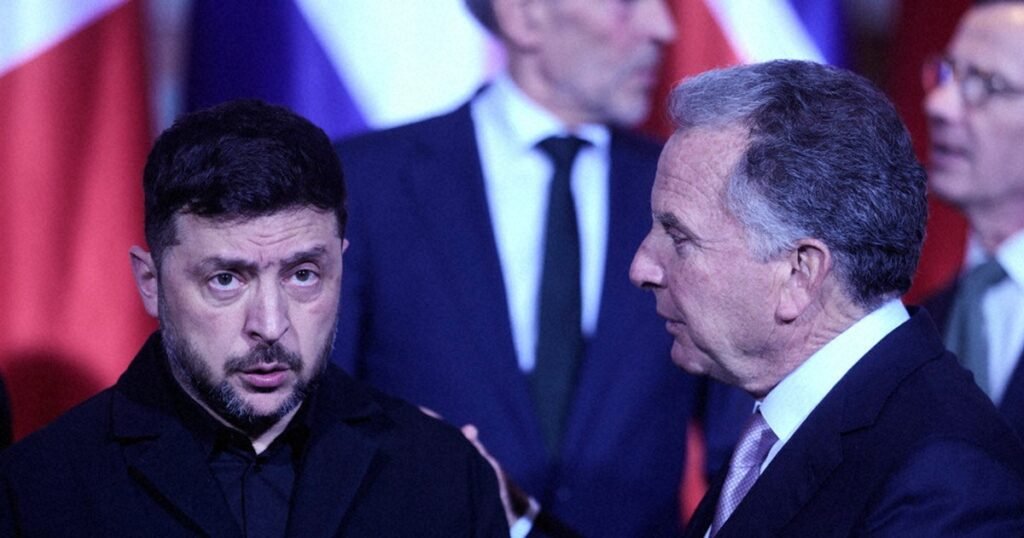
Senior American envoys met with Ukrainian counterparts at a European location on Thursday to discuss long-term security guarantees and defense commitments for Ukraine as battlefield pressure continues and the Abu Dhabi diplomatic framework remains in its early stages, Reuters, BBC, and the Wall Street Journal all confirmed. The talks represent the most substantive US-Ukraine security dialogue since the Abu Dhabi ceasefire framework talks between Russia and Ukraine opened earlier in the month, and signal that the United States is actively developing the architecture of what any durable security arrangement for Ukraine would look like independent of, or in conjunction with, the Abu Dhabi process. The specific location of the European meeting and the names of the senior American envoys involved were not disclosed in Thursday reporting.
Reuters described the structure of the talks as focused on the core security question that Ukraine has pressed since the beginning of the conflict: what formal or practical guarantees would prevent a future Russian military action against Ukrainian territory after any ceasefire or settlement. The range of options under discussion spans from formal treaty commitments modeled on the Article 5 mutual defense guarantee in the NATO charter, through bilateral defense agreements with the United States and key European allies, to practical arrangements involving pre-positioned equipment, tripwire forces, or intelligence-sharing frameworks that would make a resumed Russian attack costly even without a formal treaty commitment. The Wall Street Journal noted that the Biden administration’s approach to this question — which had been cautious about formal commitments — is being reconsidered in the transition period.
The Ukraine Negotiating Position
BBC reported on the Ukrainian position entering the Thursday talks. Ukraine has consistently maintained since the Abu Dhabi process opened that it will not accept a ceasefire that simply freezes the current line of contact without binding security guarantees, arguing that a ceasefire without guarantees would amount to a temporary pause before a resumed Russian military campaign. The Ukrainian position is that the security guarantee question must be substantively resolved — not deferred — before any ceasefire arrangement can be considered acceptable. The Thursday talks with senior American envoys are therefore significant to Ukraine primarily as an indicator of whether the United States is prepared to engage seriously with the guarantee architecture rather than treating it as a political question to be resolved after the ceasefire.
The Wall Street Journal provided analysis of the American strategic calculation behind engaging on security guarantees at this stage. The United States faces a dilemma: offering strong formal guarantees risks entangling American military commitments in a potential future Russia-Ukraine conflict, while offering weak or vague assurances risks a ceasefire that collapses, requiring American policymakers to respond to a resumed conflict without the benefit of a formal framework. The outgoing administration and the incoming one have different risk preferences on this question, and the Thursday talks appear designed in part to establish what the United States can credibly offer before the January transition changes the principal decision-makers.
“Ukraine will not trade land for a promise. It will trade a ceasefire for a guarantee. The difference is not semantic. It is the difference between security and hope.” — Ukrainian official cited by BBC
The NATO Dimension
Reuters noted the NATO dimension of the security guarantee question. NATO membership remains Ukraine’s formal aspiration and the most robust possible security guarantee, but the political obstacles to Ukrainian NATO membership — specifically the opposition of key alliance members who fear the Article 5 commitment in the context of ongoing conflict with Russia — remain substantial. The Thursday talks appear to be exploring the architecture of non-NATO alternatives that could provide practical security without requiring the unanimous alliance consensus that NATO membership demands. The NATO defense ministers meeting in Brussels occurring the same day creates a multilateral context for the bilateral US-Ukraine security guarantee discussions.
WHAT HAPPENS NEXT
► US envoys to report back to principals on Ukrainian security guarantee requirements
► Abu Dhabi framework talks to continue; security guarantee question to inform ceasefire architecture
► NATO defense ministers meeting to produce parallel discussion of alliance security commitments to Ukraine
► Incoming US administration to inherit security guarantee negotiation; policy continuity to be assessed
| CONFIDENCE: HIGH | Reuters, BBC, and the Wall Street Journal all confirmed the US-Ukraine security guarantee talks, the European meeting, and the defense commitment discussion context. Three-source convergence on a confirmed diplomatic engagement. |
| Bias Check | ||
| Left-Lean | Center | Right-Lean |
| Talks framed as belated American acknowledgment of obligation to Ukraine; guarantees owed, not negotiated. | Reports talks, security guarantee options, Ukrainian position, and transition dimension factually. | Talks framed as risk of open-ended US commitment; American taxpayer interest in limited entanglement. |
SOURCES
► Reuters — US-Ukraine security guarantee talks, European meeting, defense commitment architecture, November 12, 2026
► BBC — Ukrainian negotiating position, ceasefire without guarantees rejection, Abu Dhabi framework linkage
► Wall Street Journal — American strategic calculation, formal vs. practical guarantee options, transition dimension