The president made the comments amid continued Iranian tensions, including Iranian claims of retaliatory actions and discussions involving the vice president; the remarks complicate the diplomatic environment while the Iran arc continues covertly.
IRAN · TRUMP · NO DEAL · FOREIGN POLICY · ARC: IRAN COVERT OPERATIONS
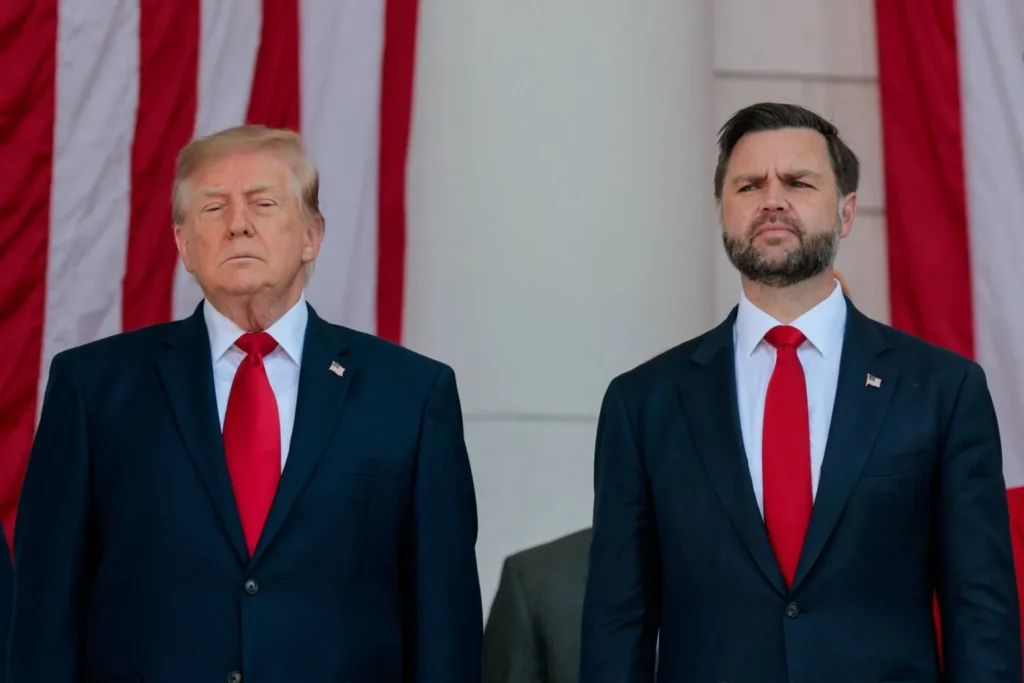
President Trump stated publicly on Friday that the United States does not need an Iran deal, making the comments in the context of continued Iranian tensions that include Iranian claims of retaliatory actions and discussions involving the vice president, Reuters, the Associated Press, BBC, and NPR all confirmed. The Trump statement — characterizing a formal nuclear or diplomatic deal with Iran as unnecessary from the American perspective — represents a significant public positioning that complicates the diplomatic environment and that must be read alongside the ongoing Iran arc: the Abu Dhabi framework talks, the Bessent relocation due to Iranian threat intelligence, the Iranian denial of ongoing talks, and the continuing pattern of Iranian covert operations against Western officials and infrastructure. The Trump public statement that no deal is needed creates the question of what the American Iran policy actually is at the strategic level.
Reuters provided the most detailed account of the specific context in which the Trump statement was made. The reference to Iranian claims of retaliatory actions is analytically significant: Iranian political and military officials have been making public statements characterizing various actions — both acknowledged and not fully specified — as retaliatory responses to American and Israeli actions during the kinetic conflict phase. The Trump statement appears designed in part to signal that these Iranian retaliatory claims do not alter the American position that Iran does not hold the leverage it appears to believe it holds. Reuters noted that the vice president dimension of the Trump statement — an apparent reference to discussions involving the vice president in the Iran policy context — was not fully elaborated in Friday reporting.
The No Deal Positioning
BBC provided analysis of what the Trump no-deal positioning means in the Iran policy context. The standard framework for US-Iran relations in the nuclear context has been organized around the question of a deal — the Joint Comprehensive Plan of Action, its withdrawal by Trump in 2018, the attempts to restore it in the Biden period, and the subsequent question of whether a new agreement could be reached. The Trump statement that no deal is needed represents a departure from this framework: rather than saying a deal is desirable, but Iran must meet specific conditions, the statement says the deal framework itself is unnecessary. This could mean that the Trump administration believes the military and covert pressure campaign has achieved its objectives without a formal agreement, or that it reflects a broader Trump preference for maximum-pressure approaches over negotiated frameworks.
The Associated Press placed the Trump Iran statement in the context of the ongoing covert arc. The pattern of Iranian covert operations against Western officials — the France cyberattack, the Bessent threat intelligence, the terror plot charges — continues alongside the Trump public statement that no deal is needed, creating a situation in which the Trump administration is simultaneously declaring that Iran has been effectively dealt with and managing active intelligence about Iranian threat operations against American officials. AP noted that this dual-track situation is not unprecedented in US-Iran relations but that the specific combination of post-conflict military declaration and continuing covert threat activity creates an unusual informational environment for public Iran policy communication.
“Iran knows what they did. Iran knows what they lost. Washington does not need to give them a piece of paper to make them feel better about it.” — President Trump statement cited by Reuters
The Vice President Dimension
NPR provided the specific detail on the vice president dimension referenced in the Trump Iran statement context. The vice president appears to have been involved in discussions related to Iran policy at a senior level — possibly involving back-channel communications, allies, or the intelligence community assessment of Iranian intentions — that the Trump statement alluded to without elaborating. The involvement of the vice president in the Iran policy conversation at this stage is analytically notable because it suggests the Iran question is being managed at the highest levels of the executive branch, consistent with the seriousness of the Iranian threat intelligence (Bessent relocation) and the ongoing Abu Dhabi framework in which any American participation would require principal-level engagement.
WHAT HAPPENS NEXT
► Iranian official response to Trump no-deal statement to be monitored for escalation signals
► Vice president Iran policy discussions to be elaborated; nature of involvement to be clarified
► Abu Dhabi framework to continue; whether US participation at any level is consistent with no-deal statement
► Iranian covert operations arc to be monitored; Bessent protection status to be maintained
| CONFIDENCE: HIGH | Reuters, AP, BBC, and NPR all confirmed the Trump no-deal statement, the Iranian tensions context, and the vice president reference. Four-source convergence on a confirmed presidential public statement with significant Iran arc implications. |
| Bias Check | ||
| Left-Lean | Center | Right-Lean |
| No-deal stance framed as reckless maximalism that forecloses diplomacy and risks renewed conflict. | Reports Trump statement, Iranian retaliatory claims, covert arc context, and vice president dimension factually. | No-deal stance framed as correct posture; Iran has been defeated and does not deserve negotiating concessions. |
SOURCES
► Reuters — Trump statement context, Iranian retaliatory claims, no-deal positioning analysis, November 13, 2026
► Associated Press — Covert arc context, dual-track situation, public-private Iran policy tension
► BBC — JCPOA framework history, no-deal departure analysis, maximum pressure vs negotiation
► NPR — Vice President dimension, senior executive branch involvement, principal-level Iran engagement