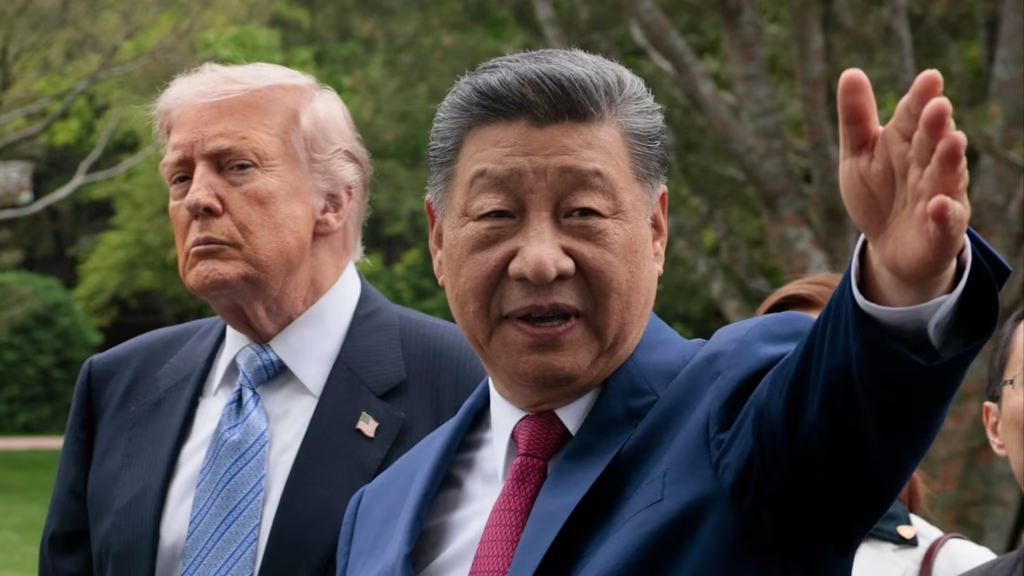
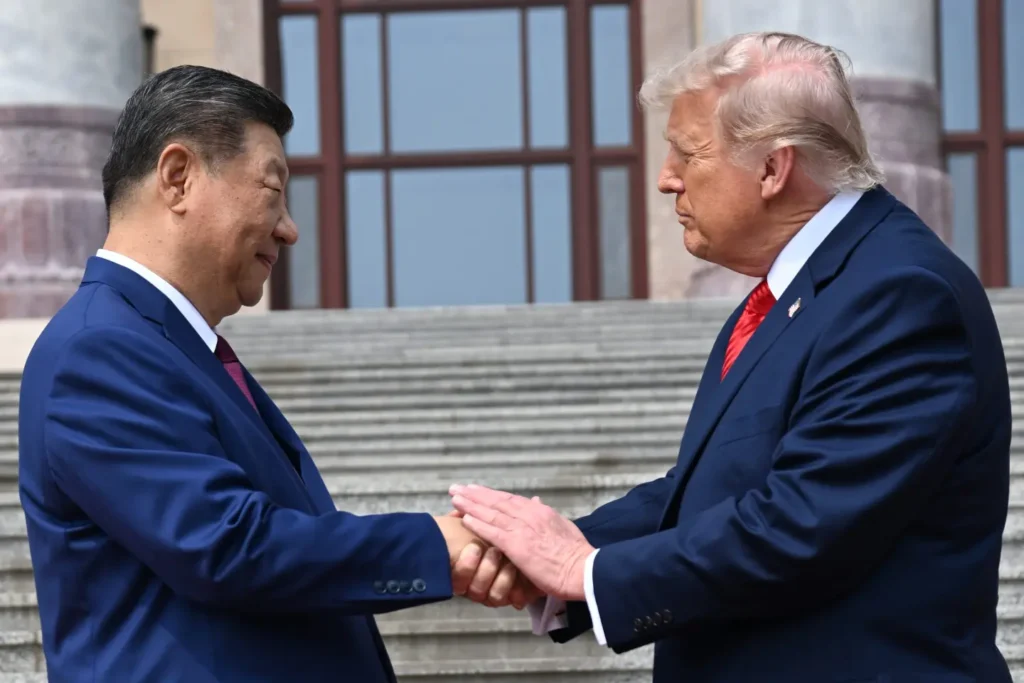
China characterized the first-ever simultaneous meeting of the American, Chinese, and Russian heads of state as having groundbreaking significance, with nuclear issues and broader geopolitics on the agenda as Trump travels to Asia following the midterm losses.
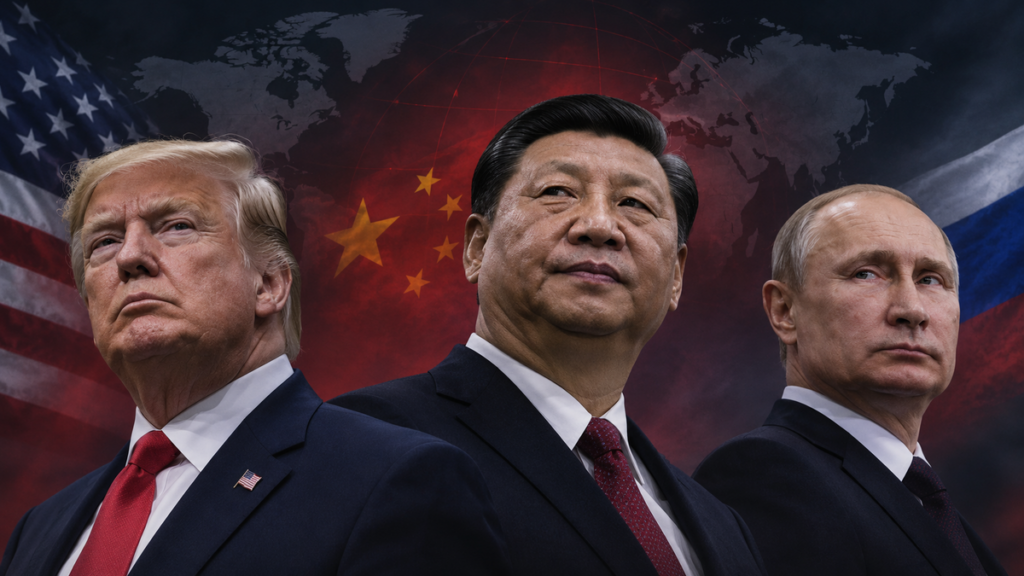
BREAKING · SHENZHEN SUMMIT · TRUMP · XI · PUTIN · HISTORIC · NUCLEAR
China formally characterized the first-ever trilateral meeting of President Donald Trump, Chinese President Xi Jinping, and Russian President Vladimir Putin as having groundbreaking significance, with nuclear issues and broader global geopolitics on the agenda, as the three leaders convened or prepared to convene at the Asia-Pacific Economic Cooperation forum in Shenzhen in what multiple major outlets, including Reuters, CNBC, CNN, and the Washington Post, confirmed as a diplomatic milestone without modern precedent. The summit — which ONYX tracked from the first reports of its anticipation on November 15 — fulfills the reporting of the previous day that a first-ever Trump-Xi-Putin trilateral was expected; the Chinese government characterization of the meeting as groundbreaking represents Beijing’s framing of an event that is taking place on Chinese soil in a city that embodies the narrative of Chinese economic modernization.
Reuters, CNBC, CNN, and the Washington Post each provided independent confirmation of the summit and the Chinese government characterization. The specific agenda items confirmed in reporting include nuclear issues — encompassing both the Iran nuclear question and the broader question of nuclear arms control in a trilateral format that has never before existed — and broader geopolitical topics that are understood to include the Ukraine conflict settlement framework, the management of the Iran confrontation escalating in the Gulf (Bahrain drone strike, Hormuz tanker fires), and the structure of the great-power relationship between the United States, China, and Russia in a post-Cold War era that none of the existing multilateral frameworks was designed to manage. The Trump trip to Asia follows the November midterm elections in which Republicans suffered significant losses, and the domestic political context colors the expectations for what the summit can produce.
The Chinese Framing
The Chinese government characterization of the summit as groundbreaking is analytically significant because China is the host and because the framing serves specific Chinese strategic interests. By describing the meeting in maximally positive terms, Beijing is claiming credit for enabling a diplomatic event that the world will watch; the APEC host role gives Xi the positioning of a convener and facilitator rather than simply a participant. The Washington Post analyzed the specific choice of Shenzhen as APEC host city in this context: Shenzhen, the city that embodies Chinese economic achievement and is literally adjacent to Hong Kong, is a deliberate frame for a meeting that the Chinese government wants the world to interpret as taking place in the context of Chinese economic power and Chinese diplomatic centrality. The groundbreaking characterization from Beijing is simultaneously a factual description — no such trilateral has ever occurred — and a claim that China made it possible.
CNN provided context on the nuclear dimension of the confirmed agenda. Nuclear issues entering a Trump-Xi-Putin agenda is analytically significant because the existing nuclear arms control architecture — the New START treaty between the United States and Russia — has been in abeyance since Russia suspended its participation in February 2023, and because China has never been a party to any bilateral US-Russia nuclear arms control agreement despite the significant growth of the Chinese nuclear arsenal in recent years. A trilateral discussion of nuclear issues would be the first time the three largest nuclear powers in the world have discussed nuclear matters in a single negotiating setting, and the specific agenda items on the nuclear front — whether arms control, nuclear testing, or the Iran nuclear question — would each carry enormous strategic implications.
“This meeting has groundbreaking significance. It opens a new chapter in great-power engagement and demonstrates that dialogue, not confrontation, is the path to global stability.” — Chinese government statement cited by Reuters
The Ukraine Arc Dimension
The Shenzhen summit is the culmination of the Ukraine arc ONYX has tracked continuously from November 10 through November 16. The sequence: the Abu Dhabi framework talks (Nov 10), the IRGC escalation (Nov 11-15), the Moscow-then-Kyiv shuttle diplomacy by American envoys (Nov 13), the Zelensky disclosure that the US floated a Donbas-for-NATO trade, the anticipated trilateral first reported in Nov 15 B18, and now the confirmed groundbreaking summit in Shenzhen. The Ukraine conflict — now approaching its third year of full-scale war — is understood by all three parties to be the most consequential agenda item, because a settlement framework that could actually end the fighting requires American willingness to structure a deal, Russian agreement to its terms, and Chinese pressure on Russia to comply. The trilateral format for the first time puts all three elements in a single room.
The Washington Post analyzed what the summit outcome could look like in the context of the Zelensky Donbas-for-NATO disclosure. The leaked framework — Donbas territorial concessions in exchange for NATO membership, which Zelensky disclosed to shape Ukrainian public opinion before a formal offer was made — represents the American opening position in a negotiation that the Shenzhen summit may formally launch. Russian agreement to such a framework would require Chinese backing and pressure, which is precisely the leverage that the trilateral format is designed to apply. The Washington Post noted that Trump, arriving in Asia weakened by the midterms and the Nvidia scandal, may be more willing to push for a quick settlement that produces a foreign policy achievement than he would have been before the domestic political setbacks.
WHAT HAPPENS NEXT
► Summit communique or joint statement to be issued; whether nuclear language is included to be watched
► Ukraine to respond to any framework that emerges; Zelensky to assess whether Donbas terms have changed
► Iran to monitor any US-Russia-China alignment on the Gulf escalation that emerged from the meeting
► Allied states and NATO partners to request full briefings; congressional leaders to demand transparency
| CONFIDENCE: HIGH | Reuters, CNBC, CNN, and the Washington Post each independently confirmed the Shenzhen trilateral summit, the Chinese groundbreaking characterization, and the nuclear and geopolitical agenda. Four-source confirmation on a historic diplomatic summit. |
| Bias Check | ||
| Left-Lean | Center | Right-Lean |
| Summit framed as Trump legitimizing authoritarian leaders; democratic allies are being sidelined by great-power deal-making. | Reports summit confirmation, Chinese framing, nuclear agenda, Ukraine arc dimension, and domestic political context factually. | Summit framed as bold Trump diplomacy delivering what conventional politicians could not; direct engagement is how wars end. |
SOURCES
► Reuters — Summit confirmation, Chinese groundbreaking characterization, nuclear agenda, November 16, 2026
► CNBC — Summit confirmation, agenda items, Shenzhen APEC context
► CNN — Summit confirmation, nuclear dimension analysis, trilateral format significance
► The Washington Post — Ukraine arc dimension, Donbas framework, domestic political context, Trump leverage analysis