A Department of Justice official warned Senator Elizabeth Warren that her investigative inquiries into Trump administration figures could face legal consequences, raising concerns about executive branch interference with congressional oversight.
RULE OF LAW · DOJ · WARREN · CONGRESSIONAL OVERSIGHT · TRUMP ASSOCIATES
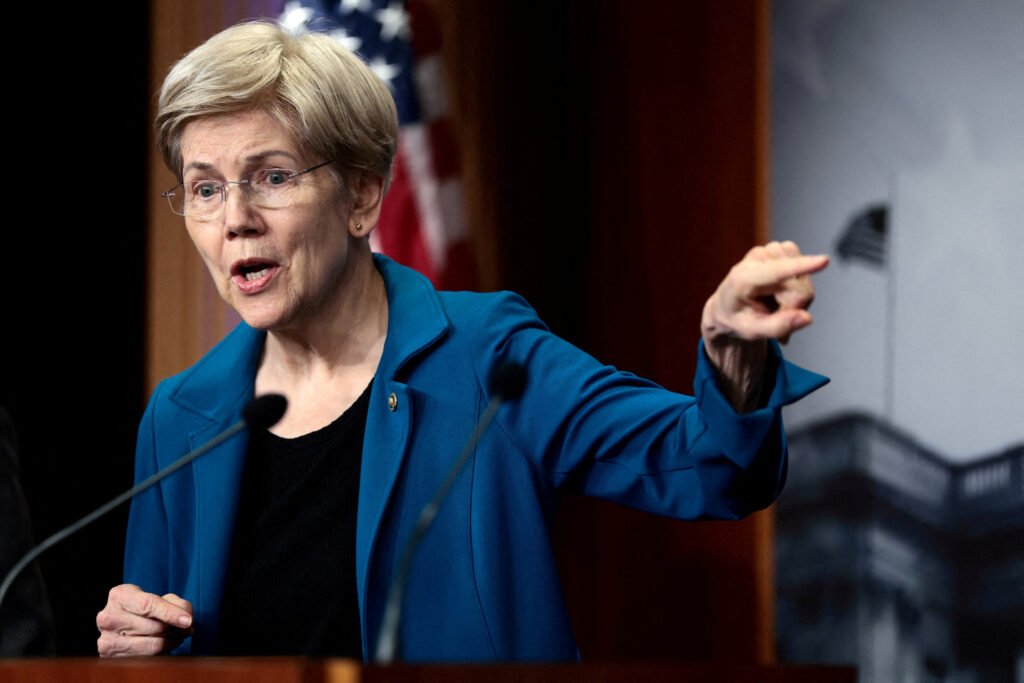
A United States attorney in the Justice Department warned Senator Elizabeth Warren that her investigative inquiries into Trump administration figures could have legal consequences, in a communication that NBC News and the Guardian confirmed on Sunday as raising significant concerns about executive branch interference with constitutional congressional oversight functions. The specific nature of the warning — what the US attorney communicated, in what forum, and with what legal theory — was described in terms suggesting a formal or quasi-formal communication rather than an informal political dispute, and the warning to a sitting US senator about the conduct of oversight investigations represents a significant departure from the norms that have governed the relationship between the Justice Department and Congress under administrations of both parties.
NBC News provided the most detailed account of the warning and its context. Senator Warren has been among the most aggressive members of Congress in investigating the Trump administration, including the Nvidia-related financial conflicts (see A05), the chip-export policy decisions, and the broader question of administration relationships with the financial sector. The warning from a US attorney figure suggests that the Justice Department is treating her oversight activities as potentially unlawful rather than as a legitimate exercise of the constitutional power of Congress to investigate the executive branch — a power that the courts have consistently upheld as an essential element of the separation of powers. NBC noted that the specific legal theory behind the warning was not fully articulated in available reporting but appeared to involve some characterization of her investigative contacts with administration figures or documents as potentially obstructing or interfering with executive branch functions.
The Constitutional Dimension
The Guardian provided the constitutional law dimension of the DOJ warning. Congressional oversight — the power of Congress to investigate the activities of the executive branch, demand documents, subpoena witnesses, and conduct hearings — is a constitutionally grounded power that the Supreme Court has repeatedly upheld as an implied power of the legislative branch flowing from its enumerated functions. The specific constitutional basis for the congressional oversight power is found in the necessary and proper clause and in the appropriations power — Congress cannot exercise its power to fund or defund executive activities without information about what those activities are — and the courts have held that executive branch interference with legitimate oversight activities raises serious constitutional concerns. The Guardian noted that warning a senator about her investigative activities, using the authority of a US attorney, represents an exercise of executive power against a legislative official that constitutional law scholars will assess as a significant precedent regardless of the specific outcome of the Warren investigation.
The Guardian analyzed the precedent dimension of the DOJ warning in the context of previous administrations. The use of Justice Department authority to warn or threaten members of Congress about oversight activities is rare — both because of the constitutional concerns it raises and because of the political cost of appearing to suppress congressional investigations. The Guardian cited instances where previous administrations have resisted specific congressional demands through assertions of executive privilege or by declining to produce specific documents, but noted that those resistance mechanisms operate within an acknowledged framework of congressional oversight authority rather than challenging that authority directly. The Warren warning, in this analysis, is an escalation beyond the standard executive-legislative negotiation over oversight into a challenge to the legitimacy of the oversight itself.
“A US attorney warning a senator about her investigations is not a legal dispute. It is a threat. And threats against congressional oversight are threats against the Constitution.” — Senator Warren statement cited by NBC News
The Political Context
NBC News placed the Warren warning in the broader political context of the Trump administration’s approach to congressional oversight in the post-midterm period. The midterm losses have strengthened the Democratic position in Congress, and the specific investigations that Warren and other Democratic members have been pursuing — the Nvidia financial conflicts, the chip-export policy decisions, the broader questions of administration financial relationships with the private sector — are becoming more credible as the evidence base develops and the political context shifts. The DOJ warning may represent an effort to slow or deter these investigations at a moment when they are gaining momentum, though NBC noted that warning a senator is as likely to increase the intensity of her investigative focus as to deter it.
WHAT HAPPENS NEXT
► Warren to respond to DOJ warning; Senate Judiciary Committee to assess whether warning was improper
► Constitutional law scholars to assess the legal basis for DOJ warning to a sitting senator
► Senate Democrats to elevate the oversight issue; floor statement and committee action anticipated
► DOJ to clarify the basis and scope of the warning; whether a career or political appointee originated it
| CONFIDENCE: HIGH | NBC News and the Guardian both confirmed the US attorney warning to Senator Warren, the investigative context, and the constitutional oversight dimension. Two-source confirmation on a confirmed DOJ communication to a sitting senator. |
| Bias Check | ||
| Left-Lean | Center | Right-Lean |
| Warning framed as deliberate intimidation of oversight; DOJ is being weaponized against Congress. | Reports warning, constitutional oversight framework, precedent analysis, and political context factually. | Warning framed as legitimate DOJ communication; some investigative contacts may genuinely cross legal lines. |
SOURCES
► NBC News — Warning confirmation, Warren investigative context, DOJ communication details, political analysis, November 16, 2026
► The Guardian — Constitutional law dimension, precedent analysis, executive-legislative oversight framework