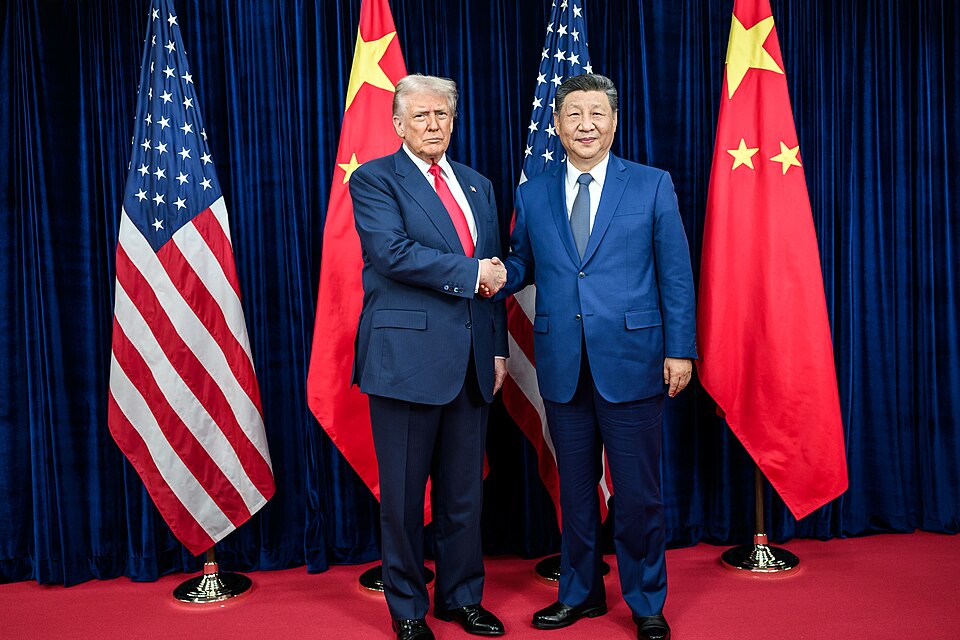
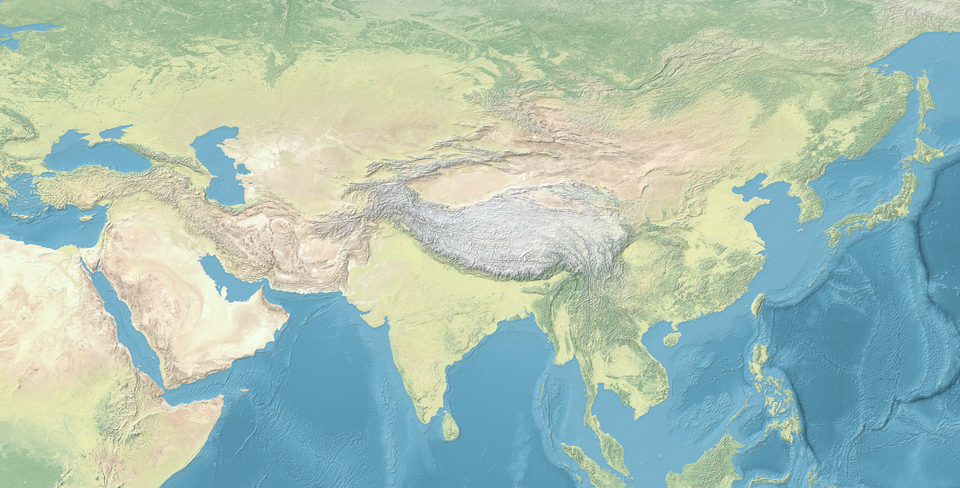
President Trump said he may also meet North Korean leader Kim Jong Un during the ongoing Asia trip, a potentially historic diplomatic encounter that would revive the Singapore-model summitry that defined the first Trump term.
DIPLOMACY · TRUMP · KIM JONG UN · NORTH KOREA · ASIA TRIP · SUMMIT · NUCLEAR
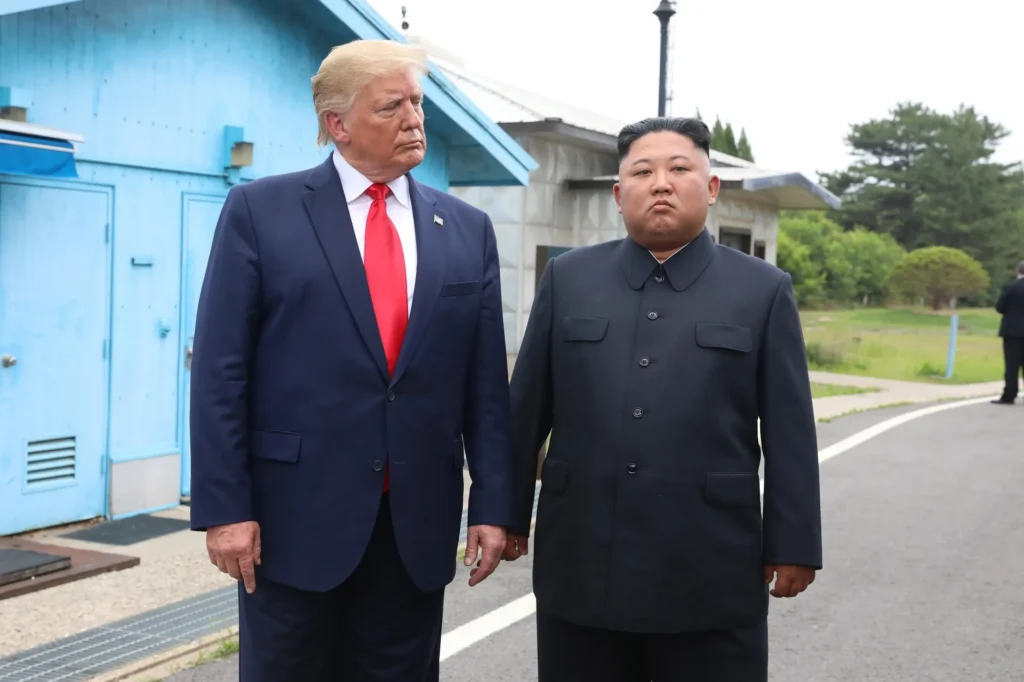
President Trump said during the Manila leg of his Asia trip that he may also meet North Korean leader Kim Jong Un, potentially adding a fourth bilateral summit to an Asia trip that already includes Quad meetings in Manila and the Trump-Xi-Putin trilateral at Shenzhen, CBS News and NPR confirmed on Monday. The Trump float of a Kim meeting revives the Singapore-model summitry — the leader-to-leader diplomatic engagement between Trump and Kim that produced the Singapore summit of June 2018, the Hanoi summit of February 2019, and the Panmunjom meeting of June 2019 — that was the defining element of the first Trump term’s North Korea policy, and that ended inconclusively when the Hanoi summit collapsed over disagreements about the scope of North Korean denuclearization in exchange for sanctions relief. A second-term Trump-Kim meeting would restart a diplomatic track that has been dormant since 2019.
CBS News provided context on the specific significance of the Trump-Kim float in the context of the Asia trip arc. The Shenzhen summit framework — which involves Trump, Xi, and Putin — is a great-power arrangement that includes China, the most significant external actor in the North Korea diplomatic equation. Any Trump-Kim bilateral engagement would occur in a context where China has been consulted — Beijing has historically served as the guarantor of North Korean diplomatic engagements with the United States and would expect to be informed if not involved in the arrangement — and where the Shenzhen summit may have included a specific Chinese-facilitated opening to the Kim meeting. CBS News noted that Trump comment was described as a float rather than a confirmed plan, and that the logistics of a Trump-Kim meeting on short notice — the security arrangements, the location, the agenda — would require significant preparation that may or may not have already begun.
The Nuclear Dimension
NPR analyzed the nuclear dimension of a potential Trump-Kim meeting. North Korea has advanced its nuclear and missile program substantially since the 2019 Hanoi summit: it has conducted additional nuclear tests (the most recent being the 2024 test of a tactical nuclear device), has tested and deployed intercontinental ballistic missiles capable of reaching the continental United States, and has formally declared itself an irreversible nuclear state in its constitution. The North Korean negotiating position in any renewed engagement will be shaped by this enhanced capability: Pyongyang is no longer seeking to exchange a nascent nuclear program for sanctions relief but is seeking to manage the relationship between an established nuclear power and the United States from a position of deterrence credibility. The Trump willingness to meet Kim despite this enhanced nuclear posture — if confirmed — would signal a willingness to engage with North Korea as a de facto nuclear state rather than insisting on denuclearization as a precondition for engagement.
NPR noted the specific Japan and South Korea dimension of a potential Trump-Kim bilateral. Japan and South Korea — the two American treaty allies most directly affected by the North Korean nuclear program — have historically been consulted in advance of any US-North Korea engagement and have pressed for their specific concerns to be reflected in the American negotiating agenda. Japan has consistently prioritized the resolution of the Japanese citizens abducted by North Korea in the 1970s and 1980s, and South Korea has prioritized inter-Korean relationship normalization alongside the nuclear question. A Trump-Kim float that does not include prior consultation with Tokyo and Seoul would create immediate allied concerns about whether the alliance management framework is consistent with the Quad peace through strength posture that Trump and Albanese just affirmed.
“I might also see Kim. I have a good relationship with Kim. These things are possible when you have good relationships.” — President Trump, cited by CBS News
The China Factor
CBS News analyzed the China factor in a potential Trump-Kim bilateral. China has traditionally viewed its relationship with North Korea as a strategic asset — the North Korean buffer state and the Chinese ability to manage the Kim regime give Beijing leverage in the Northeast Asian security environment that it is reluctant to cede to American diplomacy. A Trump-Kim bilateral that bypasses Chinese facilitation would be unusual in the history of US-North Korea diplomacy, and the Shenzhen summit context raises the specific question of whether Trump-Xi engagement included a Chinese facilitation offer for a Trump-Kim meeting. CBS News noted that the China factor makes the Trump-Kim float more geopolitically complex than the first-term Singapore model: in the first term, the summitry was largely a bilateral US-North Korea affair with Chinese awareness; in the current context, any meeting would occur within the great-power framework that the Shenzhen summit established, and China’s interest in the outcome is both more explicit and more consequential.
WHAT HAPPENS NEXT
► Trump to confirm or deny Kim meeting during Asia trip; logistics and location to be established
► China to be consulted; whether Shenzhen summit facilitated the Kim float to be assessed
► Japan and South Korea to be briefed; allied consultation to precede any confirmed Trump-Kim engagement
► North Korean response to Trump float to be monitored; whether Pyongyang signals willingness to meet
► Nuclear status of North Korea to be addressed; whether denuclearization remains a US precondition
| CONFIDENCE: HIGH | CBS News and NPR both confirmed the Trump float of a possible Kim meeting, the Asia trip context, and the Singapore-model comparison. Two-source confirmation of a confirmed presidential statement about a potential diplomatic engagement. |
| Bias Check | ||
| Left-Lean | Center | Right-Lean |
| Kim float framed as naive personal diplomacy; Trump is legitimizing a nuclear dictator without allied consultation. | Reports Trump Kim float, nuclear dimension, Japan-South Korea allied concerns, and China factor factually. | Kim float framed as bold diplomacy; Trump unique personal relationship with Kim gives the US the best chance at a deal. |
SOURCES
► CBS News — Trump-Kim float confirmation, Asia trip context, Singapore model comparison, China factor analysis, November 17, 2026
► NPR — Nuclear dimension analysis, Japan and South Korea allied concerns, North Korean negotiating position