The Senate passed bipartisan legislation to speed up the approval process for energy projects, responding to the surge in electricity demand driven by artificial intelligence data centers and the broader energy transition.
SENATE · ENERGY PERMITTING · BIPARTISAN · DATA CENTERS · AI DEMAND · REFORM
The United States Senate passed bipartisan energy permitting reform legislation that would speed the approval process for energy projects including power plants, transmission lines, and data center connections, NPR, CNBC, the New York Times, and Fox News all confirmed on Thursday. The legislation addresses the specific bottleneck in American energy infrastructure development identified by both the technology industry and the energy sector: the existing regulatory approval process — which involves environmental review under the National Environmental Policy Act, state-level permitting, and Federal Energy Regulatory Commission proceedings — takes years to complete for major energy projects, creating a gap between the rapid growth in electricity demand driven by artificial intelligence data center build-out and the ability to build the generation and transmission capacity to meet that demand. The bill passage is bipartisan because it addresses concerns shared by Republicans (who want faster approval for traditional energy projects including natural gas generation) and a sufficient number of Democrats (who want faster approval for renewable energy projects and transmission lines to connect renewable generation to population centers).
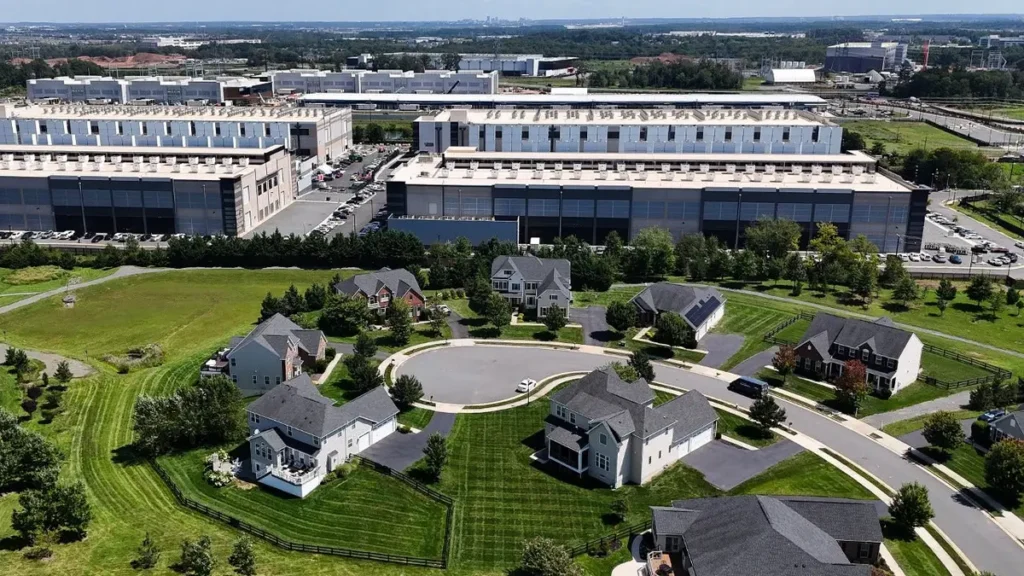
NPR and CNBC provided the specific context of the AI data center demand surge that drives the bill’s urgency. The major technology companies — Google, Microsoft, Amazon, Meta, and the AI-focused companies including Anthropic (now public) — have been building or announcing data centers at an extraordinary rate to support the AI model training and inference workloads that the AI era demands. These data centers are extremely power-intensive: a large AI training cluster can consume hundreds of megawatts of power, equivalent to the electricity consumption of a mid-sized city, and the cumulative power demand of the AI data center build-out is driving electricity demand growth rates in the United States that the grid has not seen since the mid-20th century electrification era. The existing permitting process cannot keep pace with this demand growth, and the energy permitting reform is intended to allow the grid to expand rapidly enough to supply the AI-era electricity demand.
The Bipartisan Coalition
The New York Times analyzed the specific bipartisan coalition that produced the Senate passage. Energy permitting reform has been a legislative goal of both parties for years — Republican administrations have sought it to speed fossil fuel projects, Democratic administrations have sought it to speed renewable energy — but previous attempts to pass it have failed because the coalition needed to pass it has always fractured along partisan lines about which projects would benefit. The specific bill that passed the Senate in November 2026 succeeded because the AI data center demand surge created a shared urgency that superseded the traditional partisan arguments: both parties want the grid to be able to supply the data centers that are being built in their states, and the existing permitting timeline is a threat to that goal that motivates bipartisan action. Fox News coverage emphasized the natural gas generation benefits; NPR coverage emphasized the renewable energy transmission benefits; both are correct, which is what bipartisan means.
CNBC provided the technology industry response to the Senate passage. The major technology companies had been lobbying intensively for energy permitting reform, and the Senate passage is a significant legislative victory for an industry that has become one of the most consequential forces in American energy infrastructure planning. CNBC noted that the specific provisions of the bill — particularly the timelines for NEPA review and the FERC interconnection queue reform — will determine whether the legislation actually accelerates data center connections at the pace the industry requires, and that the technology companies will be monitoring the implementation closely to assess whether the reform delivers the speed improvements it promises.
“The grid cannot wait for a three-year permitting process when the data centers are being built in three months. This bill closes that gap.” — Senate sponsor cited by NPR
The House and Presidential Dimension
NPR and the New York Times noted the House and presidential dimension of the Senate passage. The energy permitting reform bill must still pass the House — where the specific balance of priorities between fossil fuel and renewable energy projects may produce a different coalition calculus than the Senate — before it can be signed into law. The Trump administration has expressed support for the permitting reform legislation, particularly the provisions that would speed natural gas generation approvals, and a presidential signature is likely if the bill reaches the White House in a form that maintains the Senate bipartisan coalition. NPR noted that the House consideration will be the next critical juncture, and that the technology industry lobby will be active in ensuring the House version preserves the data center connection provisions that are the industry’s primary interest.
WHAT HAPPENS NEXT
► House to consider the energy permitting reform bill; whether Senate bipartisan coalition holds in House
► Trump to signal support for the bill; White House position on specific provisions to be clarified
► Technology industry to monitor NEPA and FERC provisions; whether the bill delivers promised speed
► Energy sector to assess which projects benefit most; natural gas vs. renewable energy balance to be assessed
| CONFIDENCE: HIGH | NPR, CNBC, New York Times, and Fox News all confirmed the Senate passage of the energy permitting reform legislation. Four-source confirmation across public, financial, premium, and conservative media on a confirmed Senate vote. |
| Bias Check | ||
| Left-Lean | Center | Right-Lean |
| Bill framed as giveaway to fossil fuel industry; permitting reform will primarily benefit gas plants, not clean energy. | Reports Senate passage, bipartisan coalition, AI data center demand context, and House dimension factually. | Bill framed as smart deregulation; permitting reform removes bureaucratic obstacles to American energy dominance. |
SOURCES
► NPR — Senate passage confirmation, AI demand context, bipartisan coalition analysis, House dimension, November 20, 2026
► CNBC — Technology industry response, data center demand surge, FERC interconnection provisions
► The New York Times — Bipartisan coalition analysis, prior reform attempt history, bill provisions
► Fox News — Natural gas generation benefits, administration support, deregulation framing