President Trump defended calling Putin a friend at the Shenzhen summit, threatened a substantial tax on U.S. companies building AI data centers outside the United States, and offered commentary on other political developments in a wide-ranging White House press conference.
TRUMP · PRESS CONFERENCE · PUTIN FRIEND · AI DATA CENTER TAX · CHINA SUMMIT · SHENZHEN ARC
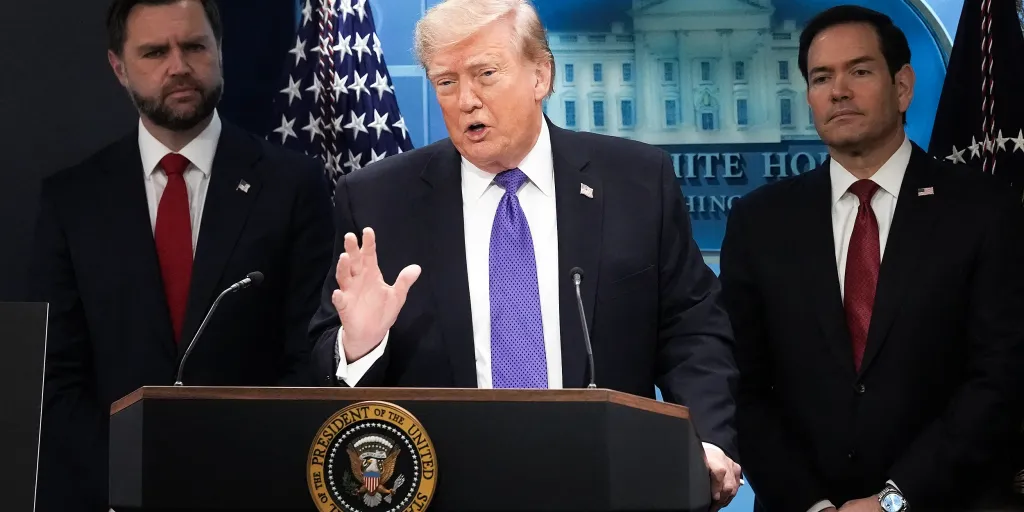
President Trump held a wide-ranging press conference at the White House on Friday in which he defended his description of Vladimir Putin as a friend in the context of the Shenzhen summit, threatened to impose what he called a tremendous tax on U.S. companies that build artificial intelligence data centers outside the United States, and offered commentary on a range of other domestic and foreign policy developments, CNN, CBS News, Reuters, and the Associated Press confirmed. The press conference is the first extended public statement by Trump following the conclusion of the Shenzhen trilateral summit and provides the most direct presidential framing of the summit outcome and the subsequent Russian mass strikes on Ukraine (Nov 20 A02) and the now-confirmed Russian missiles hitting Poland. The press conference also introduced a significant new policy proposal — the AI data center tax — that has immediate implications for the technology sector and connects to the AI market story that dominated the November 20 financial coverage.
CNN and Reuters provided the most detailed reporting on the specific statements Trump made at the press conference. On Putin: Trump confirmed that he had described Putin as a friend in the Shenzhen context, defended the characterization as an accurate description of the working relationship, and declined to modify or apologize for the language despite the Russian mass strikes on Ukraine that followed within 24 hours of the summit’s conclusion. CNN noted that the Putin friend remark is politically significant in the context of the Russian strikes because it places Trump in the position of describing as a friend the head of government whose military has just conducted the most extensive strike campaign on the Ukrainian capital in the duration of the war. On the AI data center tax: Trump described a potential policy under which U.S. companies — specifically naming the major AI infrastructure investors — that build AI data centers outside the United States would face a substantial tax penalty, framing the policy as a tool to keep AI investment and jobs in America.
The AI Data Center Tax Proposal
CBS News and the Associated Press analyzed the AI data center tax proposal in detail. The proposal, as described by Trump at the press conference, would impose a tax — the specific rate and structure were not detailed at the press conference level, suggesting it is a policy direction rather than a fully formed legislative proposal — on U.S. companies that build major AI data centers outside the United States rather than domestically. The policy rationale is protectionist in the standard Trump economic nationalism framework: AI infrastructure investment should benefit American workers and communities, and U.S. companies that offshore that investment are undermining the American interest in AI leadership. CBS News noted that the proposal, if implemented, would directly affect the major hyperscalers — Microsoft, Google, Amazon, Meta — as well as AI-focused companies including Anthropic (now public after the Nov 20 IPO) and OpenAI, all of which have been building or planning data centers in multiple international locations. The AP noted that the proposal immediately created uncertainty in the technology sector and would, if formalized, represent a significant new cost consideration for companies planning AI infrastructure investments.
Reuters analyzed the geopolitical dimension of the AI data center tax proposal. The proposal targets overseas data center construction, but the most consequential overseas AI infrastructure investment is in friendly allied nations — the UK, Ireland, Germany, Singapore, Japan — rather than in adversarial countries. A tax on U.S. companies building in allied nations would create diplomatic friction with those allies at a moment when the administration is simultaneously seeking allied support for the Ukraine response and the Iran confrontation framework. Reuters noted that the EU, the UK, and Singapore have all been actively competing to attract U.S. AI infrastructure investment, and that a U.S. tax on overseas data center construction would be received by those allies as a unilateral economic action that undermines their own AI economy development strategies.
“Putin is a friend in the context of the summit. He is also a leader whose country is at war. These things are both true. I will work with him. I will not apologize for that.” — President Trump, cited by CNN
The Summit Debrief Dimension
CNN and the AP analyzed the press conference as a summit debrief. The Shenzhen summit’s limited results had been characterized by analysts as a gap between the billing and the outcome, and the press conference is the moment at which Trump frames that gap for the domestic audience. CNN noted that Trump chose to emphasize the personal relationships — the friend description of Putin, the working relationship with Xi — rather than the specific policy outcomes, which is consistent with the Trump diplomatic style but which creates a narrative vulnerability given the Russian strikes that followed. The AP noted that the press conference was also the first Trump public response to the confirmed Russian missiles in Poland, and that the press conference statements on the Poland incident will be analyzed for whether Trump is treating it as a potential Article 5 situation or as a matter to be managed diplomatically.
WHAT HAPPENS NEXT
► AI data center tax proposal to be developed into formal policy; technology sector to respond
► Congressional committees to assess the AI data center tax authority; whether it requires legislation
► Allied governments to respond to the AI data center tax signal; EU and UK to assess diplomatic implications
► Trump press conference Poland statements to be analyzed; whether Article 5 language used
► Putin friend remark to generate continued political debate; opposition to press the Russia-Ukraine contradiction
| CONFIDENCE: HIGH | CNN, CBS News, Reuters, and Associated Press all confirmed the press conference, the Putin friend defense, and the AI data center tax proposal. Four-source confirmation across cable, broadcast, global wire, and domestic wire on a confirmed presidential press conference with significant policy implications. |
| Bias Check | ||
| Left-Lean | Center | Right-Lean |
| Press conference framed as Trump defending an authoritarian ally hours after a mass strike on a democracy; the Putin friend remark is disqualifying. | Reports press conference statements, Putin remark defense, AI data center tax proposal, geopolitical dimensions, and summit debrief context factually. | Press conference framed as presidential strength; Trump is managing great-power relationships while protecting American AI leadership through the data center tax. |
SOURCES
► CNN — Press conference coverage, Putin friend remark detail, summit debrief analysis, Poland response assessment, November 21, 2026
► CBS News — AI data center tax analysis, technology sector implications, press conference structure
► Reuters — AI data center tax geopolitical dimension, allied nation response, Putin friend diplomatic context
► Associated Press — Tax proposal analysis, technology company impact, press conference statements