The final draft text circulating at COP31 still lacks direct fossil-fuel phase-out language despite the new co-host bridging attempt, as the EU continues to push back against formulations it characterizes as inadequate while the Turkish and Australian co-hosts work to find a landing zone before the talks collapse entirely.
COP31 · FINAL DRAFT · FOSSIL FUEL · PHASE-OUT LACKING · TURKEY · AUSTRALIA · EU REJECTION · COMPROMISE
The final draft text circulating at COP31 in its latest iteration still lacks direct fossil-fuel phase-out language — the specific commitment that the EU and island-nation blocs have been demanding and that the Saudi-led oil-producing nation bloc has been resisting throughout the Turkey climate conference — despite the new co-host bridging draft (reported in B12 of this edition) that recalled prior Dubai language as an alternative formulation, the Associated Press and BBC confirmed from the negotiating floor as the overtime period of the talks extended into its second day. The EU assessment of the most recent draft — that it remains inadequate despite the recall approach — indicates that the gap between the blocs has not been fully closed by the co-host bridging attempt, and that the Turkish and Australian co-hosts are still seeking a formulation that all major blocs can accept before the talks collapse entirely and no COP31 outcome is adopted.
The AP provided the most detailed account of the current draft state. The latest version circulating in the COP31 negotiating room as of Saturday includes language that references the transition away from fossil fuels in terms that the EU delegation is characterizing as too qualified, too indirect, or too easily read as a weakening of the Dubai commitment. The specific objection appears to be that while the draft may technically recall prior language, the surrounding context — qualifications about national circumstances, just transition provisions, and the specific placement of the fossil fuel reference in the document — creates a text that the EU argues would be reported as a weaker outcome than Dubai by the climate community and by the EU member state governments that have to defend the COP31 outcome politically. The BBC noted that the EU negotiators are not simply blocking a deal — they are identifying specific textual changes that they argue would bring the draft into acceptable territory.
The Turkey-Australia Mediation
The BBC analyzed the Turkey-Australia co-host mediation effort. The specific challenge for the co-host team is that they are trying to bridge a gap between blocs with incompatible stated positions on a question — explicit fossil fuel language — where the difference between acceptable and unacceptable formulations is a matter of specific wording that each bloc will read through the lens of its own interests and political requirements. The BBC noted that the most experienced climate negotiators in the room are attempting to find language that is simultaneously explicit enough for the EU and island nations to characterize as maintaining the Dubai commitment, and qualified enough for the Saudi-led bloc to characterize as not creating new binding obligations on fossil fuel producers. The specific wording of the transition provision — the verb chosen, the qualifications attached, the reference framework cited — will determine whether this needle can be threaded.
The AP analyzed the collapse risk. The AP noted that while the collapse of COP31 without an outcome remains extremely unlikely — the institutional and diplomatic costs of a COP breakdown are severe enough that all parties have strong incentives to find some outcome — the specific dynamic of a second day of overtime with continued EU rejection of successive drafts creates conditions in which either a genuinely bridging formulation is found in the next few hours or the talks will end with an agreement that the EU and island nations accept under protest to avoid the worse outcome of no agreement at all. The AP noted that agreement-under-protest is itself a significant negative outcome for climate diplomacy: it validates the Saudi-led strategy of holding out until exhaustion produces acceptance, and it sets a precedent for future COPs.
“We are not at the end. We are not at an agreement. We are still working. That is all we can say right now.” — COP31 Turkish presidency spokesperson cited by AP
The Island-Nation Dimension
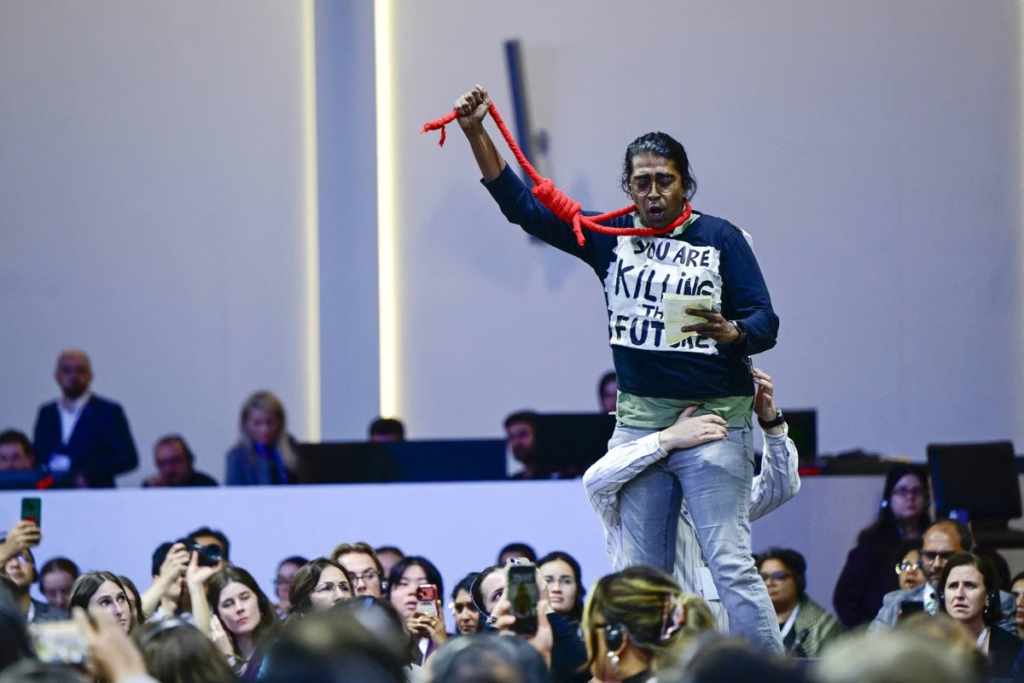
The BBC and AP documented the island-nation dimension of the final draft assessment. The small island developing states — whose existential stakes in the COP31 outcome are the most acute of any delegation — were continuing to insist that the final text must include language that is at minimum as strong as Dubai, and that accepting a weaker formulation is not an option for nations whose continued existence depends on limiting warming to 1.5 degrees. The BBC noted that the island-nation bloc has been the most emotionally powerful voice in the final stages of the COP31 negotiations and that its continued insistence on strong language is both a principled position and a strategic one: the island nations have moral authority that the EU bloc lacks in some respects, and their insistence carries a weight in the negotiating room that EU economic and legal arguments alone would not.
WHAT HAPPENS NEXT
► Co-hosts to produce revised language in response to EU objections; whether a new formulation addresses the specific EU concerns
► EU and island-nation blocs to assess any new text; whether the textual changes are sufficient to change their position
► Saudi-led bloc to assess any new formulation; the outer limit of what the opposition will accept
► Final plenary session to be convened when possible; COP31 outcome or collapse to be determined
| CONFIDENCE: HIGH | Associated Press and BBC both confirmed the final draft state, the EU continued rejection, and the co-host mediation effort. Two-source confirmation across global wire and UK public broadcaster on a confirmed negotiating impasse at the most significant ongoing climate diplomatic event. |
| Bias Check | ||
| Left-Lean | Center | Right-Lean |
| Draft failure framed as the Saudi bloc succeeding in its long-term strategy of eroding climate ambition through COP overtime pressure. | Reports the draft state, EU objections, co-host mediation, collapse risk, and island-nation dimension factually. | Draft compromise framed as the only viable path; a weaker text that all parties accept is better for the climate than a breakdown that produces no commitment at all. |
SOURCES
► Associated Press — Final draft state, EU objection detail, collapse risk analysis, Turkish presidency quote, November 22, 2026
► BBC — Turkey-Australia mediation analysis, island-nation dimension, agreement-under-protest framing