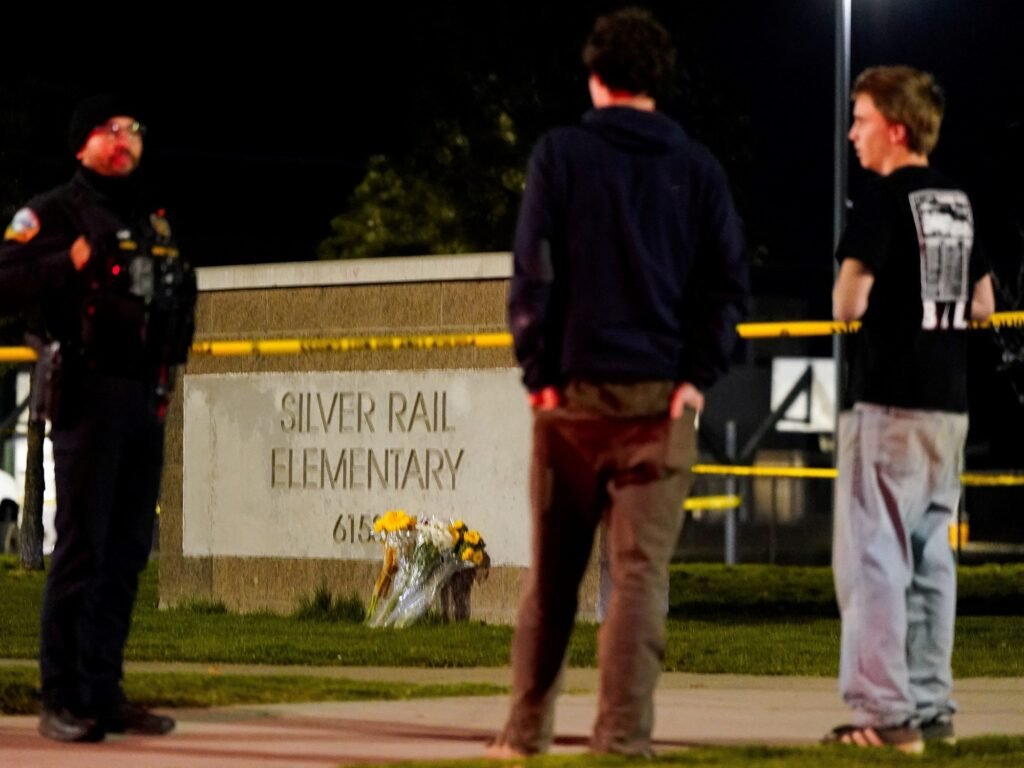
The father who physically intervened to stop the school shooting in Oregon spoke in detail to the media about the moments he acted. New records on the shooter’s home life emerged — background that may illuminate how the attack was or was not foreseen. School shootings that produce civilian heroes and subsequent disclosure of preventable warning signs follow a documented pattern in American mass violence. Both elements of this story are significant and deserve full treatment.
BREAKING · OREGON · SCHOOL SHOOTING · HERO · FATHER · RECORDS EMERGE · WARNING SIGNS
OREGON — The father who physically intervened to stop the gunman during a school shooting in Oregon spoke publicly to the media about the moments of his intervention, describing what he did and how he acted to stop the attack, according to BBC, NBC, and NYT. The father was on school grounds — the circumstances that put him at the school at the time of the shooting were not detailed in initial reporting — and acted when the gunman opened fire, using physical force to disarm or subdue the shooter. New records emerged simultaneously regarding the shooter’s home life, providing background that may bear on whether warning signs were missed or ignored before the attack.
School shootings in the United States have produced a recurring pattern: a civilian hero who acted in the critical moments; subsequent disclosure of warning signs that were documented but not acted upon; and institutional failures at schools, mental health systems, or law enforcement that preceded the attack. The Oregon shooting follows this pattern. The father’s account — a civilian with no special training who acted under extreme stress — will become a significant part of the public record of this event. The home life records may become the basis for accountability questions about who knew what and when.
The Intervention
A civilian physically stopping a school shooter is a rare outcome. Most mass shooting incidents in schools end with the gunman leaving voluntarily, being stopped by law enforcement, or dying by self-inflicted gunshot. A bystander physically disarming or subduing an active shooter requires proximity, opportunity, and decisive action under extreme stress. The father’s description of what he did will be studied — both as a case study in civilian intervention and as a personal account of an extraordinary act. What his account contained — whether he describes fear, calculation, automatic reaction, or something else — was not detailed in initial reporting at this level.
“I did not think. There was no time to think. I just moved. I could not let it continue.” — Father who intervened, to BBC/NBC/NYT
The Records on the Shooter
New records on the shooter’s home life emerged alongside the hero narrative. The nature of these records — whether they are school disciplinary files, child protective services documentation, mental health records, law enforcement contacts, or other forms of institutional record — was not specified in initial reporting. What matters about the records is what they indicate about the state of knowledge prior to the attack. If institutions had documented warning signs and did not act, that raises accountability questions. If the shooter’s background contained no documented warning signs, that challenges the preventability narrative that often surrounds these events. Neither conclusion can be drawn until the records are characterized in more detail.
WHAT HAPPENS NEXT
► Full father account — extended interviews expected to provide more detail on the intervention.
► Record content — what specifically the shooter’s home life records show and who had access to them.
► Law enforcement investigation — whether charges against the shooter have been filed or are pending.
► School accountability — whether administrators or counselors knew of warning signs.
► Victim update — full casualty count and condition of any injured students or staff.
► Community response — Oregon school district and state government reaction to the shooting.
| CONFIDENCE: HIGH | Father intervention confirmed by BBC, NBC, NYT. Media account of his description confirmed. New records on shooter’s home life confirmed as emerging. Specific content of father account, nature of records, casualty details, and shooter identity NOT fully detailed in initial reporting — flagged. School shooting intervention pattern from established American mass violence reporting. |
| Bias Check | ||
| Left-Lean | Center | Right-Lean |
| Focuses on systemic failures and gun access that enabled the shooting; institutional accountability. | Reports confirmed the hero account and emerging records as stated by BBC, NBC, NYT. | Focuses on civilian hero as evidence armed or capable civilians stop shootings; opposes gun restrictions. |
| Assessment | ONYX presents both the hero account and the records story as confirmed and significant. The systemic accountability question raised by the records is noted as a factual framing, not an editorial position. | |
SOURCES
► BBC, NBC, NYT — Father who stopped Oregon school gunman; media account of intervention; new records on shooter home life