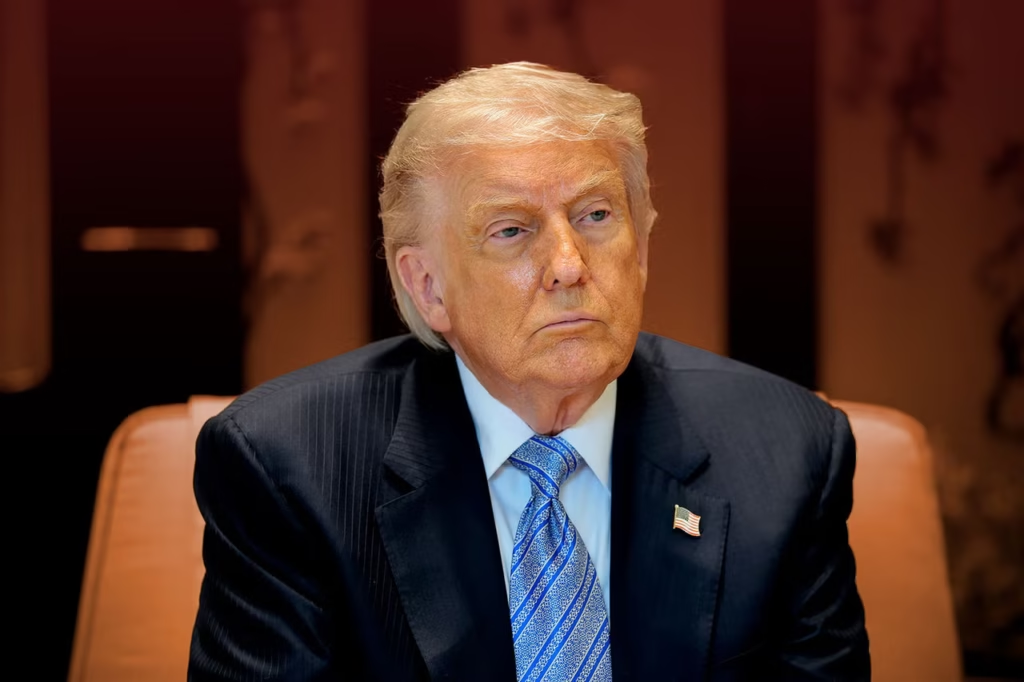
Republican approval of Trump fell to 73%, down from 82% in the prior polling cycle, according to Al Jazeera’s tracking. The 9-point drop within his own party’s base is a single-cycle move that is analytically significant: in-party erosion is harder to reverse than opposition-party criticism because the people who changed their minds are the people who were supporting him.
WHAT’S DRIVING THE DROP
The primary drivers cited in the polling:
▸ War: the Iran war cost has surpassed $37.5 billion in confirmed taxpayer spending; 18 US service members are dead; the war has been documented in ONYX for 46 days with no formal conclusion reached before October 6
▸ Inflation: the Fed raised rates for the first time since 2023 on September 17, explicitly citing Hormuz as the primary pressure point; oil was above $100 until the deal announcement brought it to $87; 46 days of energy price elevation have hit American consumers
THE IN-PARTY CONTEXT
Republican approval at 73% means 27% of self-identified Republicans do not approve of Trump. The specific context of the 9-point drop: this is the polling cycle that includes:
▸ The five-network press pool walkout (today)
▸ The AI targeting hallucination and senators’ letter (September 21)
▸ The $70 million emergency Texas Senate spending (September 20)
▸ The DOGE GAO $9.5 billion administrative leave finding (September 17)
▸ The EPA permanent climate authority proposal (September 16)
▸ The Federal Reserve’s first rate hike since 2023 (September 17)
THE DEAL’S POTENTIAL EFFECT
The 9-point drop was measured in the polling cycle before the Iran deal’s full confirmation on September 18 and Khamenei’s blessing on September 19. Oil fell to $87. The Fed signaled a possible second hike pause. Whether those developments produce a recovery in Trump’s Republican approval numbers will be visible in the next polling cycle. ONYX notes this as the specific documented timing: the erosion is documented before the deal’s economic benefits became fully visible in oil prices.
THE MIDTERMS DIMENSION
42 days to November 3. Republican Senate candidates in Texas, North Carolina, and other competitive states are running in an environment where their party leader’s base support just dropped 9 points in a single cycle. The deal may stabilize or reverse some of that erosion. The five-network walkout may extend it. The midterms are the specific electoral context in which 73% Republican approval is a documented data point.
73% of Republicans approve of Trump. That’s down from 82% in the prior cycle. 27% of his own party base doesn’t approve. The primary reasons: the war and inflation. The deal was announced after this polling was taken. Oil fell to $87 after this polling was taken. Whether $ 87 oil and a deal announcement restore 9 points of Republican approval before November 3 is the specific political question the next polling cycle will answer.
WHAT HAPPENS NEXT
▸ Next polling cycle — whether the deal’s oil price effect and the five-network walkout’s press freedom dimension each affect Republican approval differently
▸ Texas Senate race — whether the Republican base erosion affects Ken Paxton’s specific competitive position
▸ November 3 — 42 days
| CONFIDENCE: HIGH | Republican approval Trump 73% down from 82% prior cycle war inflation primary drivers from Al Jazeera tracking. |
| ⚖️ BIAS CHECK — WHO IS SAYING WHAT | |
| Al Jazeera tracking | The polling source; their methodology and sample are from their confirmed reporting |
| Republican respondents | The 27% who no longer approve are the specific documented erosion; their stated reasons are war and inflation |
| ONYX | Covering the polling at its confirmed number; naming the specific documented events in the polling cycle; noting that the deal’s oil price effect postdates the polling |
SOURCES
▸ Al Jazeera tracking — Republican Trump approval September 22 2026