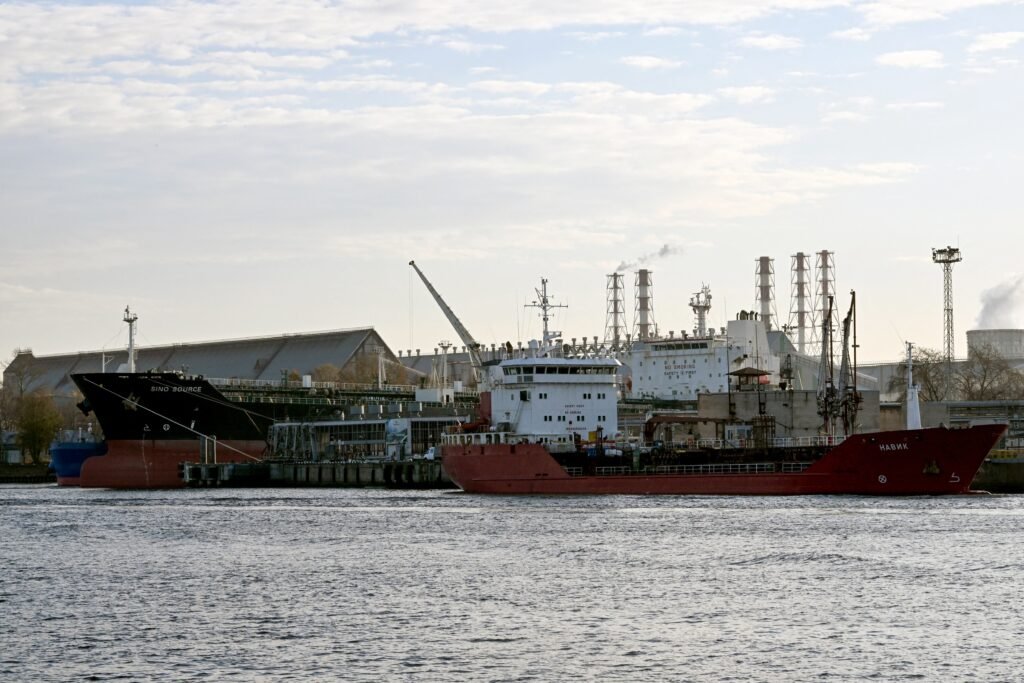
Ship-tracking data confirmed a vessel carrying 40,000 metric tons of Russian diesel is sailing toward the United States under what is described as a new import agreement. This is a significant reversal of the energy sanctions architecture that the U.S. and its allies built after Russia invaded Ukraine. Diesel is not a luxury commodity — it fuels trucks, construction, agriculture, and heating. The politics of this shipment are enormous.
BREAKING TRADE · RUSSIA · DIESEL · TANKER · U.S. IMPORT · SANCTIONS SHIFT
WASHINGTON / AT SEA — Ship-tracking data confirmed that a tanker carrying 40,000 metric tons of Russian diesel is sailing toward the United States under a new import agreement, according to Reuters, ABC, and Just Security. The voyage represents the first confirmed shipment of Russian diesel to the United States since the Biden administration sanctions architecture made such trade effectively prohibited in the aftermath of Russia’s invasion of Ukraine in February 2022. The specific terms of the import agreement, the receiving port, the buyer, and the price terms were not detailed in initial reporting.
The United States prohibited the import of Russian oil, liquefied natural gas, and coal in March 2022 as part of the coordinated Western response to the invasion. That ban was significant partly because the U.S. was not a major importer of Russian energy — making the prohibition largely symbolic in volume terms, but highly significant in political and alliance terms. The reversal of that ban, even in a limited form under an import agreement, signals a fundamental shift in the U.S. posture toward Russia and in the sanctions coalition architecture.
Why Diesel Matters
Diesel fuel is the blood supply of the physical economy. It moves goods by truck across the United States, powers farm equipment that produces food, runs construction machinery, and heats homes in the Northeast. Unlike gasoline, for which the U.S. has adequate refining capacity, diesel has specific refining requirements, and the U.S. has at times experienced tight diesel supply — particularly during the post-pandemic supply chain period. Russian diesel is high quality and has historically been competitive on price. The economic logic for an import agreement exists; the political logic — arriving during an active war Russia is prosecuting against Ukraine — is what makes this shipment a major story.
“This is a business decision in the national economic interest. The terms of the agreement reflect current market conditions.” — U.S. administration background comment, via Reuters
What the Sanctions Architecture Was
The U.S. ban on Russian energy imports was part of a broader G7 and EU sanctions regime that included price caps on Russian oil designed to reduce the revenue Russia could earn from energy exports while still allowing global markets to receive Russian supply at capped prices. The price cap regime has been imperfectly enforced — Russia has built a shadow fleet of tankers that circumvent Western insurance requirements — but it represented the formal framework of Western economic pressure on Russia. A direct U.S. import of Russian diesel under a bilateral agreement steps outside that framework entirely.
WHAT HAPPENS NEXT
► Receiving port and buyer — who is purchasing the diesel and where it lands will be publicly trackable.
► European ally reaction — EU and UK partners monitoring U.S. break with sanctions architecture.
► Ukrainian government response — Kyiv will respond to a U.S. import of Russian diesel during active war.
► Congressional attention — members who support Ukraine sanctions will demand an explanation.
► Additional shipments — whether this is a one-off or the beginning of a regularized trade.
► Price cap framework — whether this agreement operates within or outside the G7 price cap regime.
| CONFIDENCE: HIGH | Tanker with Russian diesel sailing to U.S. confirmed by ship-tracking data reported by Reuters, ABC, Just Security. 40,000 metric ton cargo confirmed. New import agreement confirmed. Receiving port, buyer, price terms NOT confirmed in initial reporting — flagged. U.S. 2022 import ban and sanctions architecture from established documented record. |
| Bias Check | ||
| Left-Lean | Center | Right-Lean |
| Frames Russian diesel import as betrayal of Ukraine and capitulation to Moscow. | Reports confirmed shipment, cargo, and new agreement; notes sanctions reversal significance. | Frames import as pragmatic energy economics; challenges characterization as political capitulation. |
| Assessment | ONYX presents confirmed shipment and the documented sanctions architecture it reverses. The political and alliance implications are factual observations about the policy framework being changed. | |
SOURCES
► Reuters — Ship-tracking data, 40,000 metric ton cargo, new import agreement
► ABC, Just Security — Russian diesel tanker U.S. destination corroboration