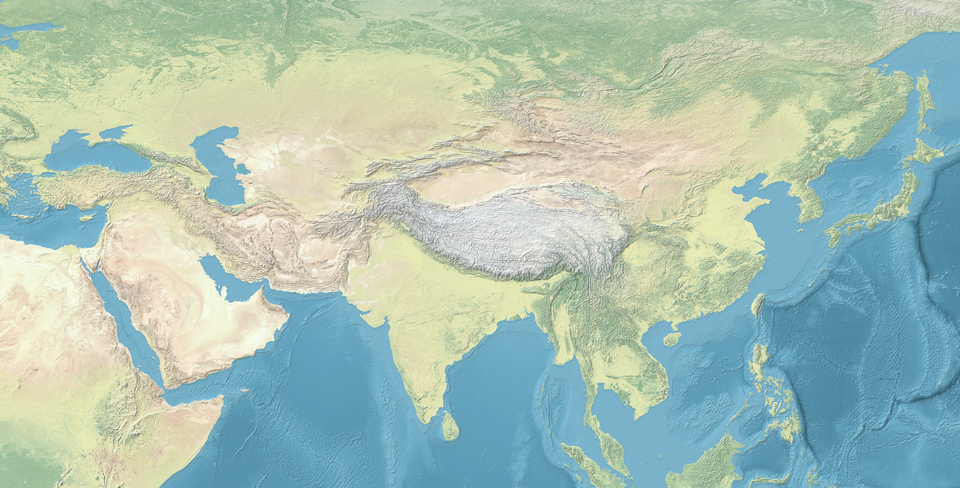
A grounded Russian oil tanker has spilled crude onto beaches in Oman, according to Democracy Now. Oman is the country brokering the Iran ceasefire deal: the Muscat nuclear dialogue is named for its capital; the maritime boundary discussions between Iran and Oman are central to the Hormuz governance architecture; Sultan Haitham’s government has invested significant diplomatic capital in the mediation role. A Russian oil tanker running aground in Omani waters and fouling Omani beaches adds an environmental and diplomatic complication to an already fragile diplomatic position.
2-MINUTE CONTEXT — THE OMANI DIPLOMATIC POSITION
Oman has maintained its role as a neutral mediator between the US and Iran through multiple administrations and multiple conflict cycles. Sultan Haitham inherited from Sultan Qaboos — who died in 2020 — a decades-long diplomatic tradition of quiet neutrality and back-channel facilitation. Oman is a member of the Gulf Cooperation Council but has consistently pursued an independent foreign policy that allows it to maintain relations with both Iran and the US simultaneously.
The ceasefire deal’s architecture depends on Oman’s continued willingness to serve as host and facilitator. The Muscat nuclear dialogue’s first session (August 14) used Omani facilities and Omani diplomatic framework. The second session’s scheduling — still pending as of Day 13 — depends on Oman’s continued engagement. A Russian oil tanker fouling Omani beaches is a direct insult to the environmental integrity of a Gulf state that has taken considerable diplomatic risk by hosting this mediation.
THE RUSSIAN TANKER DIMENSION
Russian oil tankers operating in the Gulf are frequently part of the ‘shadow fleet’ — vessels that have been transporting Russian crude despite Western sanctions, often under flags of convenience and with murky ownership structures. The shadow fleet has been associated with increased maritime incidents: reduced maintenance standards, untrained crews, and vessels that no longer meet Western insurance and safety requirements operating in sensitive waterways.
Whether the specific tanker is a shadow fleet vessel is not confirmed in available reporting. What is confirmed: it is described as a Russian oil tanker. If it is operating outside standard Western maritime insurance frameworks, it may have reduced liability coverage for the environmental cleanup, which would fall to Omani authorities and international environmental response organizations.
THE ENVIRONMENTAL SCALE
Oil spills in Gulf waters have specific environmental characteristics that make them particularly damaging. The Gulf’s warm, shallow, relatively enclosed waters produce slow natural degradation of spilled petroleum; currents can distribute spilled crude across large areas of coastline; and the Gulf’s fisheries and coastal ecosystems are already under stress from other environmental pressures. A crude oil spill on Omani beaches during a period of active diplomatic mediation is a specific environmental crisis in a politically sensitive location.
The country brokering the Iran deal just had its beaches fouled by a Russian oil tanker. Russia is Iran’s most important strategic partner. That is a specific combination of facts that has no clean diplomatic interpretation.
THE GEOPOLITICAL DIMENSION
Russia’s relationship with Iran — its strategic partnership, its acceptance of North Korean troops for Ukraine, and its support for the IRGC’s broader regional activities — makes a Russian tanker causing environmental damage in Oman specifically diplomatically awkward. Iran’s primary strategic partner’s vessel fouling the beaches of Iran’s primary diplomatic intermediary is not a deliberate action, but its diplomatic consequences are real regardless of intent.
WHAT HAPPENS NEXT
▸ Environmental cleanup operation — Omani authorities will manage the immediate cleanup; international maritime pollution response organizations may be engaged
▸ Tanker ownership and liability — establishing who is responsible for cleanup costs requires establishing the tanker’s legal ownership, insurance status, and flag state
▸ Diplomatic fallout — whether Oman formally addresses the incident with Russia, and whether it affects the mediation track
▸ Shadow fleet implications — the incident will intensify international pressure on vessels operating outside standard maritime safety and insurance frameworks
| CONFIDENCE: HIGH | Russian oil tanker grounding and Omani beach crude fouling are from Democracy Now confirmed reporting. Oman ceasefire mediation role is from established ONYX documentation. Shadow fleet context is from established maritime journalism. |
| ⚖️ BIAS CHECK — WHO IS SAYING WHAT | |
| Oman | The immediate environmental victim; must balance managing the cleanup, managing the diplomatic awkwardness, and maintaining its ceasefire mediation role simultaneously |
| Russia | The tanker’s flag state or origin nation; will not want to acknowledge liability that could be attributed to shadow fleet operations |
| Iran | Diplomatically in an awkward position: its Russian strategic partner just caused an environmental disaster in its diplomatic intermediary’s territory |
| International Maritime Organization | Will be engaged on maritime safety and environmental liability; shadow fleet operations are under increasing IMO scrutiny |
SOURCES
▸ Democracy Now — Russian oil tanker grounding Oman, August 2026
Q: What is the shadow fleet?
A: The “shadow fleet” refers to vessels that transport Russian crude oil outside Western-sanctioned channels. These ships often operate under flags of convenience, use complex ownership structures to obscure Russian connections, and have been excluded from Western maritime insurance. Approximately 500-600 vessels are estimated to be operating in this way, transporting the majority of Russian oil exports since Western sanctions were imposed.
Q: Who pays for the cleanup?
A: Oil spill cleanup costs fall to the responsible party — typically the tanker owner, flag state, and insurers. Shadow fleet vessels often operate outside standard P&I (Protection and Indemnity) club insurance. If the vessel lacks adequate coverage, cleanup costs can fall to the coastal state and international environmental response funds.