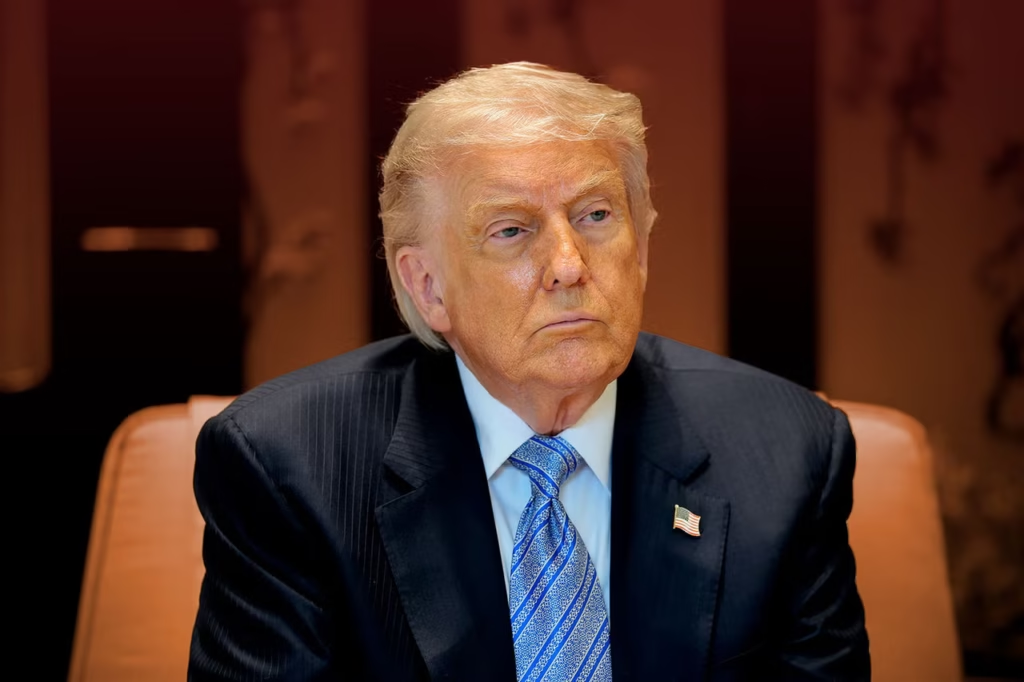
South Korean President Lee Jae Myung acknowledged Tuesday that many South Koreans ‘remain baffled and concerned’ about Trump’s abrupt order to substantially reduce joint military exercises, according to NPR. This is a significant diplomatic escalation from South Korea’s Blue House position of yesterday — which used the managed language of ‘close coordination’ with Washington. A sitting allied head of state publicly acknowledging that his country is ‘baffled’ by a US military decision is not routine diplomatic language.
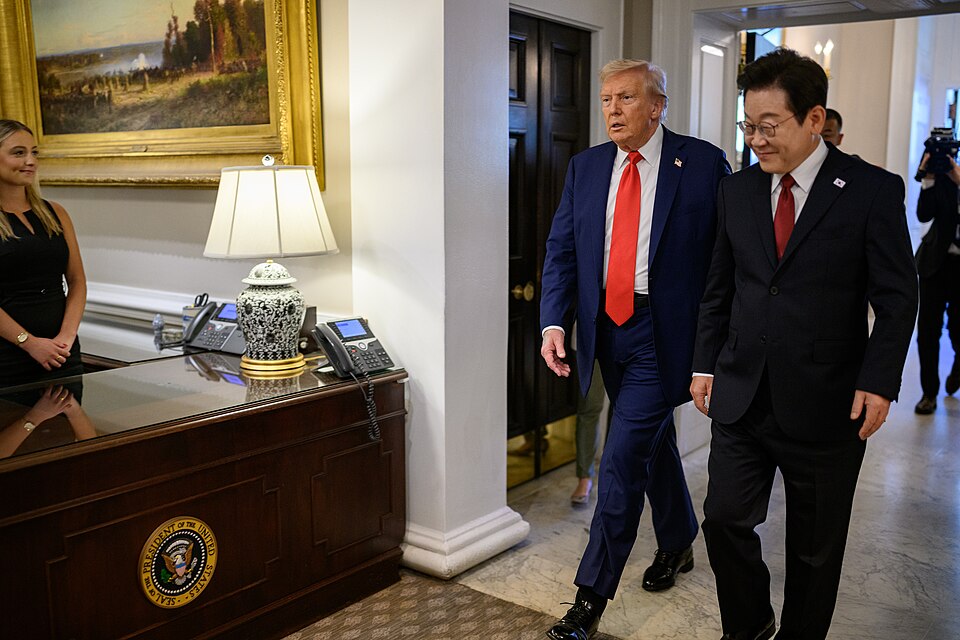
“BAFFLED AND CONCERNED” — TRANSLATING THE DIPLOMATIC REGISTER
Presidential statements about alliance partners are calibrated with extreme precision. ‘Baffled and concerned’ — attributed to the South Korean public and South Korean government simultaneously — is the diplomatically acceptable version of what, in private channels, is almost certainly something stronger. Presidents of US-allied countries do not publicly call US military decisions ‘baffling’ unless the private communication has failed to resolve the problem and a public statement is the only remaining avenue for signaling displeasure.
The shift from yesterday’s ‘close coordination’ (Blue House language, August 18) to today’s ‘baffled and concerned’ (President Lee’s language, August 19) represents a 24-hour escalation in South Korea’s public expression of displeasure. The direction is clear: South Korea is not accepting the drill reduction quietly.
WHAT THIS MEANS FOR THE ALLIANCE
The US-South Korea alliance has survived prior periods of Trump-era tension, including the 2018-2019 drill suspensions and the 2019 burden-sharing negotiations in which Trump demanded South Korea pay five times more. But each instance of public allied displeasure creates a domestic political record in South Korea: the US is an ally that sometimes makes decisions unilaterally and without adequate consultation. That record accumulates.
South Korea has a specific domestic political dimension that compounds this: its own progressive political tradition has argued for greater strategic autonomy from the US. President Lee’s ‘baffled and concerned’ language, while not endorsing strategic autonomy, provides political space for that argument in South Korean domestic politics. An ally that is publicly baffling its partners is an ally whose partners are more open to arguments for independence.
When the head of state uses the word ‘baffled’ about a decision by his closest ally, he is telling you the private conversations have not worked. That is the specific escalation in that single word.
THE NORTH KOREA LAUNCH CONTEXT
President Lee’s ‘baffled and concerned’ statement arrives the day after North Korea launched two ballistic missiles immediately preceding the scaled-back Ulchi Freedom Shield exercise (ONYX August 18 Section B Story 15). A South Korean president who is baffled by the drill reduction is also a South Korean president who watched North Korea fire missiles on the eve of the reduced exercise. The North Korean launches did not produce a return to full-scale exercises; they produced a presidential statement of bafflement.
| CONFIDENCE: HIGH | President Lee Jae Myung ‘baffled and concerned’ statement is from NPR confirmed reporting. Blue House August 18 ‘close coordination’ language is from ONYX August 18 Section B Story 18. North Korea launches are from ONYX August 18 Section B Story 15. |
SOURCES
▸ NPR — South Korean President Lee Jae Myung “baffled and concerned” statement, August 19, 2026