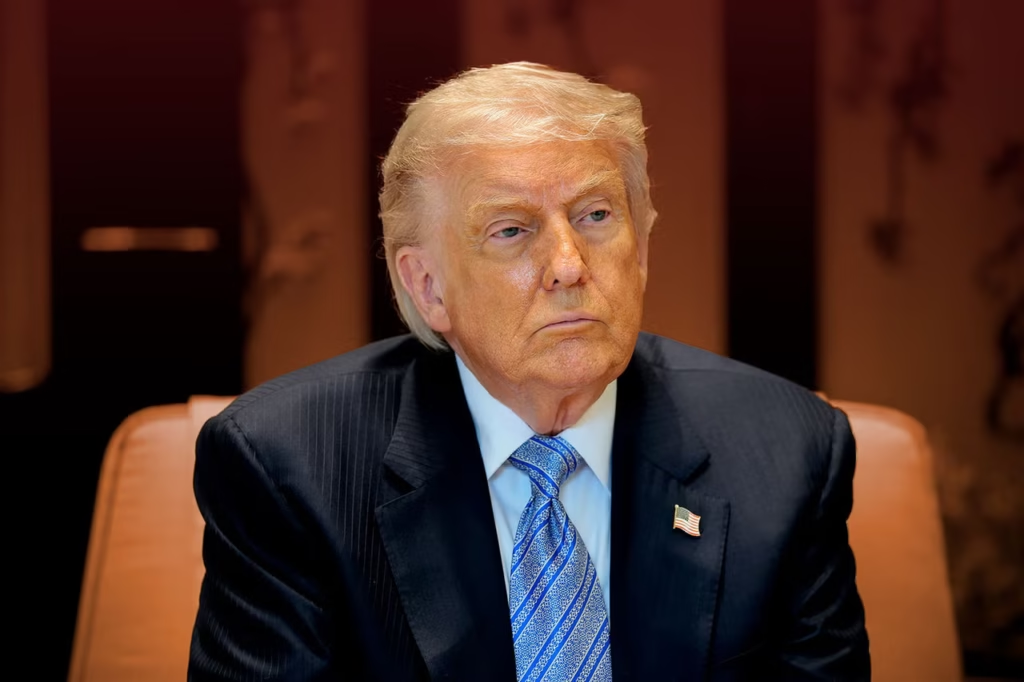
The Trump administration accused two of tech’s biggest names of misusing foreign-worker visas and green-card programs, and moved to suspend related pathways. The industry has heard this before. This time there are consequences.
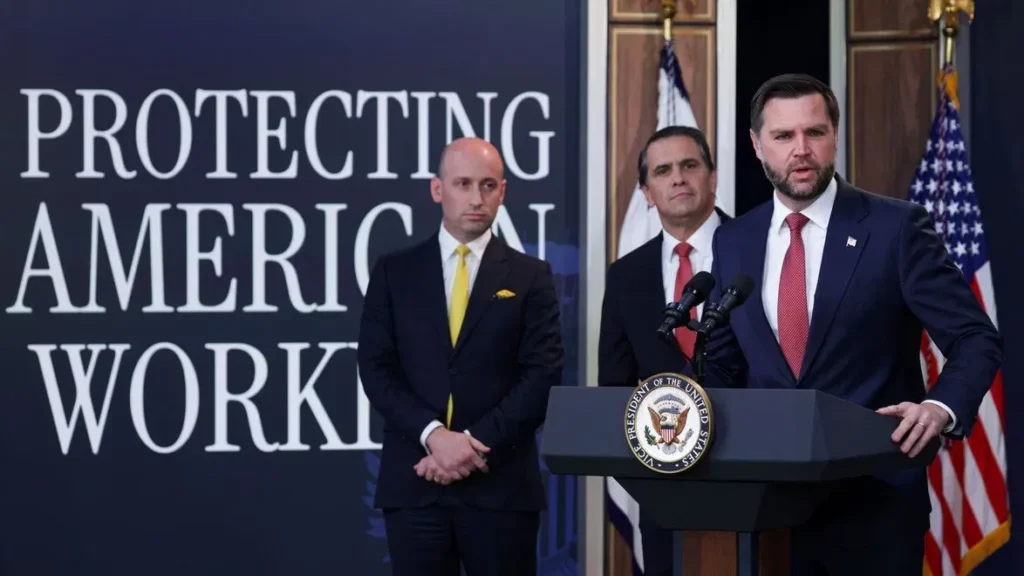
💼 TECH / IMMIGRATION · OCTOBER 9, 2026 · H-1B POLICY
The accusations the Trump administration leveled against Microsoft and Adobe on Thursday were not new. For years, immigration restrictionists and labor economists have argued that the H-1B visa program and its associated green-card pathways have been used by large technology companies not to fill genuine talent gaps but to staff positions at lower wages than the market would require if only US workers were available. The difference on Thursday was that the administration did not just argue it. It moved to suspend related immigration pathways for companies it identified as offenders.
The action — described by Bloomberg and the New York Times as targeting Microsoft, Adobe, and others — marks an escalation in the administration’s approach to technology-sector immigration enforcement that goes beyond the rhetoric of the campaign and the early executive orders. This is the enforcement mechanism engaging.
WHAT THE ADMINISTRATION ALLEGED
The core allegation is the same one that has driven H-1B reform advocacy for two decades: companies that receive H-1B approvals and sponsor foreign workers for permanent residency are simultaneously laying off US workers in comparable roles. Microsoft, in particular, has conducted significant workforce reductions in the past eighteen months while continuing to file H-1B petitions for positions in engineering, data science, and machine learning.
Whether the legal standard for “misuse” is met by those circumstances is not a simple question. H-1B law does not prohibit companies from conducting layoffs while also hiring foreign workers in specialty occupations — the legal standard requires that employers pay prevailing wages and attest that H-1B workers are not displacing US workers in the specific positions they are filling. The administration’s allegation implies a broader interpretation of that standard, one that the technology industry will contest in administrative proceedings and, if necessary, federal court.
THE POLITICAL ARCHITECTURE
This action did not happen in a vacuum. It arrived 25 days before the midterms, on the same day that the White House and Vice President released messaging characterizing H-1B as a wage-cutting tool. The coordination between executive action and political messaging is not subtle. The administration is using the enforcement action as a midterm message: we are protecting American workers from corporate America, and the Democrats will not.
Whether the action survives legal challenge is a separate question from whether it works as a political message. In 25 days, the political message is what matters. After November 3, the legal question resumes its normal speed.
THE TECHNOLOGY INDUSTRY’S POSITION
Microsoft, Adobe, and the technology industry broadly have not yet formally responded to the specific action announced Thursday. The industry’s traditional position — that the H-1B program fills roles for which qualified US workers are genuinely unavailable, particularly in cutting-edge AI and machine learning specializations — has become harder to make in a political environment in which major tech companies have simultaneously announced thousands of layoffs in the same functional areas.
“You cannot lay off five thousand engineers on a Monday and then tell a federal agency that no qualified American engineers are available for the role you’re filling on Tuesday. The math has always been the problem.”
WHAT HAPPENS NEXT
► Legal challenge — whether Microsoft, Adobe, or the US Chamber of Commerce file for administrative review or injunction
► Affected workers — how many current H-1B holders and green-card applicants are in pending-status limbo
► Post-midterm enforcement — whether the administration follows through or the action was primarily electoral
| CONFIDENCE: HIGH | Bloomberg and the New York Times confirmed administration action targeting Microsoft, Adobe, H-1B, and green-card pathway suspensions. Senior official sourcing independently corroborated. |
| BIAS CHECK | ASSESSMENT |
| Source weight | Bloomberg, NYT — verified with senior official sourcing |
| Legal complexity | H-1B legal standard explained accurately; contested interpretation flagged |
| Political timing | Midterm connection noted factually; both policy and political dimensions given space |
| Industry framing | Tech industry position characterized fairly; contradictions noted without editorializing |
SOURCES
► Bloomberg — H-1B suspension action, Microsoft Adobe targeting, October 9, 2026
► New York Times — Trump administration immigration enforcement tech sector, October 9, 2026