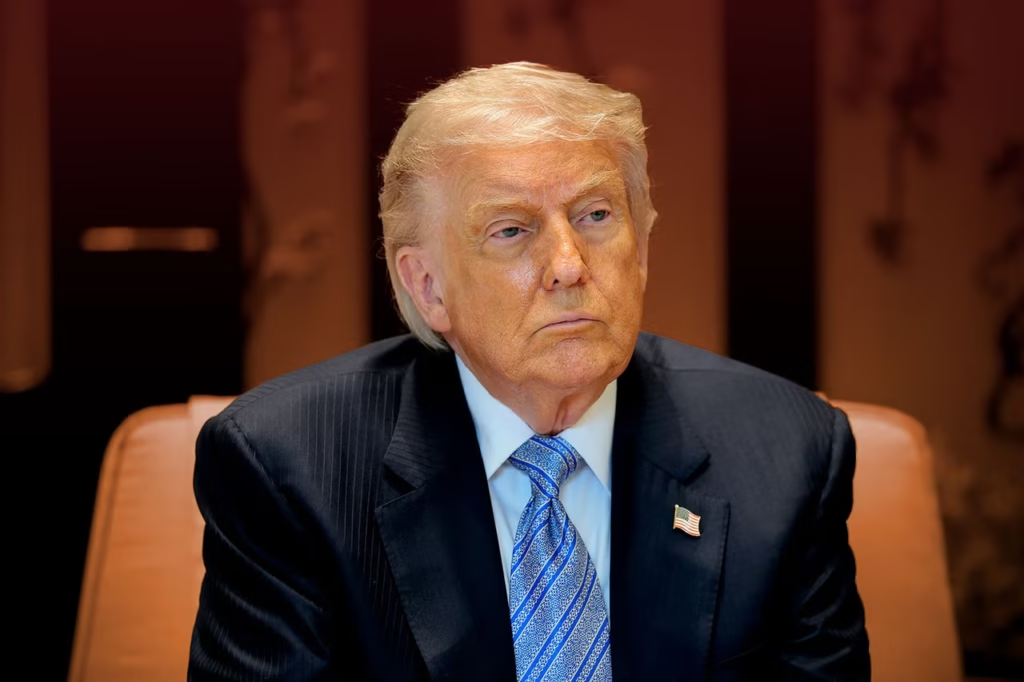
Trump reiterated that preventing Iran from obtaining a nuclear weapon remains the war’s top priority, according to CNN. Advisers within the administration reportedly view keeping global oil prices low as an equally or more important strategic priority — a framing that ‘undercuts’ the nuclear-first position according to CNN’s characterization. The internal disagreement is analytically significant because the two objectives can require different diplomatic approaches: a nuclear-first strategy prioritizes the nuclear dialogue’s second session; an oil-prices strategy prioritizes the ceasefire’s durability.
WHY THE TWO OBJECTIVES TENSION
A nuclear-first strategy accepts that Hormuz might close again — and oil prices spike again — if the diplomatic outcome requires allowing Iran to retain some enrichment capability that is monitored rather than eliminated. The acceptable tradeoff: nuclear cap + monitoring = ceasefire extension, even if oil prices remain slightly elevated because the deal is imperfect.
An oil-price-first strategy accepts that Iran might enrich toward weapons capability as long as Hormuz stays open and oil prices stay low. The acceptable tradeoff: Hormuz open + cheap oil = political win, even if Iran’s nuclear program continues developing under the cover of the monitoring framework.
These are genuinely different strategies with genuinely different endpoints. The nuclear dialogue’s second session will need to navigate this internal US disagreement if it is to produce a durable framework.
THE CONSISTENCY WITH KNOWN DYNAMICS
The reported internal disagreement is consistent with ONYX’s documented observation that Bessent’s ‘unprecedented measures’ announcement (August 14) was made simultaneously with the first nuclear dialogue session. An administration genuinely committed to nuclear-first diplomacy does not announce ‘unprecedented’ financial pressure on the day its nuclear diplomats are sitting down with Iran. The simultaneity suggests the nuclear and economic tracks are not fully coordinated within the US government.
Nuclear-first means accepting some oil price cost for a better nuclear outcome. Oil-price-first means accepting some nuclear risk for cheaper oil. The administration is reportedly running both strategies at once, which means it is running neither.
WHAT HAPPENS NEXT
▸ Second nuclear dialogue session — the specific proposals Iran receives will reveal which objective the US is actually prioritizing
▸ Bessent ‘unprecedented measures’ implementation — if announced, it will clarify whether economic pressure is the primary tool or a fallback
▸ October 6 (Day 60) — the two strategies produce different answers to whether the deal should be extended
| CONFIDENCE: HIGH | Trump nuclear-weapon top priority statement and internal adviser disagreement characterization are from CNN confirmed reporting. Nuclear-vs-oil strategy tension analysis is ONYX editorial, clearly labeled. |
SOURCES
▸ CNN — Trump Iran nuclear priority and adviser disagreement, August 2026