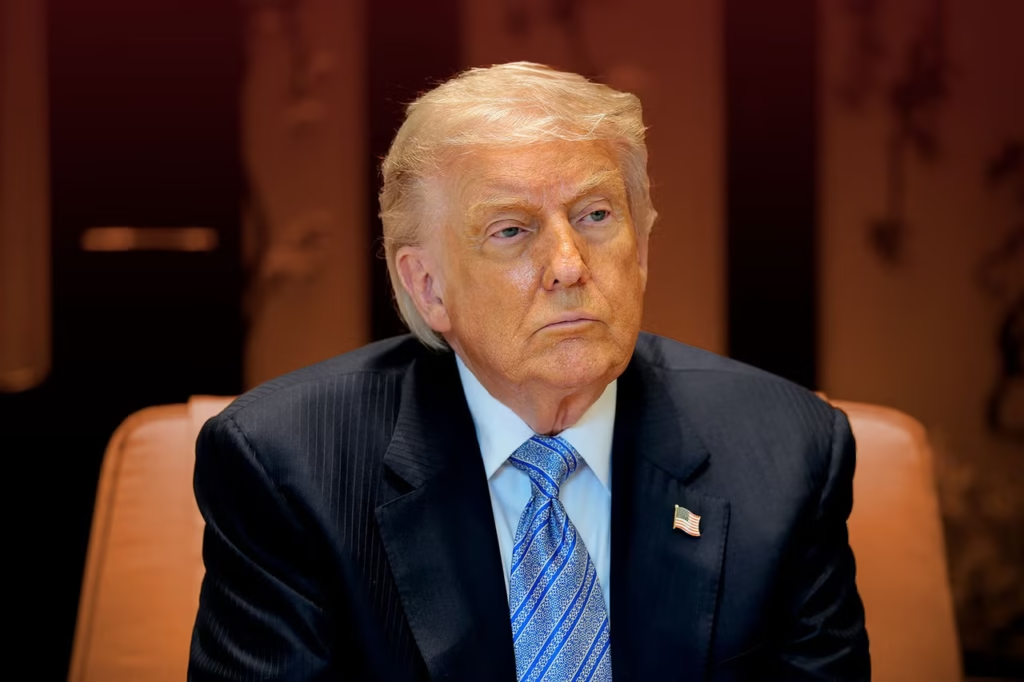
The President announced Russia would supply hundreds of thousands of tons of diesel to ease fuel prices before November. Ukraine said it was funding the war. Analysts questioned whether it would move prices at all.
🇺🇸 WASHINGTON / KYIV · OCTOBER 10, 2026 · TRUMP-PUTIN
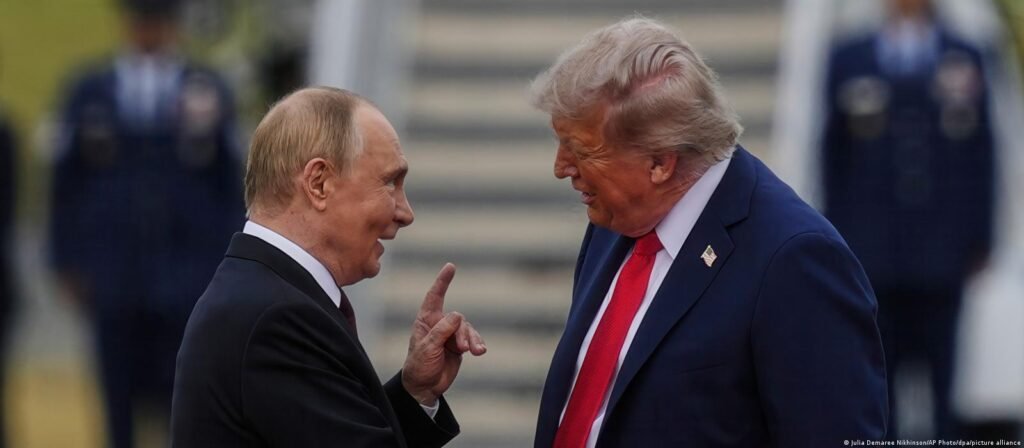
There are weeks in American foreign policy when the news arrives in a sequence so compressed that each story seems to crowd the previous one out before it has been fully absorbed. This was one of those weeks. Twenty-four hours after Russian forces killed thirty civilians on Ukrainian buses, and less than a week after the Iran-linked naval operations that kept the USS Abraham Lincoln at sea for a near-record deployment, President Trump announced that following a call with Vladimir Putin, Russia would supply large volumes of diesel fuel to the United States — hundreds of thousands of tons immediately, with more to follow — to help ease high American fuel prices ahead of the November midterm elections.
The announcement was made by Trump directly. The justification was explicit: American fuel prices are high, midterms are 25 days away, and Russia has diesel. The geopolitical context in which this deal was struck — an ongoing war in Ukraine, a sanctions regime that most of America’s allies still consider central to its deterrence value, and a week in which Russian strikes killed dozens of Ukrainian civilians — was not the framing Trump chose to lead with.
ZELENSKY’S RESPONSE
Ukrainian President Volodymyr Zelensky did not wait to respond. He called the deal “not fair and not honest,” described it as “a gift to Putin,” and said it directly undermines peace efforts by signaling to Moscow that the United States’ economic pressure on Russia has limits that electoral calendars will override.
The specific mechanism Zelensky described is worth taking seriously. The sanctions regime on Russian energy exports has imposed real costs on the Russian economy, though those costs have been distributed unevenly and have proven less immediately decisive than early Western projections suggested. A US-Russia diesel agreement — even a bilateral, limited-volume one — signals something to the global market about the durability of that sanctions framework. It signals that when American domestic economic interests conflict with the sanctions architecture, the sanctions yield.
THE PRICE ARGUMENT
Analysts questioned whether a few hundred thousand tons of Russian diesel would meaningfully move American pump prices, which are shaped by global crude benchmarks, refinery capacity, and distribution networks that a single bilateral supply deal cannot easily alter. The diesel market is distinct from the gasoline market — it matters more for trucking, agriculture, and industrial use than for the passenger vehicles that most Americans drive — but fuel prices are experienced as a single political fact regardless of their constituent parts.
Whether the deal moves prices is almost secondary to whether it moves the political dial. Trump clearly believes it will. Or — equally plausible — he believes the announcement of an agreement with Putin on American fuel costs will signal to working-class voters a seriousness about their household budgets that rivals cannot match, regardless of the deal’s actual price impact. The announcement is the product. The diesel is incidental.
WHAT ALLIES ARE WATCHING
European capitals did not immediately comment on the Trump-Putin diesel deal, but their silence was not the same as indifference. The deal arrives in a week when the British Foreign Minister was in Kyiv announcing new Russia sanctions and when EU partners were coordinating on sanctions packages. A US-Russia bilateral economic agreement — struck without consultation with NATO allies, framed entirely around American electoral needs — is not a small development for the transatlantic sanctions architecture that Western governments have spent two years building.
“The President made a fuel deal with the leader of a country currently killing Ukrainian civilians. He framed it as a victory for American consumers. Both things are true simultaneously. That is the policy.”
WHAT HAPPENS NEXT
► Deal mechanics — specific terms, delivery timeline, and what Russian entity supplies the diesel
► Allied reaction — whether EU and UK partners formally object or stay quiet
► Sanctions review — whether the deal creates a legal or regulatory complication under existing Russia sanctions
► Price impact — whether pump prices move in response to the agreement or the announcement
► Ukraine aid — whether Zelensky uses the deal to pressure allies for compensatory military support
| CONFIDENCE: HIGH | Axios, CNN, NYT, Guardian, CNBC, Reuters all confirmed Trump-Putin call, diesel supply agreement, and Zelensky reaction. Multi-outlet consensus on the deal’s announcement and political framing. |
| BIAS CHECK | ASSESSMENT |
| Source weight | Axios, CNN, NYT, Guardian, CNBC, Reuters — maximum-tier multi-outlet confirmation |
| Trump framing | Stated justification reported accurately; electoral timing noted as stated by Trump, not inferred |
| Zelensky framing | Quotes confirmed across multiple outlets; characterized as stated, not endorsed |
| Price analysis | Analyst skepticism accurately characterized; no editorial position on the deal’s value |
SOURCES
► Axios — Trump-Putin diesel deal announcement, October 10, 2026
► CNN — Deal terms and Zelensky reaction, October 10, 2026
► The New York Times — Sanctions implications and allied reaction, October 10, 2026
► The Guardian — Ukraine and European response, October 10, 2026
► Reuters — Deal mechanics and market analysis, October 10, 2026
► CNBC — Diesel price impact analysis, October 10, 2026