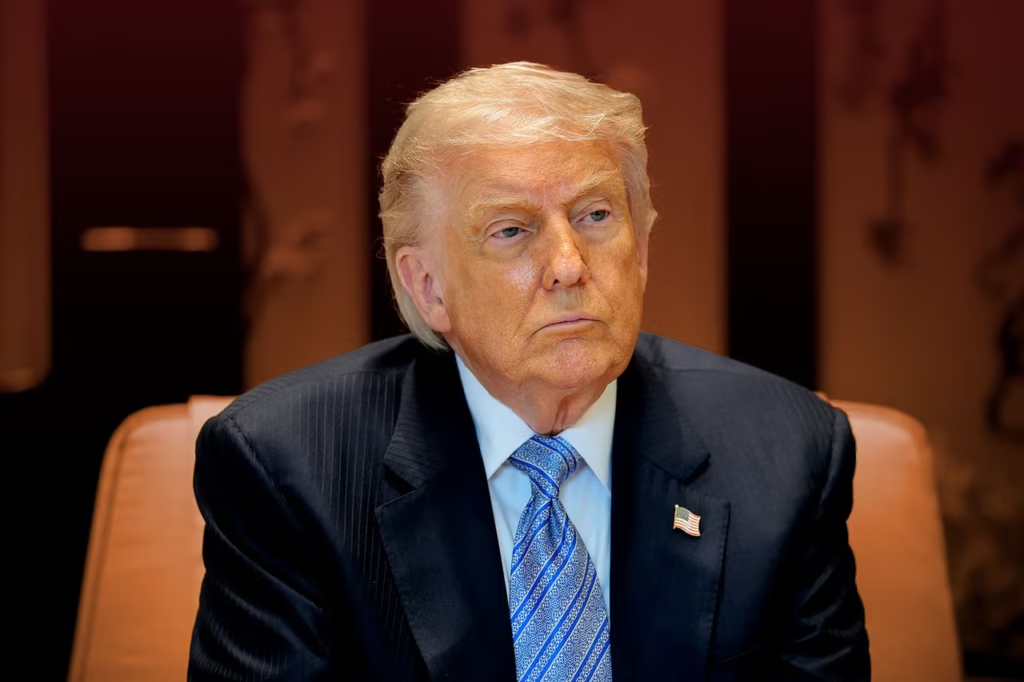
President Trump ordered the Pentagon to ‘substantially reduce’ annual joint military exercises with South Korea, describing the drills as sending ‘a signal that is totally inappropriate and hostile’ to North Korea. Trump called North Korea ‘unthreatening and respectful’ during his time in office and tied the decision to South Korea declining to help with what he described as Iran’s ‘denuclearization.’ The bipartisan response from the Senate Armed Services Committee has been unusually direct. Democrat Jack Reed: the move is ‘inane’ and ‘China and Russia are watching how easily this president abandons America’s allies.’ Republican Thom Tillis: reducing the drills ‘does nothing more than free up thousands of North Korea’s troops to support Putin’s systematic kidnapping, torture, rape and murder of innocent Ukrainian citizens.’
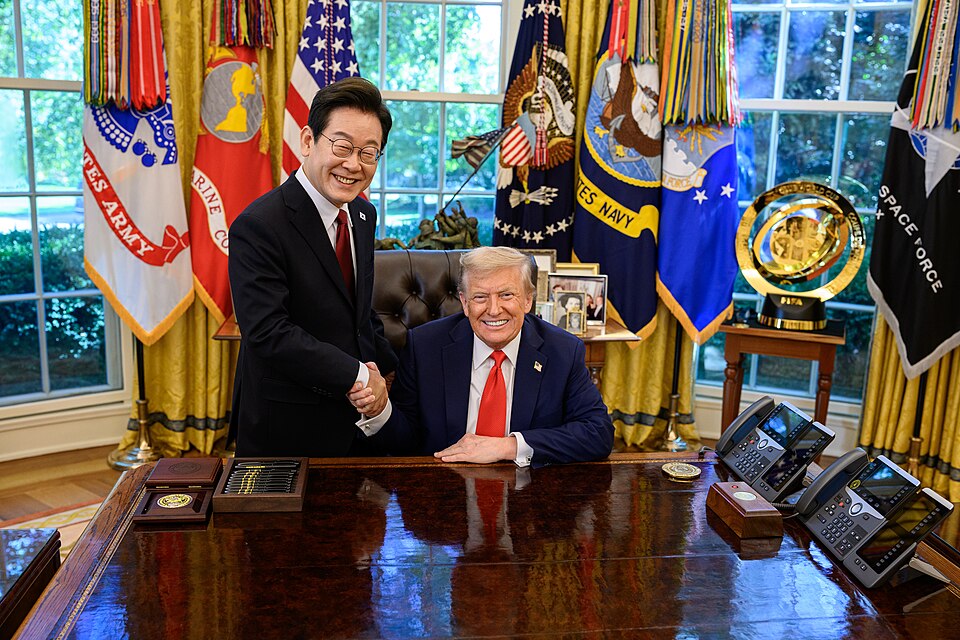
2-MINUTE CONTEXT — WHAT JOINT MILITARY EXERCISES DO
US-South Korea joint military exercises are not symbolic events. They are operational readiness activities that accomplish specific military functions: practicing combined arms operations between US and Korean forces; testing interoperability of communications, logistics, and command systems; developing and refining war plans; training Korean forces in US operational doctrine; and maintaining the credibility of the US defense commitment that deters North Korean aggression.
Reducing these exercises does not reduce the US’s formal treaty commitment to South Korea’s defense. It reduces the practical capability to fulfill that commitment. An alliance whose forces have not trained together recently is less capable of executing a combined defense than one whose forces train continuously. North Korea’s military planning specifically accounts for the interoperability level of US-Korean forces; reducing exercises reduces the operational integration that those plans must contend with.
THE NORTH KOREA-UKRAINE CONNECTION — TILLIS’S SPECIFIC POINT
Republican Senator Tillis’s specific point — that reducing US-Korea exercises frees up North Korean troops for Ukraine — reflects the documented Russia-North Korea military partnership ONYX covered on August 12. North Korea has deployed military personnel to support Russian operations in Ukraine. Those personnel are drawn from the same military forces that US-Korea exercises are designed to deter and contain. Reducing the deterrent pressure on North Korea’s military gives it more operational freedom, including the freedom to continue or expand its Ukraine deployment.
This is not a logical leap. It is a documented operational connection: North Korean troops in Ukraine are possible because North Korea’s military is not fully committed to the Korean peninsula deterrence posture. Reducing US-Korea exercise intensity reduces the perceived threat that requires North Korea’s military focus at home.
“Reducing the drills does nothing more than free up thousands of North Korea’s troops to support Putin’s systematic kidnapping, torture, rape and murder of innocent Ukrainian citizens.”
— Senator Thom Tillis (R-NC), Senate Armed Services Committee
THE SOUTH KOREA CONDITIONALITY PROBLEM
Trump’s stated reason for reducing drills — that South Korea declined to help with Iran’s ‘denuclearization’ — is a significant framing problem. It suggests the US-South Korea alliance’s military exercises are conditional on South Korea’s support for US policy on entirely separate geopolitical issues. The implication: alliance commitments are transactional, and US defense partners must support US positions on unrelated matters to maintain those commitments.
This framing is strategically dangerous for the specific reason Senator Reed articulates: ‘China and Russia are watching.’ If US alliance commitments can be reduced based on alliance partner non-compliance with US preferences on unrelated issues, every US ally in every theater must assess whether their defense commitment is similarly conditional on their agreement with Washington’s broader foreign policy positions.
WHAT THE EXERCISES ACTUALLY COVER
| EXERCISE TYPE | WHAT IT DEVELOPS |
| Combined command post exercises | US-Korean command and control interoperability under simulated wartime conditions |
| Live-fire training | Combined arms coordination between US and Korean ground, air, and naval forces |
| Maritime exercises | US-Korean naval coordination for sea control and anti-submarine warfare in the Yellow Sea and Sea of Japan |
| Air exercises | Combined air superiority, strike, and close air support operations over the peninsula |
| Logistics exercises | Supply chain and sustainment operations for a sustained combined military campaign |
| OPLAN development | Refining and updating operational plans for various North Korean contingencies |
THE CHINA AND RUSSIA SIGNAL
Reed’s ‘China and Russia are watching’ observation is the specific strategic concern that extends beyond the Korean peninsula. China is watching what happens when a US ally declines to support a US policy position on an unrelated issue and the US reduces its defense commitment to that ally. This creates a template: if China can convince US allies not to support specific US positions, those allies’ defense commitments become vulnerable to reduction. This is exactly the leverage China seeks in its relationships with countries that are simultaneously US-aligned and economically dependent on China.
WHAT HAPPENS NEXT
▸ Pentagon implementation — how substantially the exercises are actually reduced will be determined by the specific orders issued to US Forces Korea
▸ South Korean government response — Seoul’s public position on the drill reduction will signal how much they are willing to absorb without formal protest
▸ North Korea’s reaction — Kim Jong Un will likely characterize the reduction as a US acknowledgment of North Korean demands; whether he offers any reciprocal concessions is the specific test of whether the Trump-Kim relationship has any strategic value
▸ Japan’s assessment — Japan is watching US-Korea alliance reliability as a proxy for US-Japan alliance reliability; the Pacific carrier gap (ONYX August 16) compounds this concern
| CONFIDENCE: HIGH | Trump order, ‘substantially reduce’ characterization, Iran denuclearization conditionality are from confirmed reporting. Reed ‘inane’ and ‘China and Russia watching’ quote is from confirmed reporting. Tillis North Korea-Ukraine connection quote is from confirmed reporting. Exercise functions analysis is from established military doctrine. |
| ⚖️ BIAS CHECK — WHO IS SAYING WHAT | |
| Trump Administration | Framing as diplomatic engagement with North Korea; does not engage with the specific military readiness consequences |
| Senate Armed Services Committee (Reed, Tillis) | Bipartisan; both are Senate Armed Services members with specific institutional equities in alliance maintenance |
| North Korea / Kim Jong Un | Will characterize as diplomatic victory; the reduction validates their position that exercises are a threat |
| China | Benefits from reduced US-Korea exercise intensity; watches the precedent for conditioning alliance commitments |
| South Korea | Must balance the US alliance relationship with its own security assessment; a drill reduction against their interests creates a domestic political problem |
SOURCES
▸ Confirmed reporting — Trump drill reduction order, conditioning on Iran, August 2026
▸ Sen. Jack Reed statement — “inane,” “China and Russia watching” (Senate Armed Services)
▸ Sen. Thom Tillis statement — North Korea-Ukraine connection (Senate Armed Services)
Q: Has Trump done this before?
A: Yes. In 2018-2019, Trump suspended joint military exercises with South Korea following his summit with Kim Jong Un at Singapore, describing them as expensive “war games.” Those exercises were eventually resumed. The pattern is similar but arrives in a more complex geopolitical environment given the Russia-North Korea military partnership now in place.
Q: What does “substantially reduce” mean specifically?
A: Not yet specified in available reporting. The specific reduction could range from eliminating certain exercise categories entirely to reducing their scale, frequency, or duration. The Pentagon’s implementation guidance will determine the practical effect.
Q: What did South Korea actually decline to do on Iran?
A: Not specified precisely in available reporting. The Trump administration’s characterization is that South Korea declined to help with Iran’s “denuclearization” — which may refer to South Korea’s lack of support for US pressure on Iran or its trade relationships with Iran that continue despite US sanctions. The specific ask and refusal are not detailed in available reporting.