
NPR confirmed via Reuters reporting and an anonymous US official that the Army has used up most of its long-range precision strike missiles — including Tomahawks, Precision Strike Missiles (PrSMs), and Army Tactical Missile Systems (ATACMS) — during the five-month Iran war. Stockpiles are expected to take years to replenish. This is separate from, and in addition to, the Patriot interceptor shortage reported yesterday. America is simultaneously running low on both its primary missile defense interceptors and its primary long-range strike weapons — during a war that, by military budget comparison, it was supposed to be winning easily.
2-MINUTE CONTEXT — WHAT ARE THESE MISSILES AND WHY ARE THEY DIFFERENT FROM PATRIOTS?
The Patriot shortage reported yesterday involves defensive missiles — interceptors designed to shoot down incoming threats. Today’s story is about offensive weapons — the missiles the US fires at Iranian targets. They are different systems serving different functions, and the simultaneous depletion of both categories is a compounding vulnerability.
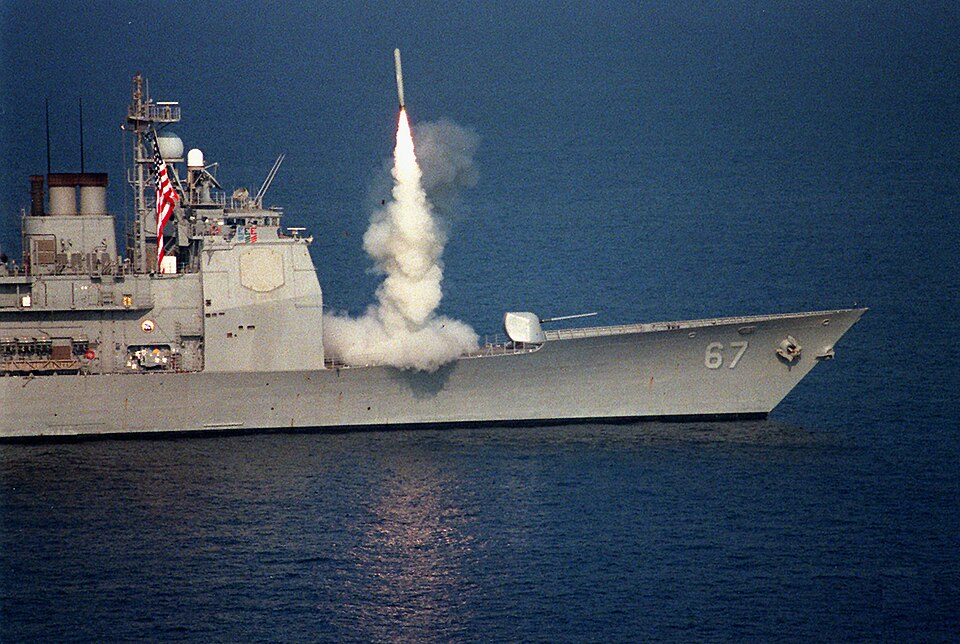
Tomahawk cruise missiles are the US’s primary long-range land-attack weapon. They can be fired from Navy ships and submarines and are designed to strike fixed targets — command centers, infrastructure, airfields — with precision from hundreds to over 1,000 miles away. They are slow (subsonic) but extremely accurate and carry a significant warhead.
The Precision Strike Missile (PrSM) is a newer, longer-range replacement for ATACMS that can strike targets beyond 500 kilometers. ATACMS (Army Tactical Missile System) is the older long-range ballistic missile that has been widely used in Ukraine and is now being consumed in Iran operations. Both are land-based systems fired from HIMARS and M270 launchers.
Together, these systems represent America’s ability to strike deep into Iranian territory from ships and ground-based launchers without risking aircraft. Their depletion means that sustained long-range strike operations against Iran would require increased use of manned aircraft — at higher risk to pilots and with reduced standoff distance.
THE NPR CONFIRMATION — AND ITS SIGNIFICANCE
NPR’s Mary Louise Kelly confirmed the Reuters report that US Army long-range precision missile stockpiles have been “almost depleted” during the Iran war, and confirmed the Patriot figure as well: “from nearly 2,400 to between 700-850, and I’m told by a US official those numbers from CSIS are pretty accurate.” The NPR confirmation matters because it represents a named major news organization, citing its own US official source, validating figures that the Defense Department has not officially confirmed.
Senior military officials have insisted the US “currently has enough offensive weapons to meet its immediate needs” — a careful formulation that leaves considerable room for what “immediate” and “enough” mean. The distinction between “enough for today” and “enough for a sustained conflict” or “enough if Iran escalates” is not addressed in that formulation.
“From nearly 2,400 to between 700-850, and I’m told by a US official those numbers from CSIS are pretty accurate.”
— NPR’s Mary Louise Kelly — on the confirmed Patriot stockpile depletion, corroborating CSIS figures
THE COMPOUNDING PROBLEM — BOTH CATEGORIES SIMULTANEOUSLY
| Patriot interceptors remaining 700–850 down from ~2,400 pre-war (NPR/CSIS confirmed) | Long-range strike missiles MOST GONE Tomahawk, PrSM, ATACMS — almost depleted per US official |
| Time to replenish both YEARS official characterization — no specific timeline given | Monthly US defense spend (est. )$12B+ vs. Iran’s total annual defense budget ~$10B |
| Iran’s military budget vs. US <10% Iran spends a fraction of what the US spends on defense | Months of active conflict 5 February 28 – August 6, 2026 |
THE STRATEGIC IRONY — FIGHTING AN ASYMMETRIC ADVERSARY
Iran’s annual defense budget is approximately $10 billion. The United States spends roughly $900 billion annually on defense — 90 times more. By every conventional military metric, the US should be able to sustain this conflict indefinitely without running low on anything.
The reason this is not happening is asymmetric warfare economics. Iran does not need to match US military capacity dollar for dollar. It needs only to fire weapons at a rate that exceeds the US’s ability to replenish defensive interceptors and offensive strike missiles. Iranian ballistic missiles cost roughly $500,000–$2 million each. PAC-3 MSE Patriot interceptors cost $4 million each. ATACMS cost roughly $1–1.5 million each. Tomahawks cost $1.9–2.6 million each.
Iran fires one $1 million ballistic missile. The US fires two $4 million Patriot interceptors to stop it. Iran’s spending: $1 million. US spending to defend: $8 million. At scale, across five months, this arithmetic produces the depletion figures now being confirmed.
Iran spent roughly $1 million firing a missile. America spent $8 million stopping it. Multiply that by thousands of incidents over five months. That is the stockpile depletion arithmetic.
| 🔍 ONYX REALITY CHECK VERDICT: TRUE WHY? NPR confirmation of long-range precision missile depletion is from Mary Louise Kelly citing an anonymous US official — this is credible, documented journalism. “Almost depleted” is the official’s language as reported. Senior officials’ “currently enough for immediate needs” formulation is from on-record DoD statements. The asymmetric warfare cost arithmetic is ONYX analysis of documented public figures, clearly labeled as such. |
WHY THIS MATTERS
For the current conflict: if Iran escalates — whether in response to the canceled bombing campaign, in response to Gulf state diplomatic pressure, or in pursuit of its own strategic objectives — the US will be responding with a depleted strike arsenal. The options available to US commanders today are fewer than the options available in February.
For deterrence: deterrence is a function of capability and credibility. If adversaries — not just Iran but also Russia, China, and North Korea — can calculate that five months of conflict has depleted US precision strike stockpiles, they update their own risk assessments accordingly. The disclosure of these figures, even through investigative reporting rather than official channels, changes the strategic calculus of every country watching.
For the defense industrial base: this depletion, like the Patriot shortage, reflects a production model built around peacetime assumptions. The Army does not produce Tomahawks at all — that’s a Navy/manufacturer relationship. ATACMS and PrSM production is run through Lockheed Martin. Neither production line was sized for sustained wartime consumption.
For the public: Americans are being told the war is going well. The stockpile figures suggest that the operational reality is more complicated than the public messaging.
POLITICAL IMPACT
▸ Congressional defense committees — expect urgent classified briefings followed by public hearings on production ramp requirements
▸ DoD / Hegseth — the “manufactured story” defense from yesterday is even harder to sustain now that NPR has confirmed both the Patriot and long-range strike depletion from separate US official sources
▸ Defense industry (Lockheed, Raytheon, Boeing/RTX for Tomahawks) — production ramp justification; billion-dollar contract acceleration expected
▸ Iran — if their own intelligence confirms this information, it changes their negotiating posture heading into any ceasefire deal
▸ Russia — is watching the depletion of ATACMS specifically, which it knows well from Ukraine operations
WHAT HAPPENS NEXT
▸ Watch for a DoD budget supplemental specifically addressing missile production ramp — this is now politically unavoidable
▸ Senate Armed Services Committee will demand classified briefings — watch for chair and ranking member joint requests
▸ Any Iran ceasefire deal this week takes on a different character knowing US long-range strike capacity is depleted — a deal becomes more attractive to Washington than it would otherwise be
▸ Production ramp announcements from Lockheed (ATACMS/PrSM) and Raytheon/BAE (ATACMS components) expected within weeks
| CONFIDENCE: HIGH | NPR confirmation via Mary Louise Kelly is documented, named journalism citing a US official. “Almost depleted” characterization is from that source. Patriot figures (700-850) are cross-confirmed by CSIS and NPR US official source. Asymmetric cost arithmetic is from documented public defense procurement records. |
| ⚖️ BIAS CHECK — WHO IS SAYING WHAT | |
| DoD / Hegseth | Senior officials maintaining “enough for immediate needs” — careful framing that is not a denial of depletion |
| NPR / Reuters | Credible investigative journalism confirming the figures through independent sourcing |
| Congressional Democrats | Will use these figures in defense oversight hearings; demanding production ramp and accountability for the depletion rate |
| Congressional Republicans (defense hawks) | Alarmed; calling for production increase; not defending the depletion but managing the political exposure |
| Iran | Will factor confirmed US strike missile depletion into its strategic calculus; may become more emboldened or may see a deal as more attractive from a position of relative strength |
| Russia | Paying close attention to ATACMS depletion specifically — directly relevant to their calculus on Ukraine |
| Defense Industry | Publicly expressing commitment to ramp; privately preparing proposals for accelerated contracts |
SOURCES
▸ NPR — Mary Louise Kelly confirmation of long-range precision missile depletion, August 6, 2026
▸ Reuters — Army long-range missile stockpile reporting
▸ Anonymous US official — “almost depleted” characterization
▸ CSIS — Patriot figures (2,400 → 700-850) confirmed via NPR
▸ DoD senior officials — “enough for immediate needs” formulation (on record)
▸ Defense procurement records — Tomahawk ($1.9–2.6M), ATACMS ($1–1.5M), Patriot PAC-3 MSE ($4M) costs
QUESTIONS YOU MAY STILL HAVE
Q: What exactly is “almost depleted”? Is zero?
A: No — “almost depleted” means the stockpile has fallen to a level where sustained operations are constrained. For long-range precision strike missiles, operational planners typically want a reserve for contingencies, training, and ally commitments. Being at the low end of that reserve is what the official is describing.
Q: Can the US buy Tomahawks from allies?
A: Tomahawks are US-manufactured (Raytheon/BAE joint production) and are not in other countries’ inventories in significant quantities. Australia operates Tomahawks but has its own inventory requirements. There is no allied stock to draw on meaningfully.
Q: Why didn’t the military anticipate this?
A: This is the core planning failure question. Pre-war stockpile assumptions are calibrated to scenarios. A five-month sustained campaign against Iran clearly exceeded the consumption scenarios in those plans. Whether this reflects intelligence failure (not anticipating the conflict’s duration) or planning failure (not modeling sustained consumption) or procurement failure (not having built larger stockpiles before the conflict) is a question that will drive future oversight hearings.