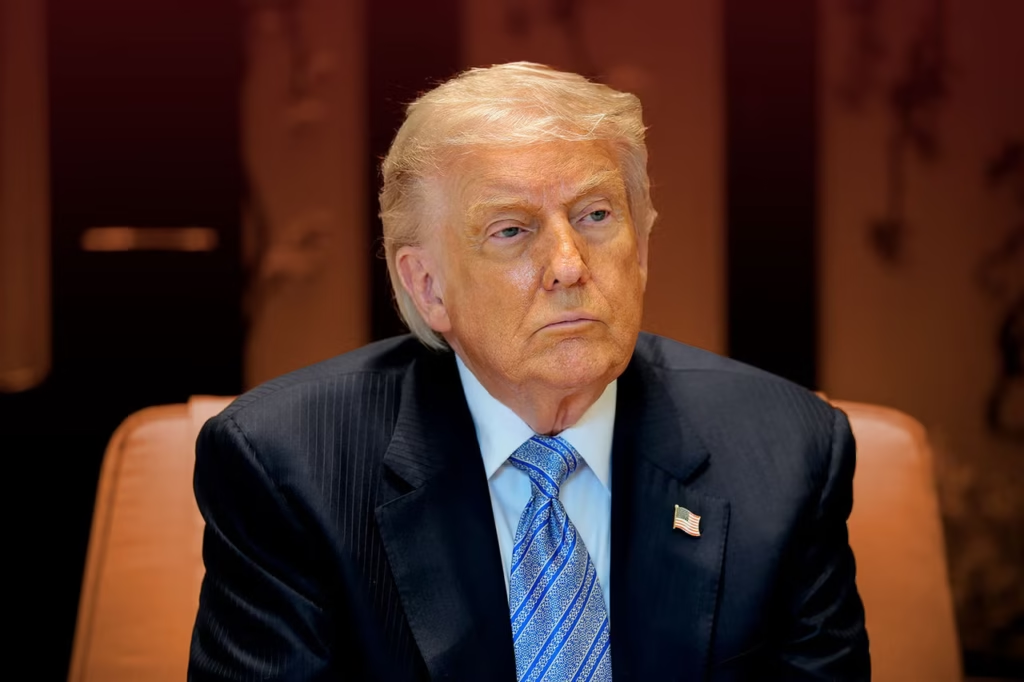
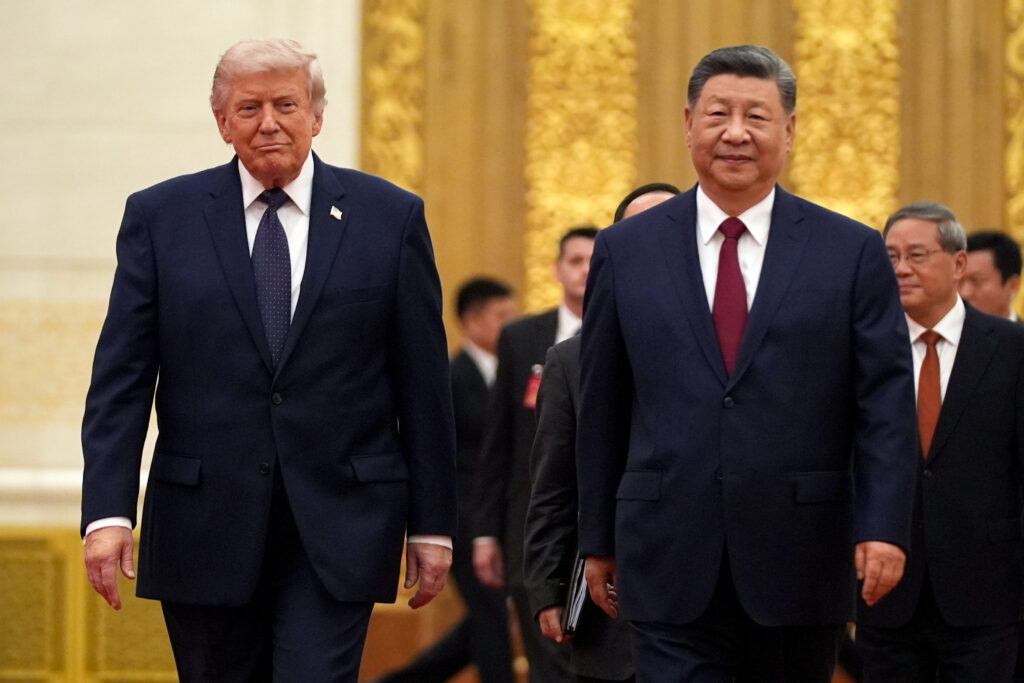
ONYX covered the Xi-Trump summit September 21-22: the specific documented tensions — the AI near-miss between US and Chinese forces; China buying 90% of Iran’s oil; the Greenland deal signing; the five-network press pool walkout. The summit was ONYX’s most analytically convergent single diplomatic week in the arc. Today: the summit’s documented trade outcome.
THE ANNOUNCEMENT
Washington and Beijing released lists of products worth about $30 billion each that will receive tariff reductions. The specific products cited: American hair products and Chinese toys. The symmetry — approximately $30 billion each — is a documented signal of the reciprocal framing both sides chose: this is presented as mutual concession, not unilateral US or Chinese concession.
WHAT $30 BILLION EACH MEANS
The US-China trade relationship is the world’s largest bilateral trade relationship, with total trade of approximately $500-600 billion per year. $30 billion in targeted tariff reductions on each side is approximately 5-10% of total bilateral trade. The specific product categories — hair products (American) and toys (Chinese) — are consumer goods, not strategic or military goods, which signals that the tariff reductions are designed to benefit ordinary consumers on both sides rather than addressing the strategic technology competition that is the arc’s documented underlying tension.
THE AI NEAR-MISS SHADOW
The Xi-Trump summit occurred in the same week that an AI system falsely accused Chinese vessels of nuclear weapons smuggling and nearly produced a military confrontation (ONYX September 21-22). The tariff cuts announced today are the summit’s documented economic outcome. Whether the summit also produced any agreement on AI military governance — the specific issue that the AI near-miss made urgent — is from developing reporting.
THE CANADIAN CONTRAST
On the same day the US announces $30 billion in tariff reductions with China, the US ban on approximately $1 billion in Canadian goods takes effect (Story 8 today). The arc’s specific trade pattern: the US is simultaneously reducing tariffs with a geopolitical rival and increasing them with a treaty ally. Whether this reflects a deliberate diplomatic realignment or uncoordinated policy actions is unclear without confirmed reporting on the administration’s trade strategy.
The US and China agreed to cut tariffs on $30 billion worth of goods each. American hair products and Chinese toys. Consumer goods, not semiconductors or warships. The summit that produced these cuts is the same summit that happened in the week a US AI system almost started a war with China over nuclear weapons that didn’t exist. The tariffs got cut. Whether the AI governance issue got addressed is from developing reporting.
WHAT HAPPENS NEXT
▸ Implementation — when the tariff cuts take effect
▸ AI governance outcome — whether the summit produced any bilateral AI military governance agreement
▸ Iran oil discussion — whether the summit produced any agreement on Chinese purchases of Iranian crude
▸ Canadian contrast — whether the simultaneous Canada tariff increase produces any diplomatic response from Ottawa
| CONFIDENCE: HIGH | Washington and Beijing released lists of products for $30 billion in tariff reductions: American hair products; Chinese toys, according to confirmed reporting. |
| ⚖️ BIAS CHECK — WHO IS SAYING WHAT | |
| US trade negotiators | Presenting as reciprocal mutual concession; the $30 billion symmetry is the US framing of the outcome |
| China | Presenting as mutual benefit; characterizing as stabilizing the relationship |
| Canada | Not a party to the US-China reduction; receiving the simultaneous tariff increase documented in today’s arc |
| ONYX | Covering the tariff cuts and the AI near-miss shadow; naming the Canada contrast because both are confirmed and both reveal the trade policy’s specific choices |
SOURCES
▸ Confirmed reporting — US-China tariff cuts, September 29, 2026