
ONYX covers Wendell Berry’s death with the same care it gave Dolly Parton’s (August 30) and King Harald V’s (August 29). Berry occupied a different public space than both — he was not famous in the pop-culture sense — but his influence on American thought about land, community, work, and ecological responsibility is among the most profound of any American writer in the 20th and 21st centuries. He earned a full accounting.
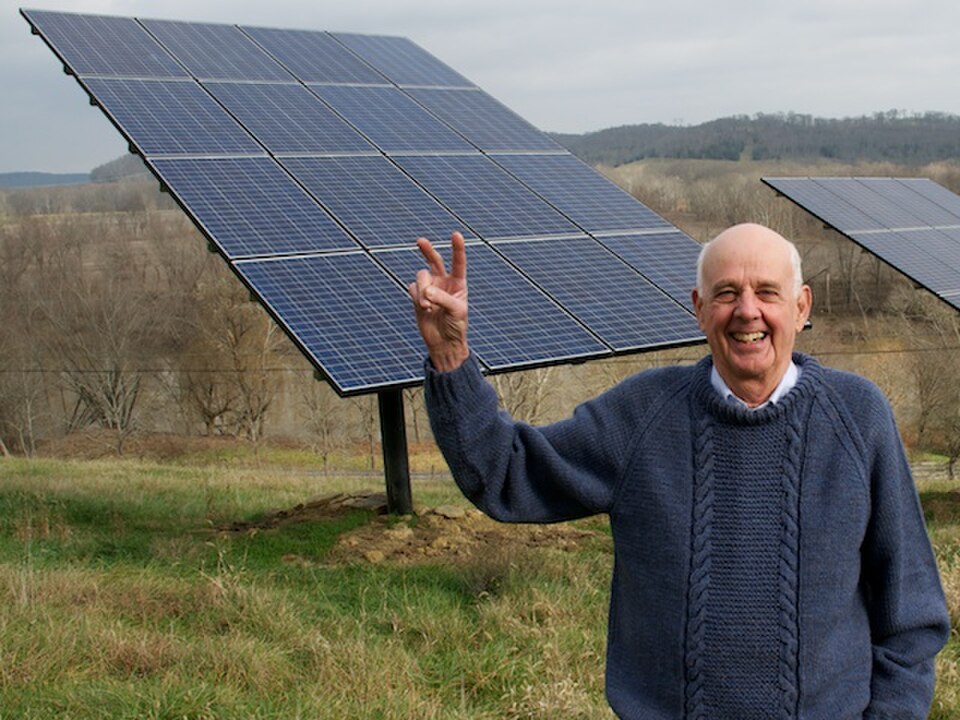
WHO WENDELL BERRY WAS
Wendell Berry was born in 1934 in Henry County, Kentucky. He died at 92. He spent virtually his entire adult life on a small farm in Port Royal, Kentucky, and his writing — poetry, novels, short stories, and essays — emerged from and about that specific place and the community around it.
▸ The farming: Berry farmed with horses rather than tractors for much of his life, not as an affectation but as a considered position on the relationship between technology, scale, and the specific texture of agricultural knowledge that machines displace
▸ The writing: his essay collection ‘The Unsettling of America’ (1977) is among the most influential critiques of industrial agriculture written in the 20th century; his ‘Port William Membership’ fiction series traces multiple generations of a Kentucky farming community from the early 20th century through the present
▸ The activism: Berry testified before Congress, organized against strip mining in Kentucky, and connected environmental advocacy to agrarian community values in a way that reached audiences outside the traditional environmental movement
▸ The honors: National Book Award finalist, National Humanities Medal (from President Obama), Jefferson Lecture in the Humanities
THE SPECIFIC IDEAS
Wendell Berry’s most important ideas, at their core:
▸ The local as the scale of care: Berry argued that the ecological crisis is fundamentally a crisis of people not knowing, loving, or being responsible for the specific places they inhabit; the solution is not global policy but local responsibility
▸ The body and the land: Berry connected the health of the human body to the health of the land that produces food; industrial food production that degrades the land is also degrading the humans who eat its output
▸ Work and meaning: Berry’s writing argues that meaningful work — work that requires skill, produces something real, and connects workers to their community — is a prerequisite for human dignity; industrial labor that severs those connections is degrading
▸ The long marriage of community and place: Berry’s Port William fiction traces what happens to a farming community over a century of economic and technological change; what is lost is not just the farms but the specific forms of knowledge, memory, and mutual obligation that farming communities created
THE REACH OF THE INFLUENCE
Berry’s influence extends across conventional categories. He is claimed by environmental conservatives (agrarianism, localism, critique of industrial scale), by the left (critique of corporate agriculture, community solidarity), by religious communities (stewardship, the body as gift), and by literary readers who care about beautiful prose about specific places. His refusal of ideological categorization is itself part of his significance: he thought from a place, not from a party.
He farmed with horses. He wrote about a specific community in a specific place in Kentucky for 60 years. He argued that knowing and loving a particular piece of land was the beginning of environmental ethics, not an obstacle to it. He was right. The world is specifically diminished by his absence.
THE LEGACY
The specific inheritance Wendell Berry leaves:
▸ The Port William Membership fiction series — one of the most sustained and humane portraits of American rural life in the language
▸ ‘The Unsettling of America’ — still the best single-volume critique of industrial agriculture
▸ The Land Institute, the Rodale Institute, and other agrarian research organizations whose intellectual foundations his work influenced
▸ Generations of writers and farmers who read Berry and chose differently because of it
| CONFIDENCE: HIGH | Wendell Berry death at 92 is from Democracy Now confirmed reporting. Biographical details (1934, Henry County Kentucky, Port Royal, farming with horses, The Unsettling of America 1977) are from established public record. |
SOURCES
▸ Democracy Now — Wendell Berry death at 92, September 2, 2026
Q: What is “The Unsettling of America”?
A: “The Unsettling of America: Culture and Agriculture” (1977) is Berry’s most influential work of non-fiction. It argues that the industrialization of American agriculture has destroyed not just ecological health but the specific culture and communities that farming created. Berry traces the connection between the “unsettlement” of rural communities — families leaving farms, communities hollowing out — and the broader American cultural crisis of disconnection from place, work, and community. It remains in print and in use in environmental, agricultural, and humanities curricula nearly 50 years after publication.
Q: What is the Port William Membership?
A: The Port William Membership is Berry’s multi-generational fictional community in a small Kentucky town. Across a series of novels and short stories written across five decades — beginning with “Nathan Coulter” (1960) and extending through his 90s — Berry traces the lives of families across multiple generations, from the early 20th century’s relatively intact farming culture through the agricultural industrialization of the mid-century and its consequences. The series is often compared to Faulkner’s Yoknapatawpha County as a sustained imaginative reconstruction of a specific American place across time.
Q: Why did he farm with horses?
A: Berry used horses rather than tractors as a considered agricultural position: horses are scale-appropriate for small-farm operations; they produce fertility (manure) rather than requiring external fossil-fuel inputs; the knowledge required to work with them is specific, bodily, and passed through community practice; and the pace of horse-powered farming allows a farmer to observe the land in ways that machine-speed agriculture does not. It was not nostalgia; it was an argument about what kinds of knowledge and relationships agricultural work makes possible.