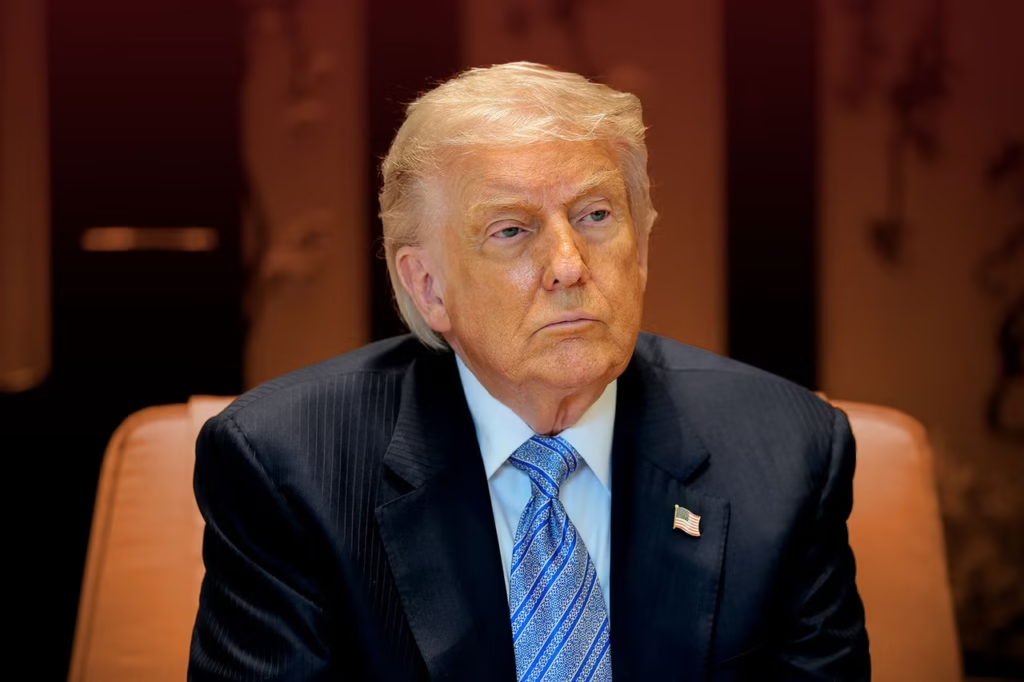
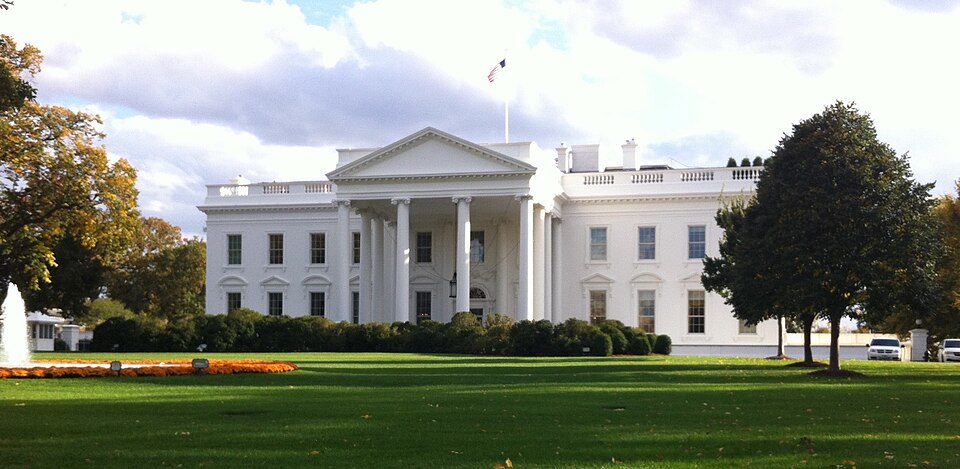
The White House has signaled it will not seek to extend the US-Iran memorandum of understanding past its October 6 expiration, according to Democracy Now. Trump simultaneously posted a call for Iran to ‘put up the white flag of surrender,’ with Iran’s Foreign Minister pushing back sharply. ONYX covers this as the most significant Iran deal development since the ceasefire was signed on August 7: a US signal that the deal will not be extended is a specific statement that the diplomatic track beginning with the August 14 first nuclear session and the September 1 second session is moving toward a hard October 6 deadline, not a negotiated extension.
THE SIGNIFICANCE OF “NO EXTENSION”
ONYX’s October 6 cliff analysis has been a consistent feature of the arc since August 7. The specific concern: if the ceasefire expires on October 6 without an agreement on nuclear terms or a deal extension, Hormuz closes, oil prices spike, and the gas price benefit that has been building since August 7 reverses. ONYX projected that reversal to be significant — the same $7-8 Brent crude discount that the deal produced would be lost within days of Hormuz closure.
A White House signal that it will not seek extension means: the September 1 Session 2 nuclear dialogue is now not a step toward an extension but the last substantive diplomatic moment before October 6. Whatever Session 2 produces — or does not produce — will be the basis on which both sides decide whether the deal expires or is renegotiated on new terms entirely.
THE TRUMP SURRENDER DEMAND — WHAT IT MEANS
Trump’s call for Iran to ‘put up the white flag of surrender’ is the most explicitly maximalist US statement about the Iran conflict since the ceasefire was signed. It is the rhetorical opposite of what a negotiated extension would require: a deal extension requires mutual acknowledgment that both parties have interests to negotiate; a surrender demand positions the US as requiring Iranian capitulation as the price of continued non-conflict.
The specific diplomatic consequence: Iran cannot accept a ‘surrender’ framing without collapsing the domestic political position of every Iranian official involved in the ceasefire diplomacy, including Araghchi, whose Foreign Ministry track ONYX has documented as the functional diplomatic channel. If Iran’s Foreign Ministry must choose between continuing diplomatic engagement and appearing to accept a ‘surrender’ frame, the domestic political pressure pushes strongly toward rejection.
The White House says it won’t extend the deal. Trump says surrender. Iran’s Foreign Minister pushes back. Session 2 is 6 days away. October 6 is 40 days away. These are not the conditions for a negotiated extension. They are the conditions for a hard deadline.
THE “CEASEFIRE DIED” CLARIFICATION
ONYX has corrected claims that the ceasefire expired before its October 6 date on August 17 (research brief error), August 19 (Iran’s ‘lost relevance’ claim), and now August 26 (Democracy Now’s framing). The clarification in each case is the same: the ceasefire’s Hormuz framework has a documented October 6 expiration. One party declaring it dead, or a news organization characterizing it as expired, does not change the October 6 date. Tankers are still transiting Hormuz. IAEA is still monitoring. The deal’s operational indicators are the test, not the rhetoric.
What has changed on Day 19: the US has signaled it views October 6 as a hard deadline, not a negotiating starting point for extension. That is a genuine and alarming escalation in US posture. It is not the same as the ceasefire having already expired.
THE FIVE FAILURE MODES AT DAY 19
Updated assessment at Day 19:
▸ Israeli unilateral strike on Iran: STILL HIGH — Ben Gvir coalition ultimatum active; Netanyahu formal response still pending
▸ Iran enrichment violation: MONITORING — IAEA active; Session 2 September 1 unchanged
▸ Iranian domestic collapse: ELEVATED — Trump surrender demand creates domestic Iranian political pressure on Araghchi’s diplomatic track
▸ Gulf proxy incident: ELEVATED — UAE trade suspension ongoing; Russian tanker Oman oil spill (Story 14); Houthi Red Sea attacks
▸ 60-day cliff: 40 DAYS AWAY — White House no-extension signal makes October 6 a HARD DEADLINE, not a negotiating starting point for extension
| Deal day 19 October 6 (Day 60) is 40 days away | Session 2 Sep 1 6 days away; now the last major diplomatic moment before Oct 6 |
| White House posture NO EXTENSION Most alarming US signal since the deal was signed | Hormuz status OPEN Transit continuing; deal not expired; operational |
| Trump statement SURRENDER Most maximalist US posture since ceasefire; complicates Iran domestic politics | Days to Oct 6 40 Hard deadline per current US posture |
WHAT HAPPENS NEXT
▸ September 1 Session 2 — now the single most consequential diplomatic moment remaining before October 6; if it produces no extension framework, the deal expires
▸ Iran’s Foreign Minister formal response — the specific diplomatic response to the no-extension signal and surrender demand
▸ Oil market reaction — the no-extension signal should produce upward pressure on oil prices; watch Brent crude in the next 24-72 hours
▸ Hamas ceasefire response — Netanyahu’s formal response to Hamas acceptance, expected imminently, will determine whether the Gaza/Iran pressure compound
▸ 40 days to October 6
| CONFIDENCE: HIGH | White House no-extension signal and Trump surrender demand are from Democracy Now confirmed reporting. ONYX clarification that ceasefire has not expired (October 6 is 40 days away) is from ONYX established deal documentation. Day 19 operational indicators are from ONYX cumulative tracking. Five failure mode update is ONYX editorial. |
| ⚖️ BIAS CHECK — WHO IS SAYING WHAT | |
| White House / Trump | The no-extension signal and surrender demand are the most maximalist US postures of the ceasefire period; they may be negotiating tactics or genuine policy; either way they significantly raise October 6 stakes |
| Iran Foreign Ministry | Must now manage the domestic political consequences of a US surrender demand while maintaining the September 1 session; Araghchi’s position is significantly more difficult |
| Oil Markets | Will price the no-extension signal as a higher probability of October 6 Hormuz closure; expect upward pressure on Brent crude |
| Democracy Now | Characterized the ceasefire as ‘officially dead’; ONYX documents the clarification: the ceasefire expires October 6, not today; what died is the prospect of easy extension |
| ONYX | Maintaining operational indicator tracking as primary stability measure; the no-extension signal is the most significant development since August 7 and is covered at that level |
SOURCES
▸ Democracy Now — White House no-extension signal, Trump surrender demand, Iran Foreign Minister pushback, August 26, 2026
▸ ONYX August 7-26 — 19-day cumulative deal documentation
Q: If the White House won’t extend, what happens on October 6?
A: If neither side agrees to an extension or a new framework before October 6, the ceasefire’s Hormuz provisions expire. Iran would be free to reimpose transit restrictions or tolls; the naval standoff would resume. Oil prices would spike toward pre-deal levels. The gas price floor reached August 22-23 would reverse. The nuclear dialogue would lose its operational context. This is the specific consequence ONYX has been tracking the October 6 cliff to assess since Day 1.
Q: Could Session 2 produce a deal even with the no-extension signal?
A: Yes, but it would require either the White House reversing the no-extension signal or producing a fundamentally new framework in one session that both sides accept before October 6. Neither is impossible; both are significantly harder given today’s developments. The no-extension signal makes Session 2 a de facto last chance rather than a step in an ongoing process.