Military families evacuated from US bases across the Middle East at the start of the Iran war — some months ago — remain in limbo, according to NPR. The Pentagon has not yet determined what will happen to the households, possessions, and communities they were forced to abruptly leave. While the ceasefire deal (signed August 7) has changed the operational picture significantly, the family evacuation question has not been resolved: families who left behind furniture, vehicles, pets, personal belongings, and community relationships do not know when or whether they will return to those bases, or whether those bases will continue to be operational.
2-MINUTE CONTEXT — WHAT MILITARY FAMILY EVACUATION MEANS IN PRACTICE
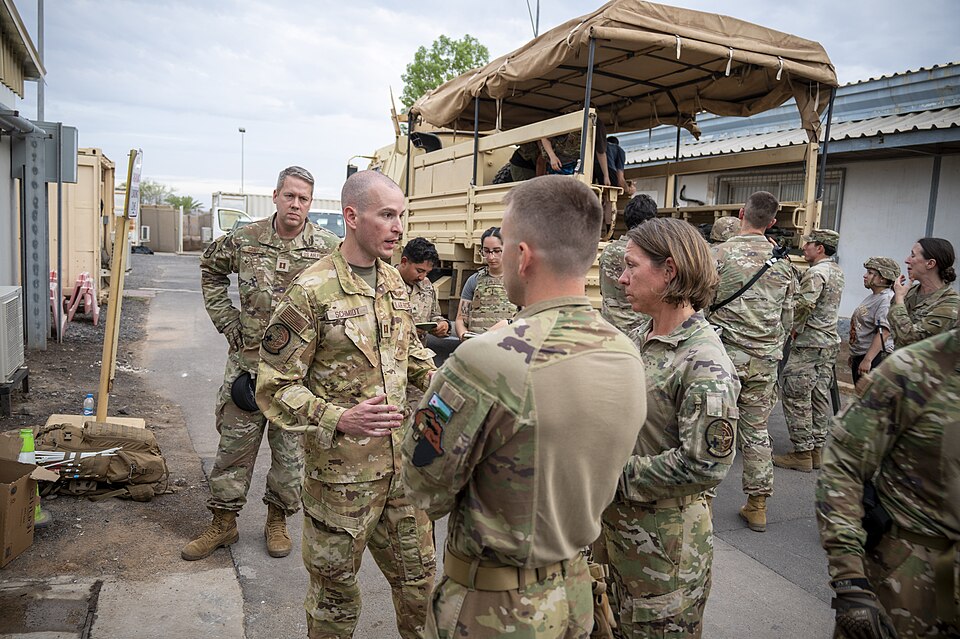
US military bases throughout the Middle East — in Bahrain (Fifth Fleet headquarters), Qatar (Al Udeid Air Base), the UAE, and others — house not just service members but their dependents: spouses, children, and in some cases other family members. These families live in on-base housing, attend on-base schools, and build community relationships with other military families across extended overseas tours.
When a base is evacuated for security reasons, families are typically given limited time to pack essential belongings and are transported to a safe location — usually in the continental United States or a less-exposed location in the region. The remaining household goods — furniture, vehicles, pets in some cases, personal belongings — are left behind for later disposition. ‘Later’ in military logistics can mean weeks to months.
The specific situation NPR documents: months after the initial evacuations, those families are still waiting. The Pentagon has not provided a clear answer about when or whether they will be reunited with their belongings, whether the bases they evacuated from will continue to be staffed at the same levels, or what housing and support they will receive during the waiting period.
THE CEASEFIRE DIMENSION — DOES THE DEAL CHANGE THIS?
The Iran ceasefire deal, signed August 7 and now in its seventh day, does not automatically resolve the family evacuation situation. The ceasefire is a diplomatic framework, not a security clearance. The military will assess whether the risk environment at Middle East bases has changed sufficiently to allow family return — but that assessment takes time, requires intelligence analysis, and must account for the deal’s fragility (60-day Hormuz window, five documented failure modes).
The ceasefire’s 60-day structure means that even if the Pentagon assessed the risk environment as improved, returning families to overseas bases during a 60-day temporary framework creates a specific problem: if the deal collapses and hostilities resume, those families would need to be evacuated again. One evacuation trauma per family is difficult enough; a second would be both operationally and humanly unacceptable.
The ceasefire is seven days old. The deal has a 60-day clock. Returning military families to Middle East bases during a 60-day ceasefire is a specific planning problem that military planners are working through.
THE HUMAN DIMENSION
NPR’s reporting identifies the quiet, human dimension of the Iran war that has received far less coverage than the military and diplomatic developments. Military families are a community of their own — one that has managed deployments, relocations, and overseas tours as a defining feature of their life. An unexpected forced evacuation, followed by months of uncertainty about their home, belongings, and community, is a specific kind of disruption that military family support research identifies as among the most damaging to family wellbeing.
The children evacuated from overseas schools — some mid-year — face educational disruption. The pets left behind face uncertain care situations. The furniture and household goods that represent family stability face unknown storage or disposition fates. Each of these is a small thing relative to the war’s military toll; none of them is small to the specific family experiencing it.
WHAT HAPPENS NEXT
▸ Pentagon policy determination — the specific decision about when and whether families return will depend on the intelligence assessment of the risk environment post-ceasefire
▸ Household goods disposition — the military will need to determine whether to ship belongings to families’ current locations or store them pending return
▸ The 60-day window effect — Pentagon planners are unlikely to authorize full family return during the 60-day ceasefire period; watch for policy guidance if the ceasefire is extended
▸ Congressional inquiry — the military families story is the kind of human-dimension oversight that congressional Armed Services members from military family-dense districts will pursue
| CONFIDENCE: HIGH | Military family evacuation from Middle East bases and ongoing limbo status are from NPR confirmed reporting. Specific bases and evacuation circumstances are characterized generally as NPR’s reporting covers the pattern broadly. Ceasefire connection analysis is ONYX editorial based on established facts. |
| ⚖️ BIAS CHECK — WHO IS SAYING WHAT | |
| Pentagon / Military | Managing an operational and welfare challenge simultaneously; family welfare is a documented readiness issue, not just a human interest story |
| Military Families | In limbo; the ceasefire should be good news but it doesn’t resolve their specific immediate situation |
| NPR | Accountability journalism surfacing a welfare story that has been displaced by the military and diplomatic coverage |
| Congressional Armed Services Members | Will push for Pentagon answers; military family welfare is a high-priority constituent issue in military-connected districts |
SOURCES
▸ NPR — military families evacuated Middle East bases, ongoing limbo, August 2026
Q: Where were the families evacuated to?
A: NPR’s reporting describes families evacuated from Middle East bases but does not specify the receiving locations in detail. Military family evacuation typically routes to the continental United States or to a regional safe haven location. The specific destinations vary by service branch and base.
Q: What happens to household goods left at overseas bases?
A: The military has established procedures for non-temporary storage (NTS) of household goods when families are evacuated. Items left behind are inventoried, packed by contracted movers, and stored — theoretically accessible and insured. The practical reality of accessing those goods while in limbo is more complicated than the procedure suggests.