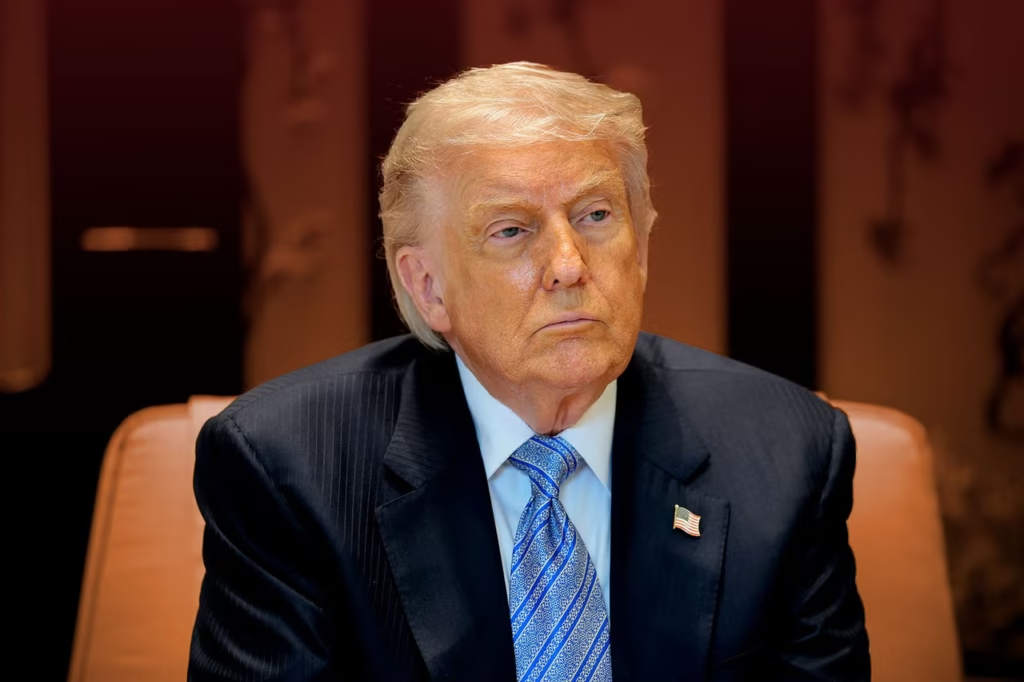
The Trump administration is reportedly pursuing a diplomatic arrangement with North Korea that would involve adjustments to the US military presence on the Korean peninsula, according to Al Jazeera. South Korean officials are expressing significant concern about the specific terms being discussed — concern that centers on whether any arrangement that reduces US troop levels or changes the security commitments underpinning the US-South Korea alliance would leave Seoul less protected against North Korean military capability. This story is arriving simultaneously with the Iran ceasefire deal, which itself raised questions about the reliability of US military commitments to regional partners.
2-MINUTE CONTEXT — THE KOREAN SECURITY ARCHITECTURE
The US military presence in South Korea is one of the oldest and most substantial alliance commitments in the world. Approximately 28,500 US troops are stationed in South Korea under the Mutual Defense Treaty (1953), serving as both a deterrent force and a tripwire — any North Korean attack on South Korea would immediately involve US forces and the full weight of the US military alliance commitment. This tripwire function is the specific security guarantee Seoul values most.
North Korea has continued developing nuclear weapons and ballistic missiles throughout recent years despite sanctions, negotiations, and diplomatic pressure. Kim Jong Un’s regime possesses nuclear warheads and ICBMs capable of reaching the continental United States, giving it genuine deterrent capability against direct US military action. Any diplomatic arrangement with North Korea that involves US concessions on the peninsula must account for this specific asymmetry: the US is negotiating with a nuclear-armed state that has shown no willingness to denuclearize.
WHAT SOUTH KOREA IS WORRIED ABOUT
South Korean officials’ concerns, as described in Al Jazeera reporting, center on the specific possibility that a Trump-North Korea arrangement could involve:
▸ Troop reduction: a decrease in US troop levels in South Korea as a concession to North Korea
▸ Exercise cancellation: reduction or elimination of US-South Korea joint military exercises, which are the primary mechanism for maintaining alliance interoperability
▸ End-of-war declaration: a political statement declaring the Korean War over (no formal peace treaty has been signed since the 1953 armistice) that could be used to argue the legal basis for the US military presence has changed
▸ Sanctions relief: economic concessions to North Korea in exchange for political commitments that do not require verifiable denuclearization
What South Korea has NOT been specifically told: the specific terms being discussed. South Korean officials expressing concern about a US-North Korea arrangement they have not been fully briefed on is itself a significant alliance management problem.
THE IRAN DEAL PARALLEL
The Iran ceasefire deal’s most significant structural legacy — documented in ONYX since August 10 — is that it revealed limits on US military protection reliability to regional partners. The Saudi-Turkey-Pakistan Mecca defense pact (August 10) was explicitly analyzed by Iranian analysts as a response to that revelation. A Trump-North Korea deal that reduces US security commitments to South Korea would extend the same message to Northeast Asia: US alliance commitments are negotiable instruments in presidential deal-making, not fixed structural guarantees.
This parallel does not mean the Korean deal is equivalent to the Iran deal. It means the signal effect of deal-making that adjusts US military presence and security commitments compounds across regional contexts. Each deal that trades alliance reliability for bilateral diplomatic objectives reduces the deterrent value of all US alliances.
The Iran deal taught Gulf partners that US military protection has limits. A Korea deal that adjusts the tripwire would teach East Asian partners the same thing. That lesson, once taught, cannot be untaught.
NORTH KOREA’S POSITION
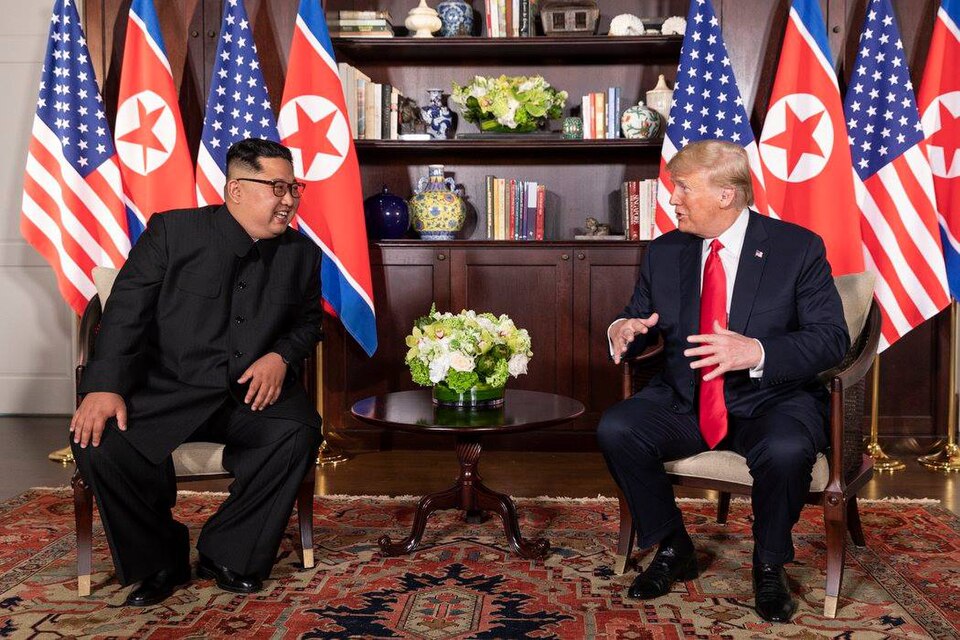
North Korea has historically been willing to engage in diplomatic processes that produce political concessions and economic relief without requiring verifiable denuclearization. The 2018-2019 Trump-Kim summits produced significant political activity but no verifiable progress on denuclearization. Whether Kim Jong Un has changed his strategic calculus — whether he is now willing to offer something the US would value as a genuine security concession in exchange for US troop adjustments — is the central unknown.
WHAT HAPPENS NEXT
▸ South Korean briefings — the US will need to brief South Korea formally on any deal terms; the fact that Seoul is expressing concern through media suggests they have not received an adequate briefing
▸ Japan’s reaction — Japan is equally affected by Korean peninsula security; Tokyo will be watching the Korea deal developments as carefully as Seoul
▸ Congressional notification — any arrangement affecting US troop levels may require Congressional notification under existing authorities
▸ Verification question — what North Korea offers in exchange for US concessions, and how it would be verified, is the central substance of any deal’s value
| CONFIDENCE: MODERATE | Al Jazeera reporting on Trump-North Korea deal discussions and South Korean concern is documented. Korean security architecture (28,500 troops, Mutual Defense Treaty, tripwire function) is from established public record. Iran parallel analysis is ONYX editorial based on documented facts, clearly labeled. |
| ⚖️ BIAS CHECK — WHO IS SAYING WHAT | |
| Trump Administration | Pursuing a deal as a diplomatic achievement; the specific terms and their security implications may be minimized in public framing |
| South Korea | Expressing legitimate alliance management concern; their lack of full briefing is itself a signal |
| North Korea | Will pursue any arrangement that provides political legitimacy and economic relief without requiring verifiable denuclearization |
| Japan | Watching carefully; any reduction in US South Korea presence affects Japan’s security calculus as well |
| China | Broadly supportive of US-North Korea engagement that reduces US military presence in its neighborhood |
SOURCES
▸ Al Jazeera — Trump-North Korea deal, South Korean concerns, August 2026
▸ Korean peninsula security architecture — established public record (Mutual Defense Treaty, troop levels, tripwire function)
Q: What happened at the 2018-2019 Trump-Kim summits?
A: Three summits produced significant political pageantry and joint statements expressing commitment to denuclearization. They did not produce any verifiable reduction in North Korean nuclear capability. The Hanoi summit (2019) collapsed without an agreement when North Korea sought comprehensive sanctions relief in exchange for partial denuclearization steps that the US found insufficient.
Q: Could a Korea deal actually happen?
A: Trump has expressed willingness to engage with North Korea throughout his political career. Kim Jong Un has a history of engaging with diplomatic processes that he views as serving his interests. A deal is possible. Whether any achievable deal would represent a genuine security improvement for South Korea and Japan — or a political achievement that trades away deterrent value for a diplomatic photo opportunity — is the specific concern being raised.