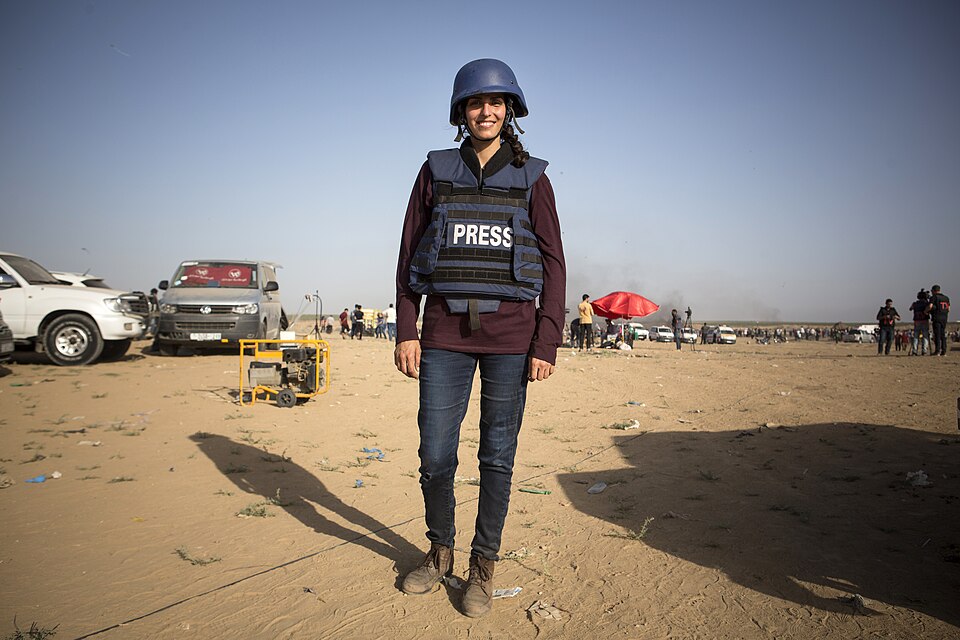
More than 270 journalists have been killed in Gaza since October 7, 2023 — a death toll that ONYX covered on August 10 with the Palestinian Journalists Syndicate’s documentation. With the two-year mark of the conflict approaching in October 2026, the accountability question has sharpened: who is responsible for these deaths, under what legal framework can accountability be sought, and why has the scale of journalist deaths in Gaza not produced the institutional response that comparable tolls in other conflicts have generated? ONYX returns to this story because it deserves sustained attention, not just a mention.
THE ACCOUNTABILITY QUESTION — WHY IT’S UNANSWERED
The deaths of 270 journalists in a conflict zone can result from multiple causes: being caught in crossfire; being deliberately targeted; dying from indirect effects (disease, hunger, lack of medical care) in a war zone; or dying from attacks on facilities they were in. Under international humanitarian law, deliberate targeting of journalists as journalists is a war crime. Incidental killing of journalists in lawful military operations is not. Determining which category a specific death falls into requires investigation — and Gaza’s specific access conditions have made independent investigation extremely difficult.
The IDF’s standard response to journalist deaths in Gaza: journalists were in proximity to military targets; journalists were in structures used for military purposes; specific cases are under investigation. Independent verification of these characterizations requires access that international journalists and investigators have not consistently had. The accountability gap is therefore not simply a question of whether anyone is investigating, but whether independent investigation is structurally possible.
THE INTERNATIONAL LEGAL MECHANISMS
The international legal mechanisms theoretically available to address the deaths of 270 journalists in Gaza:
▸ ICC investigation: the International Criminal Court has been investigating the Gaza conflict since 2021; journalist deaths are documented in the investigation record; ICC warrants have already been issued for specific individuals; the specific cases of journalist deaths may be part of ongoing investigation
▸ UN Human Rights Council: has issued multiple resolutions on Gaza; journalist deaths are documented in HRC reports; the US has historically opposed or abstained on HRC Gaza resolutions
▸ Bilateral diplomacy: states can raise journalist deaths through bilateral diplomatic channels; few have done so with the specificity that would produce Israeli accountability processes
▸ RSF and CPJ legal advocacy: Reporters Without Borders and the Committee to Protect Journalists have filed formal complaints and published documentation; neither has direct enforcement authority
WHY 270 HAS NOT PRODUCED A PROPORTIONATE RESPONSE
The specific reason 270 journalist deaths in Gaza has not produced the institutional response that comparable tolls in other conflicts generate: geopolitical protection. Israel is a close US ally; the US has used its Security Council veto to prevent UN-authorized accountability mechanisms; and the domestic political environment in Western countries that might otherwise apply pressure has been sufficiently divided that sustained institutional accountability pressure has not materialized.
This is not an observation unique to Gaza. Journalists have died in large numbers in conflicts where geopolitical protection shielded responsible parties from accountability (Yemen, Syria, Sudan). Gaza is the most documented and most visible current example of that structural pattern.
270 journalists. Two years. One investigation that cannot get access. The accountability question is not ‘is anyone investigating?’ It is ‘can investigation produce accountability in this specific geopolitical context?’
THE OCTOBER 7 TWO-YEAR MARK
October 7, 2026 marks two years since the Hamas attacks on Israeli communities that began the current phase of the Gaza conflict. The approach of that date is producing a specific kind of reflective coverage — assessments of what has been accomplished, what has been lost, and what accountability has been achieved. The 270 journalist deaths are part of that accounting. They represent a systematic reduction in the journalistic capacity to document what is happening in Gaza — which affects the completeness of the historical record that the two-year retrospectives will rely on.
WHAT HAPPENS NEXT
▸ ICC investigation — warrants already issued; investigation continues; journalist deaths are part of the documented record
▸ Two-year mark (October 7, 2026) — will produce substantial retrospective coverage that will include the journalist death toll as a central accountability element
▸ Palestinian Journalists Syndicate documentation — continues to update; ONYX will continue tracking
▸ Gaza ceasefire negotiations — any ceasefire (currently not achieved despite the US-Iran bilateral ceasefire) would change the access conditions that make both reporting and investigation difficult
| CONFIDENCE: HIGH | 270+ journalist deaths documented by Palestinian Journalists Syndicate and corroborated by CPJ and RSF (ONYX August 10). International legal mechanism analysis is ONYX editorial based on established international law. Geopolitical protection analysis is ONYX editorial clearly labeled. |
| ⚖️ BIAS CHECK — WHO IS SAYING WHAT | |
| Palestinian Journalists Syndicate | Direct membership access; most comprehensive count; less independently verified than CPJ/RSF |
| CPJ and RSF | More conservatively verified; 100+ independently confirmed; both treat Gaza as the most dangerous conflict for journalists in modern history |
| IDF | Contests journalist classification in many cases; has not engaged with the aggregate death toll as a category of accountability |
| US Government | Supports Israel’s right to self-defense; has used Security Council veto; has not engaged with journalist death accountability specifically |
| International Media | Covering inadequately relative to the scale; October 7 two-year mark will produce a surge of retrospective coverage including this dimension |
SOURCES
▸ Palestinian Journalists Syndicate — 270+ deaths (ONYX August 10 primary coverage)
▸ CPJ and RSF — 100+ independently verified deaths
▸ ICC investigation — ongoing documentation