Global supply chain analysts are recalibrating their models as the Iran ceasefire deal’s Hormuz reopening produces benefits while Bab al-Mandeb remains disrupted by Houthi operations. The dual-chokepoint situation documented in ONYX August 12 has evolved: Hormuz is improving significantly (Day 8 estimate: approximately 60+ vessels), while Bab al-Mandeb continues to divert Asia-to-Europe container shipping around the Cape of Good Hope. The specific supply chain consequence: energy goods (oil, LNG) that primarily transit Hormuz are improving; manufactured goods and consumer products that primarily transit Bab al-Mandeb to Europe via Suez remain elevated in cost.
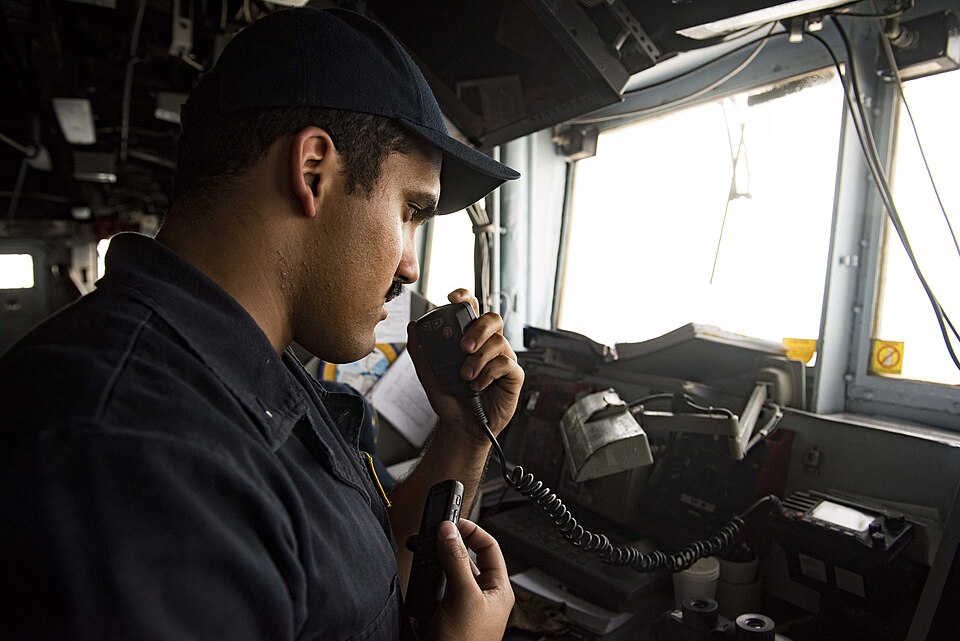
STRAIT OF HORMUZ (July 21, 2016) Lt j.g. Jonathan Bermudez, assigned to the guided-missile cruiser USS San Jacinto (CG 56), communicates with an Iranian warship during a transit of the Strait of Hormuz. San Jacinto, part of the Eisenhower Carrier Strike Group, is deployed in support of maritime security operations and theater security cooperation efforts in the U.S. 5th Fleet are of operations. (U.S. Navy photo by Mass Communication Specialist 3rd Class J. Alexander Delgado/Released)
THE TWO-TRACK SUPPLY CHAIN STORY
| HORMUZ (improving) | BAB AL-MANDEB (still disrupted) |
| Oil and LNG to Asia: normalizing | Container shipping to Europe: diverted around Africa |
| Gulf energy exports resuming | 14+ days added per voyage around Cape of Good Hope |
| Lloyd’s war-risk premiums declining | Red Sea war-risk premiums remain elevated |
| Day 8: ~60+ vessels/day and rising | Houthi operations ongoing; no ceasefire for proxies |
| QatarEnergy LNG force majeure withdrawn | European energy still paying elevated costs |
| Gas prices at US pump falling | Manufactured goods to Europe still elevated shipping cost |
THE FREIGHT RATE PICTURE
Shipping freight rates reflect the dual-track reality. Spot rates for tankers (carrying oil and LNG through Hormuz) are declining as Hormuz normalizes and war-risk insurance premiums fall. Container shipping rates (carrying manufactured goods through the Suez Canal route) remain significantly elevated because of the Bab al-Mandeb disruption — the Cape of Good Hope diversion adds cost that is not being removed by the Iran ceasefire.
The specific impact for American consumers: oil-derived energy costs (gasoline, heating oil, natural gas derivatives) are improving. The cost of manufactured goods imported from Asia (electronics, clothing, appliances) is a separate supply chain driven by container shipping and remains elevated by Bab al-Mandeb disruption. These are different supply chains with different geopolitical drivers.
WHEN DOES BAB AL-MANDEB NORMALIZE?
The Bab al-Mandeb situation will not normalize without a Yemen political settlement or a significant military defeat of Houthi capability. The US-Iran ceasefire specifically does not govern Houthi operations. Saudi Arabia’s coalition-building (ONYX August 15 Story 12) is partly designed to address Houthi operations, but coalition formation takes months and military operations against Houthi infrastructure take time to affect their operational capability.
The realistic timeline for Bab al-Mandeb normalization: not in 2026. The Cape of Good Hope diversion for Asia-to-Europe shipping appears to be a sustained feature of global shipping for the foreseeable future, not a temporary anomaly that will resolve with the Iran ceasefire.
The Iran deal improved the supply chain for oil and energy. It did not improve the supply chain for everything else. That is the specific gap in the good news.
| CONFIDENCE: HIGH | Dual-chokepoint analysis is from ONYX August 12 documentation. Day 8 Hormuz vessel count estimate is from tracking trajectory. Freight rate characterization (tanker vs. container) is from established shipping industry analysis. Bab al-Mandeb Yemen political settlement requirement is from established conflict analysis. |
SOURCES
▸ ONYX August 12 — dual-chokepoint initial analysis
▸ Shipping industry — freight rate movements (tanker vs. container)