In March 2026, the Ecuadorian fishing vessel ‘La Negra Francisca Duarte II’ was caught on footage engulfed in flames off the Galápagos Islands — one of several fishing boats allegedly struck by explosive-laden drones in the area in the months since. Survivors describe the attacks directly. The US Department of Defense has formally denied any knowledge of or involvement in the incidents. No government, criminal organization, or armed group has claimed responsibility. Five months later, the attacks remain an unresolved maritime mystery with significant implications for who controls armed drone capability in the South American Pacific.
2-MINUTE CONTEXT — WHAT IS KNOWN AND WHAT ISN’T
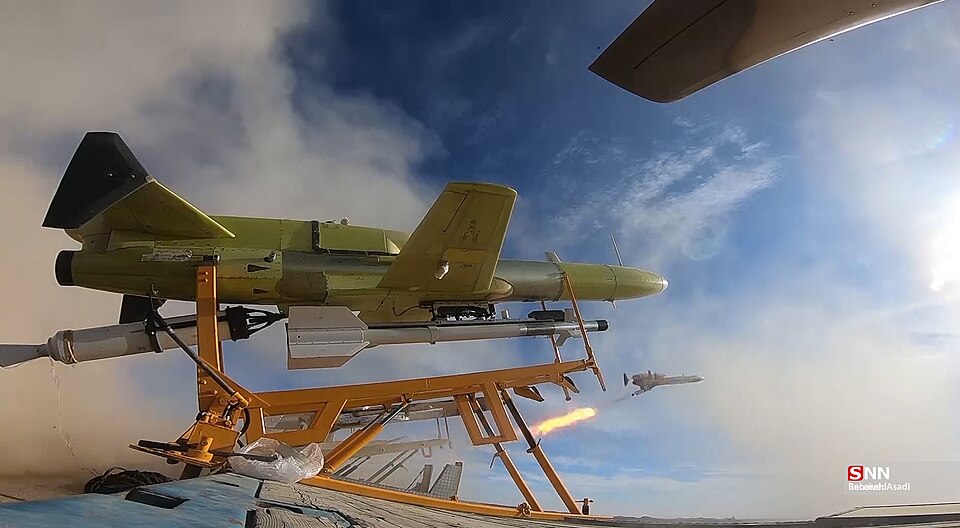
What is documented: footage of the Francisca Duarte II engulfed in flames; survivor accounts describing drones approaching boats and releasing explosive devices; multiple incidents in the same general area over a period of months; and the Pentagon formally denying involvement.
What is not known: who operated the drones; what the motive was; whether the attacks targeted specific vessels for specific reasons; whether this was state or non-state actor operation; and whether the attacks are ongoing or have stopped.
The Galápagos Islands are an Ecuadorian territory approximately 1,000 kilometers off the South American coast. The surrounding waters are a major fishing ground and one of the world’s most biodiverse marine ecosystems. Fishing vessels from Ecuador and other countries operate in the region, including significant Chinese fishing fleets that have historically caused friction with local Ecuadorian fishermen over competition for fishing grounds.
THE CANDIDATE ACTORS — WHO MIGHT HAVE DONE THIS
ONYX presents the candidate actors that investigative coverage has raised, without asserting that any specific actor is responsible. These are analytical possibilities, not confirmed attributions:
▸ Drug trafficking organizations: maritime drug smuggling routes in the South American Pacific have produced documented conflicts between rival organizations over territorial control; armed drones as a maritime enforcement tool is a documented drug trade escalation
▸ Illegal fishing enforcement: some environmental enforcement actors have been documented using drones to document illegal fishing; explosive-equipped drones would represent a massive escalation beyond documented practice
▸ State actor maritime operations: some states operate armed drones in maritime enforcement contexts; the Galápagos area’s significance as a fishing ground makes it a potential state interest area
▸ Unknown armed group: the South American Pacific has not historically been a significant armed conflict zone, but the region’s drug trafficking economy has produced organized armed groups with capability that can surprise
The Pentagon’s denial is noted but does not resolve the question: the US operates armed maritime drones in multiple theaters, and a denial is a denial, not independent verification. ONYX presents the denial as a data point, not a conclusive fact.
THE GALAPAGOS CONTEXT
The Galápagos Islands are among the world’s most protected marine ecosystems — a UNESCO World Heritage site and a global conservation priority. The fishing grounds surrounding the islands are simultaneously a legitimate livelihood source for Ecuadorian fishermen and a contested resource that has attracted large-scale foreign fishing fleets, particularly from China. The Chinese fishing fleets’ presence in the South American Pacific has been a documented source of tension with both Ecuador and environmental organizations.
Whoever flew these drones has armed drone capability in the South American Pacific and no interest in claiming the attack. Both parts of that sentence matter.
WHAT THE MYSTERY MEANS FOR MARITIME SECURITY
Regardless of who conducted these attacks, the documented fact that explosive-drone attacks on civilian fishing vessels occurred in the South American Pacific represents a new capability in a region that has not previously experienced this type of maritime threat. If drug trafficking organizations have acquired this capability, it represents a significant escalation in their arsenal. If a state actor conducted the attacks without claiming them, it represents a new kind of deniable maritime warfare. Either scenario has implications for maritime security that extend beyond the specific fishing boats involved.
WHAT HAPPENS NEXT
▸ Ecuador’s investigation — Ecuador is the territorial sovereign and has the primary investigative jurisdiction; their findings will be the most authoritative available
▸ Intelligence assessment — US, Colombian, and regional intelligence services will be monitoring for additional incidents and for intelligence about the responsible actor
▸ Maritime security response — if the attacks continue, Ecuador and the region may need to consider maritime patrol enhancement in the area
▸ CNN’s investigation — the reporting documents the events and survivor accounts; whether it produces attribution is not yet clear from available information
| CONFIDENCE: MODERATE | Footage of Francisca Duarte II in flames is documented. Survivor accounts are from CNN reporting. Pentagon denial is from confirmed reporting. Candidate actors analysis is ONYX editorial, explicitly labeled as analytical possibilities not confirmed attributions. |
| ⚖️ BIAS CHECK — WHO IS SAYING WHAT | |
| Pentagon | Has denied involvement; the denial cannot be independently verified but is the stated official position |
| Ecuador | The territorial sovereign; has the primary investigative interest and jurisdiction |
| Survivors | Described the attacks directly; their accounts are the primary evidentiary foundation |
| CNN | Investigated and documented the events; has not attributed responsibility |
| Unknown responsible actor | Has not claimed responsibility; the lack of a claim is itself a data point suggesting the actor prefers anonymity |
SOURCES
▸ CNN — Galápagos drone attacks investigation, survivor accounts, Pentagon denial, August 2026
Q: Could drug trafficking organizations really do this?
A: Yes. Mexican cartels have been documented using homemade drones for surveillance and for carrying small payloads since at least 2017. Armed maritime drones capable of sinking a fishing boat would represent a significant escalation but not an implausible one given the investment and capability development documented in criminal organizations over the past decade.
Q: Why would anyone attack fishing boats?
A: Possible motives: territorial competition over fishing grounds; cartel territorial enforcement; an attempt to intimidate specific fishing operations; or a test of drone capability in a low-scrutiny environment. None of these can be confirmed without knowing the actor.