
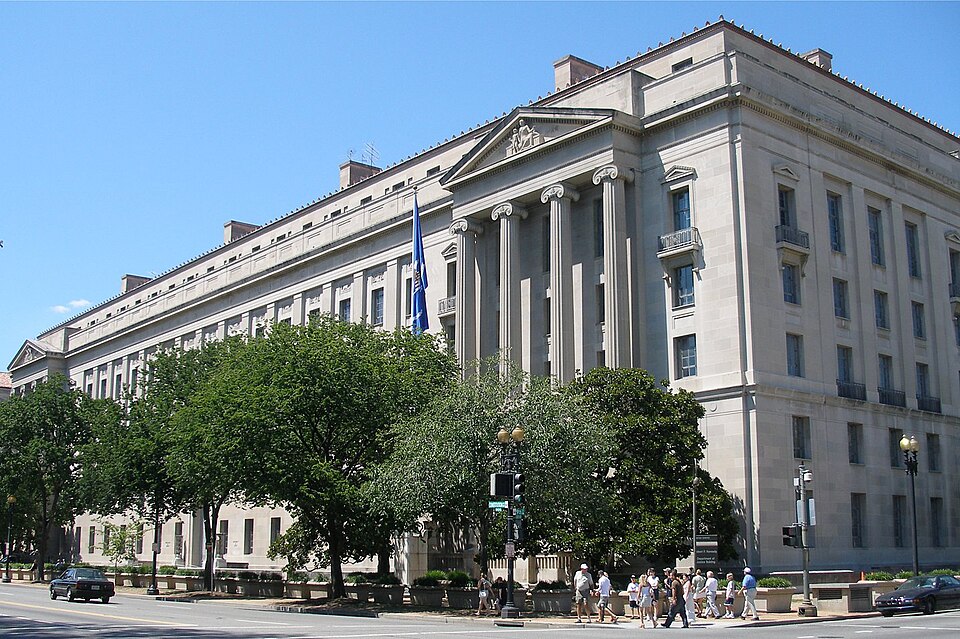
The Justice Department’s inspector general is formally reviewing a controversial DEA practice of letting drug shipments ‘walk’ — tracking rather than seizing them to identify larger trafficking networks. AP reporting found agents repeatedly allowed this in New Mexico, including one case where 74,000 fentanyl pills reached an Albuquerque mobile home park while agents watched. DEA whistleblower David Howell stated: ‘We poisoned our community to make cases.’ The DEA maintains its decisions were lawful. The opioid crisis kills approximately 70,000 Americans annually.
2-MINUTE CONTEXT — THE “LET IT WALK” TACTIC
Controlled delivery — allowing a drug shipment to reach its destination under surveillance — is a legitimate law enforcement tool with a specific strategic logic: seizing one shipment stops one transaction; following it to its destination identifies the larger network, the warehouse, the distributors, and the money. From a pure network-dismantlement perspective, the tactic can produce bigger results than intercepting individual shipments.
The specific problem with applying this tactic to fentanyl: fentanyl is lethal at microgram doses. A kilogram of fentanyl contains approximately 500,000 potentially lethal doses. When you allow 74,000 fentanyl pills to reach a mobile home park, you are not watching a shipment complete a transaction — you are watching poison enter a community. The calculus that applies to cocaine or marijuana — where ‘walking’ a shipment produces manageable community harm in exchange for bigger trafficking arrests — does not apply to fentanyl with the same ethical weight.
THE ALBUQUERQUE CASE — WHAT ACTUALLY HAPPENED
The specific New Mexico case that AP documented: DEA agents tracked a shipment of 74,000 fentanyl pills and allowed it to reach its destination at an Albuquerque mobile home park rather than intercepting it. The strategic purpose was to identify higher-level traffickers. Whether that purpose was achieved — whether the surveillance produced arrests of significant trafficking figures — is not confirmed in available reporting.
74,000 fentanyl pills reaching a residential area is not an abstraction. Each pill is a potential death if ingested in combination with other substances or by a person with low opioid tolerance. A mobile home park is a residential community with families. The specific human consequences of 74,000 fentanyl pills reaching that community — how many were used, by whom, with what outcomes — are not documented in available reporting but are the specific human stakes of the tactical decision.
“We poisoned our community to make cases.”
— David Howell, DEA whistleblower
THE WHISTLEBLOWER DIMENSION
David Howell’s statement is one of the most direct condemnations of a federal law enforcement practice that ONYX has seen in this production period. ‘We poisoned our community’ is not bureaucratic language — it is a moral indictment from inside the agency, by a person with direct professional knowledge of the tactic. Whistleblowers in law enforcement face significant institutional pressure and professional consequences; Howell’s decision to speak publicly represents a threshold of conscience that the statement itself describes.
THE DEA’S DEFENSE
The DEA maintains its decisions were lawful and followed Department guidance. This defense has a specific structure: if the practice was authorized by DOJ guidance, then individual agents were following orders; if the guidance itself was wrong, the accountability is institutional rather than individual. The inspector general review will assess whether the guidance that authorized the practice was itself appropriate — a determination that the DEA cannot make about its own conduct.
THE FENTANYL CRISIS CONTEXT
Approximately 70,000 Americans die of opioid overdoses annually — a number that has been roughly stable at elevated levels despite years of law enforcement, public health, and policy responses. Whether the ‘let it walk’ tactic has contributed to, failed to reduce, or is simply irrelevant to that death toll is the specific question the IG review will need to assess. The statistical evidence that network-dismantlement through controlled delivery has meaningfully reduced the fentanyl supply is, at minimum, not established in available reporting.
THE DOJ POLICY REVERSAL DIMENSION
The Bondi DOJ disbanded the Biden-era Task Force KleptoCapture (ONYX August 18 Story 9) on day one and redirected those resources to ‘total elimination of Cartels and TCOs.’ That same DOJ is now running an inspector general review of its own enforcement tactics — specifically the ‘walking’ tactic it inherited from prior administrations. The institutional self-assessment is appropriate; whether it produces meaningful accountability or serves primarily as a political document depends on the IG’s independence and the specific findings.
WHAT HAPPENS NEXT
▸ DOJ Inspector General report — will assess whether the ‘let it walk’ tactic complied with DOJ guidance and whether that guidance was appropriate
▸ Congressional inquiry — the AP reporting and IG review will prompt Senate and House Judiciary oversight hearings
▸ DEA operational practice changes — whether the review produces changes to the controlled delivery authorization process
▸ New Mexico cases — whether any of the trafficking prosecutions built on the Albuquerque walk cases survive the review’s findings
| CONFIDENCE: HIGH | AP reporting on the New Mexico cases, 74,000 pills, and Albuquerque destination are from confirmed AP investigation. Howell ‘we poisoned our community’ quote is from confirmed AP reporting. DOJ IG review is confirmed. DEA ‘lawful and followed guidance’ defense is confirmed. 70,000 annual opioid deaths is from established CDC data. |
| ⚖️ BIAS CHECK — WHO IS SAYING WHAT | |
| DEA | Defending the tactic as lawful; the institutional incentive is to avoid the conclusion that authorized practice produced community harm |
| David Howell / Whistleblowers | Speaking from direct knowledge; the professional cost of this statement is real; the moral weight of the statement reflects that cost |
| AP Investigative Journalism | Documented specific case with specific figures; the public interest function of this reporting is precisely what investigative journalism exists to do |
| DOJ Inspector General | Conducting the formal accountability review; the IG’s institutional independence from the agencies it reviews is the specific guarantee of the review’s value |
| Albuquerque Community | The specific human population that received 74,000 fentanyl pills; their experience is the accountability standard against which the tactic’s justification must be measured |
SOURCES
▸ AP investigation — DEA controlled delivery, New Mexico cases, 74,000 fentanyl pills, August 2026
▸ David Howell — “we poisoned our community” DEA whistleblower statement
▸ CDC — annual opioid overdose deaths (~70,000)
Q: Is “letting it walk” legal?
A: Under certain authorization frameworks, yes. Federal law allows law enforcement to conduct controlled deliveries of contraband under specific conditions and with appropriate supervisory approval. Whether the specific New Mexico cases followed the required authorization process is part of what the IG review will assess.
Q: Has anyone been prosecuted based on the Albuquerque case?
A: The specific prosecution outcomes from the cases built on the New Mexico walk tactics are not detailed in available reporting. The IG review will assess whether the tactical decisions were justified by the prosecutorial results.