
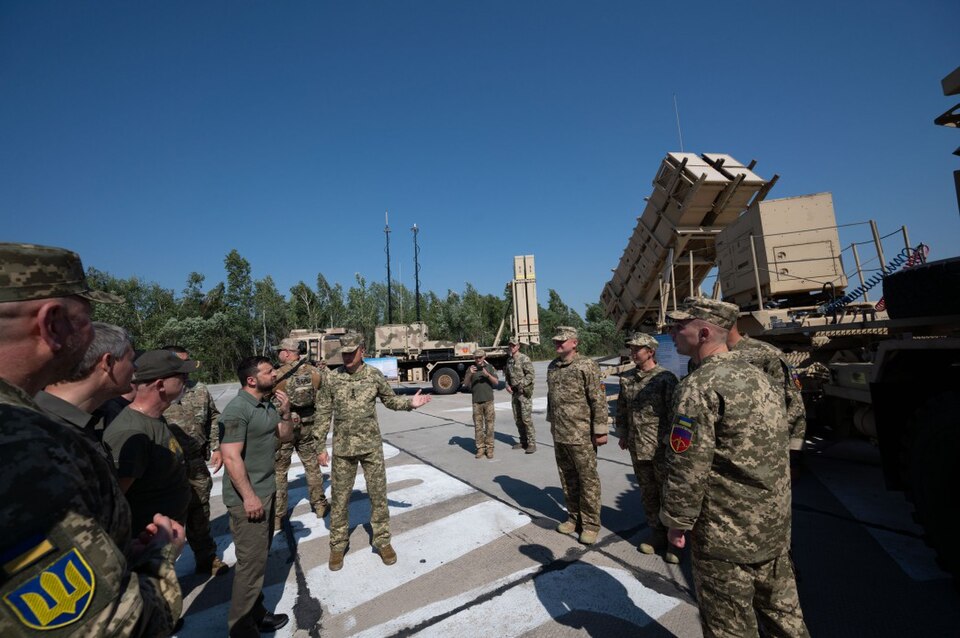
CNN reported exclusively from inside Ukraine’s near-empty Patriot missile depots, confirming Ukraine is ‘running out of the most sought-after weapon in the world.’ This is firsthand visual confirmation of what ONYX has been tracking since August 4: US Patriot stockpiles fell from 2,300+ pre-war to under 850 (CSIS confirmed); Germany-Netherlands announced emergency resupply on August 8 (not yet delivered as of prior coverage); and Ukraine’s own interception rate has been declining as a direct consequence of interceptor scarcity. CNN’s visual documentation converts the supply chain abstraction into specific, visible reality.
THE PATRIOT SHORTAGE IN CONTEXT — ONYX TRACKING
ONYX has tracked the global Patriot shortage across multiple packs:
▸ August 4-5: documented US Patriot stockpile depletion from 2,300+ to under 850 as a consequence of the Iran war’s air defense demands
▸ August 8: Germany-Netherlands emergency Patriot resupply to Ukraine announced; resupply not yet arrived
▸ August 9: Pentagon memo to manufacturers: ‘ramp up production’; plants already at capacity
▸ August 10: documented that Patriot production runs under 1,000 interceptors/year against demand that far exceeds that
▸ August 18 (today): CNN inside Ukraine’s depots; ‘running out of the most sought-after weapon in the world’ confirmed visually
WHY PATRIOT SPECIFICALLY
The Patriot missile system is the most capable man-portable surface-to-air missile system in the US inventory that can intercept ballistic missiles. Russia has been using ballistic missiles against Ukrainian targets specifically because Ukraine’s air defense has prioritized Patriot interceptors for ballistic missile defense. The shortage creates a specific vulnerability: if Ukraine cannot intercept ballistic missiles reliably, Russia can strike high-value targets — power infrastructure, headquarters, supply depots — with a system Ukraine cannot reliably stop.
The CNN depot reporting provides the visual evidence that the shortage is operational, not theoretical: the racks that were full are empty. This is not a logistics document; it is a picture of air defense capacity.
THE GERMANY-NETHERLANDS RESUPPLY TIMELINE
The Germany-Netherlands emergency Patriot resupply announced August 8 is the documented near-term solution to the Ukrainian shortage. It has not yet arrived. ONYX has been noting this gap since August 10 — Russia’s 202-drone barrage struck during the window before the resupply reached its operational destination. CNN’s reporting confirms that Ukraine’s depots are still empty, meaning the resupply either has not arrived or has not been sufficient to replenish the visible deficit.
The racks were full. Now they’re empty. CNN’s camera is the accountability document that every Patriot budget argument should be required to address.
THE BROADER ALLIANCE IMPLICATION
The Patriot shortage has a specific connection to today’s Trump-South Korea drill reduction story. Both reflect the same underlying constraint: the US and its allies do not have sufficient military capacity to meet the simultaneous demands of the Iran war theater, the Pacific deterrence mission, and Ukraine’s air defense needs. The drill reduction is a political choice that reflects a strategic priority decision. The Patriot shortage is a physical constraint that limits what choices are available.
The two stories together make a case that the US is managing multiple simultaneous high-demand military commitments with insufficient overall capacity, and that the consequences are appearing simultaneously in Korea (reduced exercises), the Pacific (carrier gap), and Ukraine (empty Patriot depots).
WHAT HAPPENS NEXT
▸ Germany-Netherlands resupply delivery — the specific date it reaches Ukrainian operational units will mark the end of the most acute shortage window
▸ US supplemental Patriot commitment — the Iran ceasefire’s reduced Gulf air defense demand creates political space for this; watch for a Pentagon announcement
▸ Production ramp — the Pentagon’s August 12 manufacturer memo asked for ramped production; realistic timeline is 12-18 months before any additional units reach Ukraine
▸ Russian ballistic missile strike tempo — Russia’s operational behavior during the shortage window will reveal how aggressively it is exploiting the gap
| CONFIDENCE: HIGH | CNN firsthand reporting from Ukraine Patriot depots is documented. Patriot stockpile figures (2,300+ to under 850) are from CSIS confirmed reporting (prior ONYX coverage). Germany-Netherlands resupply announcement (August 8) is from prior ONYX coverage. Pentagon memo to manufacturers is from prior ONYX coverage. |
| ⚖️ BIAS CHECK — WHO IS SAYING WHAT | |
| CNN | Firsthand visual documentation; the reporters were physically inside the depots; this is not secondhand sourcing |
| Ukraine | Made the access available; the political purpose is to demonstrate the shortage and increase pressure for Western supply |
| US / Pentagon | Will note that resupply is underway; does not want to publicize operational capability gaps to Russia |
| Germany-Netherlands | Announced the resupply; watching whether the delivery is credited as sufficient or as inadequate given the scale of the documented shortage |
| Russia | The operational beneficiary of the shortage window; adjusting strike patterns based on Ukrainian interception capability is standard military practice |
SOURCES
▸ CNN — Ukraine near-empty Patriot depots, August 2026
▸ ONYX August 4-17 coverage — Patriot shortage tracking
Q: How long do the existing interceptors last?
A: Depends on the rate of intercepts. During high-intensity Russian air attack periods, Ukraine can expend multiple interceptors per night. At a baseline Russian attack tempo, the remaining interceptors might last weeks; at peak attack tempo, they could be exhausted much faster.
Q: Why can’t the US just produce more faster?
A: Raytheon’s Patriot production line is running near capacity, producing under 1,000 interceptors per year. Expanding production requires capital investment, supply chain development, and labor that cannot be achieved on short timelines. Producing at twice the current rate would take 2-3 years to achieve sustainably.