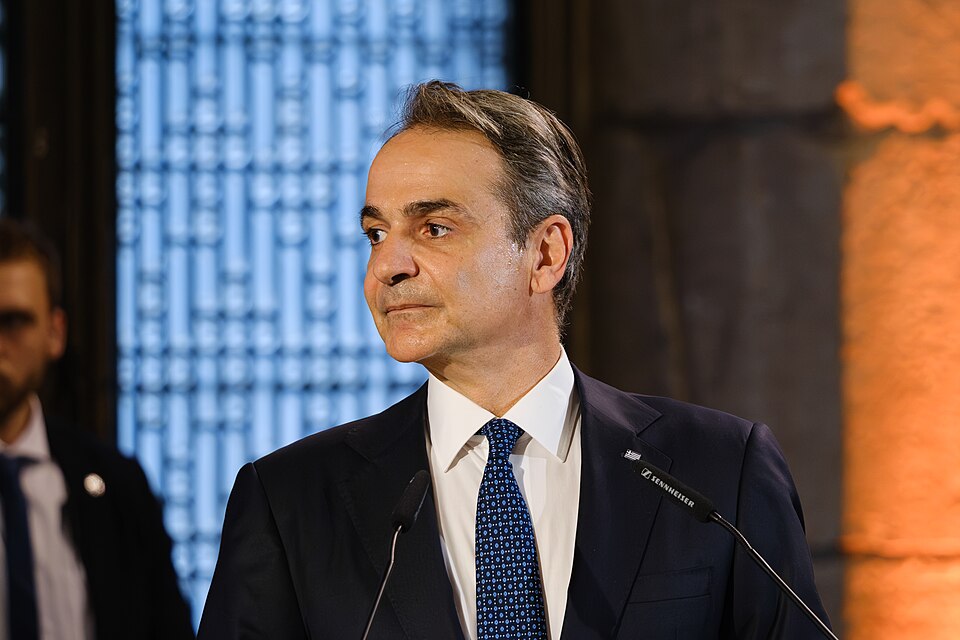
Greek Prime Minister Kyriakos Mitsotakis told CNN that any final deal permitting Iran to charge fees for Hormuz passage would be ‘completely unacceptable.’ His specific words: ‘I don’t think that the international community would be ready to accept Iran setting up a toll booth for every ship that crosses the strait.’
WHY GREECE SPECIFICALLY
Greece has the world’s largest merchant shipping fleet by tonnage. Greek-owned vessels collectively carry a larger proportion of global maritime trade than those of any other nation. When the Greek Prime Minister calls something ‘completely unacceptable’ regarding shipping through a major chokepoint, he is speaking with the authority of the world’s largest commercial shipping stakeholder.
THE IMO LEGAL DETERMINATION
A spokesperson for the International Maritime Organization — the UN’s shipping agency — told Reuters separately: ‘there is no international agreement where tolls can be introduced for transiting international straits,’ warning ‘any such toll will set a dangerous precedent.’ The IMO’s specific legal authority: the United Nations Convention on the Law of the Sea (UNCLOS) establishes the right of transit passage through international straits. UNCLOS does not permit states to charge fees for that passage.
IRAN’S TOLL DEMAND IN CONTEXT
Iran’s demand for fees for Hormuz passage has been a documented element of its negotiating position. The joint Greek-IMO rejection is significant because:
▸ The Greek rejection is political: the world’s largest shipping power saying it will not accept the toll
▸ The IMO rejection is legal: the UN’s shipping agency saying the toll has no basis in international maritime law
▸ Together: the Hormuz toll demand faces both political rejection from the most affected commercial stakeholder and legal rejection from the applicable international authority
Greece owns the world’s largest merchant fleet. The Greek PM said the Hormuz toll is completely unacceptable. The UN’s shipping agency said it’s illegal under international law. Iran wants a toll for ships passing through Hormuz. The two most authoritative voices on shipping just said no — one politically, one legally.
WHAT HAPPENS NEXT
▸ Session 3 agenda — whether the Hormuz toll demand is on the Session 3 negotiating table
▸ UNCLOS legal challenge — whether any state formally challenges an Iranian toll as UNCLOS-violating
▸ Negotiating framework — whether the toll demand is a negotiating position or a genuine condition
| CONFIDENCE: HIGH | Greek PM Mitsotakis CNN ‘completely unacceptable’ Hormuz toll booth; IMO spokesperson Reuters ‘no international agreement tolls international straits’; ‘dangerous precedent’ from confirmed reporting. |
SOURCES
▸ CNN / Reuters — Greece IMO Iran Hormuz toll September 17, 2026