The visit was planned. The timing became something else. New UK sanctions on Russia arrived alongside the worst single day for Ukrainian civilians in months.
🇬🇧 DIPLOMACY · OCTOBER 9, 2026 · UKRAINE
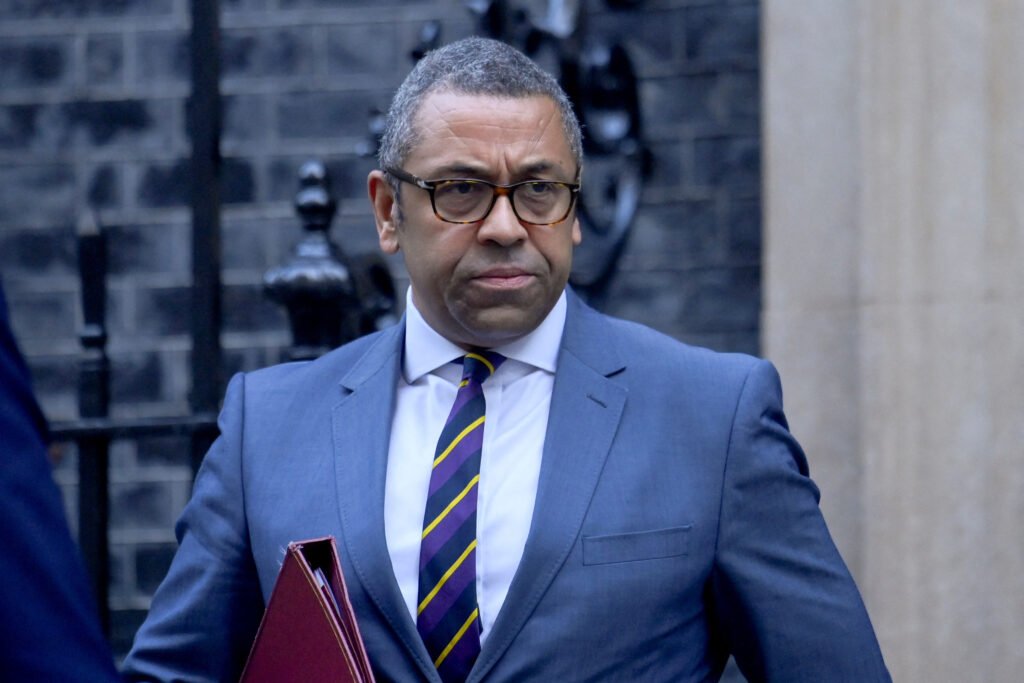
Diplomatic visits to Kyiv have become a feature of the war — a way for allied governments to demonstrate solidarity, to signal continued commitment, and to hold in-person conversations with President Zelenskyy that video calls cannot fully replicate. The British Foreign Minister’s visit on October 9 was planned in advance, a routine entry in the schedule of alliance management. Then Russia struck the buses, and the visit became something more charged than its planners intended.
The Foreign Minister arrived in Kyiv carrying a package of new UK sanctions on Russia, announced alongside the visit. The sanctions — targeting individuals and entities in Russia’s military-industrial complex, according to AP-linked and radio briefings — were the product of a policy process that began weeks before Thursday’s bus strike. They were announced on the day of the bus strike. That is not the same as being caused by it, but in the diplomacy of a war that is fought as much in the international information space as on the ground, the distinction between timing and causation is often invisible.
WHAT THE SANCTIONS COVER
The specific scope of the new UK sanctions was not fully detailed in available reporting at filing time. UK Russia sanctions have generally targeted financial institutions, oligarchs, and defense-sector entities in the post-2022 framework. The sustained accumulation of Western sanctions on Russia has not stopped the war, has not prevented Russian strikes on civilian targets, and has not produced the internal economic or political pressure that some analysts projected it would. That does not mean sanctions are useless — their effects are slow-moving and multidimensional — but it does mean the announcement of a new package on the day of a major civilian massacre requires some context.
Zelenskyy received the Foreign Minister with the public warmth that Ukrainian diplomatic protocol applies to visiting allies, and with the private specificity that he has brought to every allied conversation since the war began: what are you giving us, how much, and when does it arrive? Solidarity visits are welcome in Kyiv. Weapons and air defense systems are more welcome.
THE UK’S POSITION IN THE ALLIANCE
The United Kingdom has been among Ukraine’s most consistent and early supporters — the first NATO ally to provide long-range missiles, the first to begin training Ukrainian soldiers at scale, and a consistent voice against proposals that would require Ukraine to make territorial concessions as the price of a ceasefire. That position has not always been easy to sustain domestically, particularly as the economic costs of the war in energy and inflation have registered with the British public.
The Foreign Minister’s Kyiv visit, and the sanctions announced alongside it, are a reaffirmation of that position. They are also, on a day when thirty people died on Ukrainian buses, a reminder that reaffirmations have to compete with reality for what they mean.
“He flew to Kyiv to express solidarity. Russia struck thirty people on buses while he was in the air. The sanctions were real. The question is whether they are enough.”
WHAT HAPPENS NEXT
► Sanctions implementation — timeline and enforcement mechanism for the new UK designations
► Zelenskyy-UK bilateral — whether the visit produces specific new defense commitments
► G7 coordination — whether UK sanctions are coordinated with or precede a broader allied package
| CONFIDENCE: MODERATE | AP-linked and radio briefings confirmed UK Foreign Minister Kyiv visit and new Russia sanctions. MODERATE: full sanctions scope not specified in available sourcing at filing. |
| BIAS CHECK | ASSESSMENT |
| Source weight | AP-linked and radio briefings — secondary aggregation; Foreign Office statement not directly cited |
| Sanctions effectiveness | Historical context accurate; not dismissive of sanctions as a tool |
| Diplomatic framing | Visit characterized factually; Zelenskyy’s private priorities noted as reported pattern, not speculation |
SOURCES
► AP-linked reporting — UK Foreign Minister Kyiv visit, Russia sanctions, October 9, 2026
► Radio briefing summaries — UK sanctions and bus massacre context, October 9, 2026