Counter-terrorism officers released names and ages of two more individuals detained in connection with a recent plot targeting critical infrastructure; the investigation has now resulted in multiple named suspects across several weeks.
UK · COUNTER-TERRORISM · SUSPECTS NAMED · CRITICAL INFRASTRUCTURE
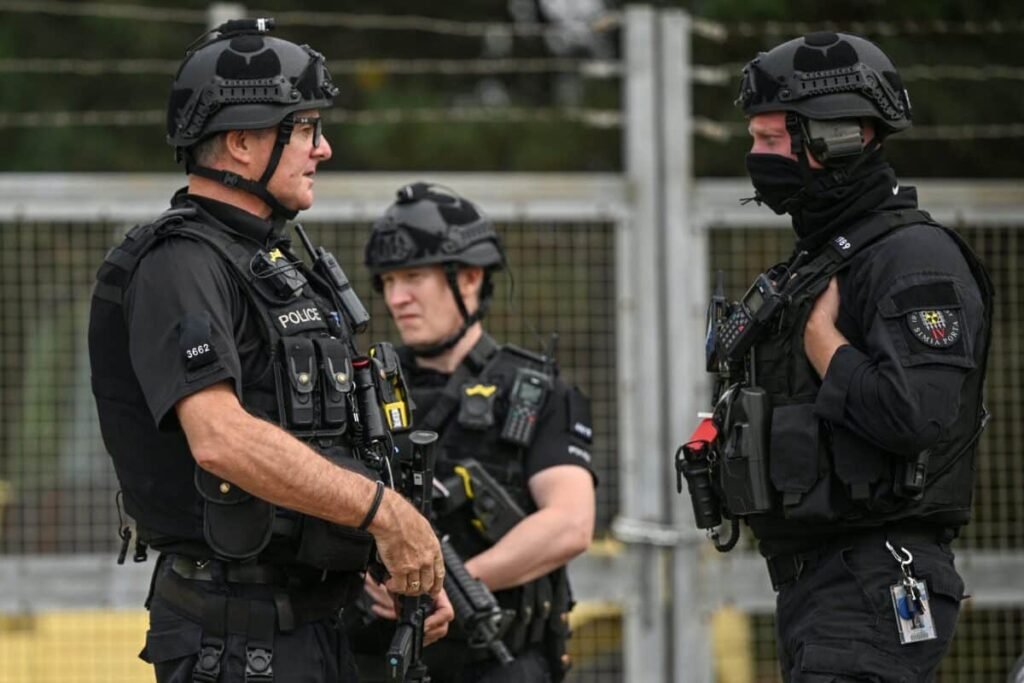
UK counter-terrorism police released the names and ages of two additional individuals detained in connection with an ongoing investigation into a plot targeting critical national infrastructure, BBC, Reuters, and The Guardian all confirmed on Thursday. The naming of the two additional suspects brings the total number of publicly identified individuals in the investigation to a number that indicates the plot under investigation was not a lone-actor operation but a network-level undertaking requiring coordination among multiple individuals. The specific critical infrastructure targeted by the alleged plot was not disclosed in Thursday reporting, consistent with the standard UK counter-terrorism practice of withholding operational details that could compromise parallel investigations or inform potential co-conspirators of the scope of police knowledge.
BBC provided the most detailed account of the procedural status of the named suspects. Under UK law, individuals can be detained for extended periods under terrorism legislation without being formally charged, and the naming of suspects in counter-terrorism investigations is typically done either at the point of charge or when police assess that public identification serves the investigation — for instance, to generate leads from members of the public who may have information about the named individuals. The Thursday naming suggests one of these operational purposes, and the BBC noted that the investigation remains active with additional individuals potentially subject to further action.
The Critical Infrastructure Targeting Dimension
Reuters provided context on the specific threat category of plots targeting critical national infrastructure. UK counter-terrorism strategy identifies critical national infrastructure — which includes energy generation and distribution networks, water treatment facilities, transportation hubs, communications systems, and financial infrastructure — as a primary target category for both state-linked and ideologically motivated terrorist actors. Plots against infrastructure are treated with particular seriousness because successful attacks can produce cascading effects that extend far beyond the immediate target, affecting civilian populations dependent on the systems targeted. The specific motivation and alleged methodology of the plot under investigation were not detailed in Thursday reporting.
The Guardian provided broader context on the arc of UK counter-terrorism investigations in the current period. The Russell Brand sentencing (November 10) and the Walliams police investigation (November 11) have occupied significant UK public attention, but the counter-terrorism investigation has been running in parallel with these stories and represents a more serious immediate national security concern. The Guardian noted that UK counter-terrorism operations have accelerated in the post-Iran-conflict period as intelligence services have assessed elevated threat levels from multiple actor categories, including both state-linked operators and ideologically motivated domestic actors inspired by the broader conflict environment.
“The investigation is ongoing. We are asking the public to contact us with any information about these individuals. No detail is too small.” — Metropolitan Police Counter Terrorism Command statement cited by BBC
The Investigation Arc
Reuters tracked the investigation arc as it has developed across the past several weeks. The initial detentions in the investigation were reported before the November 10 Section A reporting period, with the Thursday naming of additional suspects representing a continued escalation of the publicly disclosed scope of the network under investigation. Each naming in a counter-terrorism investigation is a deliberate operational decision by the police — the information is released because investigators have assessed that the benefit of public identification outweighs the risk of alerting potential co-conspirators — and the progression from initial detentions to multiple suspect namings indicates the investigation has matured to a stage where the network architecture is sufficiently understood to begin the public disclosure process.
WHAT HAPPENS NEXT
► Named suspects to face formal charging decision within statutory terrorism detention period
► Police to assess additional individuals for potential detention based on investigation findings
► Critical infrastructure operators to be briefed on specific threat nature by security services
► Investigation to continue with potential for additional suspect identifications
| CONFIDENCE: HIGH | BBC, Reuters, and The Guardian all confirmed the suspect naming, the counter-terrorism context, the critical infrastructure targeting allegation, and the investigation arc. Three-source convergence on a confirmed police counter-terrorism disclosure. |
| Bias Check | ||
| Left-Lean | Center | Right-Lean |
| Investigation framed in context of elevated threat environment linked to foreign policy choices and Iran conflict. | Reports suspect naming, investigation status, UK terrorism law context, and infrastructure threat category factually. | Investigation framed as UK security services effectively disrupting plots; surveillance and detention tools working. |
SOURCES
► BBC — Suspect naming, UK terrorism detention law, investigation procedural status, November 12, 2026
► Reuters — Critical infrastructure threat category, investigation arc, additional suspect potential
► The Guardian — Post-Iran conflict threat elevation, broader counter-terrorism context, investigation arc