Party leaders released a memo emphasizing healthcare subsidies, border enforcement funding, and judicial nominations as early goals for the new Democratic majority; the document signals the legislative agenda the caucus will pursue from January.
SENATE · DEMOCRATS · POST-MIDTERM AGENDA · LEGISLATIVE PRIORITIES
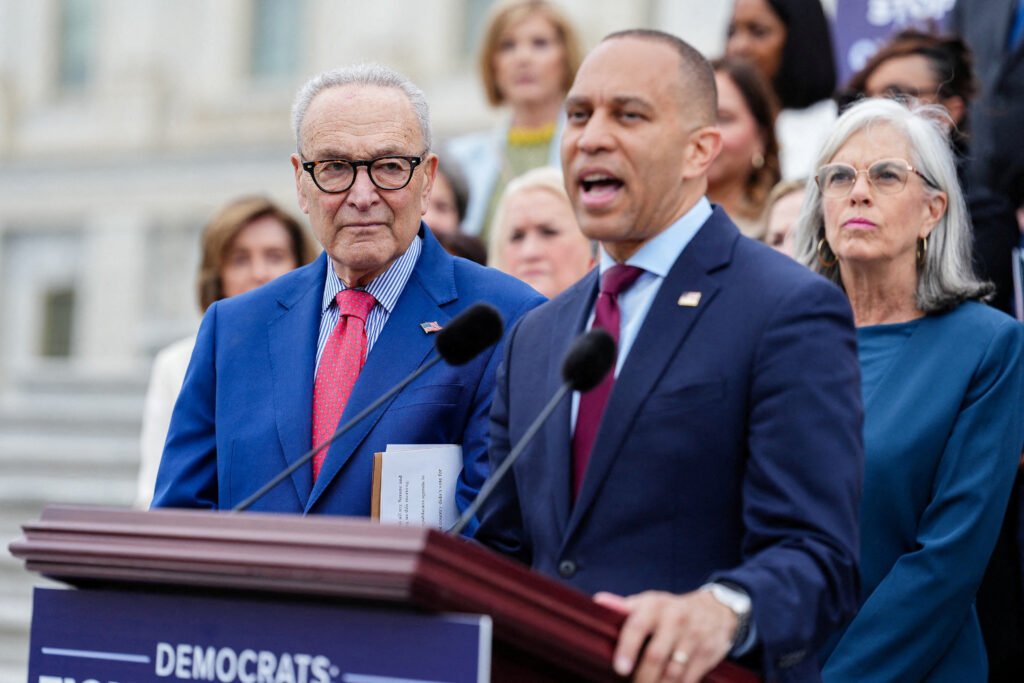
Senate Democratic leaders released a memo on Thursday outlining the caucus priorities for the legislative agenda to be pursued by the new Democratic majority when the new Congress is seated in January, with healthcare subsidies, border enforcement funding, and judicial nominations identified as the early focus areas; Politico, the New York Times, and the Associated Press all confirmed. The memo represents the first formal articulation of the Senate Democratic agenda for the incoming Congress and signals both the policy direction the caucus will pursue and the strategic calculation about which priorities can be advanced through the Senate with the majority the midterms produced. The specific procedural vehicles the caucus intends to use — regular order, reconciliation, or other mechanisms — were not detailed in the Thursday memo summary but are expected to be elaborated in the period between now and January.
Politico analyzed the internal caucus dynamics reflected in the memo priorities. The selection of healthcare subsidies, border enforcement, and judicial nominations as the three headline priorities reflects a deliberate calibration of the caucus toward the center of the Democratic coalition rather than its progressive wing. Healthcare subsidy extension is a popular policy with broad Democratic support and a track record of delivering measurable benefits to specific voter constituencies in ways that are politically legible. Border enforcement funding reflects the lesson the caucus drew from the midterm campaign period, in which immigration and border security emerged as a consistently effective Republican attack theme that Democrats struggled to rebut — the memo priority signals an intent to compete on the issue rather than cede it.
The Judicial Nominations Priority
The New York Times provided the most detailed analysis of the judicial nominations priority in the Senate Democratic memo. The outgoing period of Republican Senate control has resulted in a large backlog of Biden-era judicial nominees who were not confirmed before the election, and the incoming Democratic majority will have the ability to process these nominees through the committee and floor vote process without Republican obstruction. The judicial nominations priority reflects both a substantive commitment to reshaping the federal judiciary at the district and circuit court level and a political calculation that confirming Democratic-appointed judges is a durable investment in the legal landscape that persists beyond any single legislative session.
The Associated Press noted that the Senate Democratic agenda memo exists in tension with the House Republican situation. The continuing resolution that House Speaker Johnson is pursuing (November 12 Section A article a01) reflects House Republican leadership trying to manage its final weeks before Democratic control, while the Senate Democratic memo reflects the incoming majority planning for January. The two simultaneous narratives create a split-screen moment in American legislative politics in which one chamber is trying to close out its majority, and another is planning to open one, with significant policy implications for the overlap period.
“We heard the American people. They want us to lower costs, secure the border with common sense, and protect the courts. That is what we are going to do.” — Senate Democratic leader statement cited by Politico
The Filibuster Question
Politico raised the procedural question that underlies the entire Senate Democratic agenda: the filibuster. The 60-vote threshold required to advance most legislation through the Senate means that even a Democratic majority cannot advance most elements of its agenda without either 60 votes (requiring bipartisan support) or modification of the filibuster rules (which would require a simple majority decision). The memo priorities are calibrated partly with this procedural reality in mind: judicial nominations under existing precedent require only simple majority votes, while healthcare subsidies through reconciliation can bypass the filibuster, and border enforcement funding may be achievable through bipartisan negotiation given Republican interest in the issue.
WHAT HAPPENS NEXT
► Senate Democratic caucus to meet before January seating to finalize procedural strategy
► Judicial nominations backlog to be cleared in first weeks of new Congress
► Healthcare subsidy extension to be advanced through reconciliation or bipartisan negotiation
► Border enforcement funding proposal to be developed with potential for bipartisan support
| CONFIDENCE: HIGH | Politico, the New York Times, and AP all confirmed the Senate Democratic agenda memo, the three headline priorities, and the caucus context. Three-source convergence on a confirmed public Democratic caucus document. |
| Bias Check | ||
| Left-Lean | Center | Right-Lean |
| Agenda framed as Democrats finally delivering on healthcare and economic priorities for working Americans. | Reports memo priorities, procedural realities, filibuster context, and House-Senate split-screen factually. | Agenda framed as Democratic overreach; border enforcement add-on is political cover for spending expansion. |
SOURCES
► Politico — Senate Democratic agenda memo, caucus dynamics, healthcare and border priority calculus, filibuster context, November 12, 2026
► New York Times — Judicial nominations priority, nominee backlog, federal judiciary composition stakes
► Associated Press — House-Senate split-screen, CR-agenda interaction, incoming majority planning