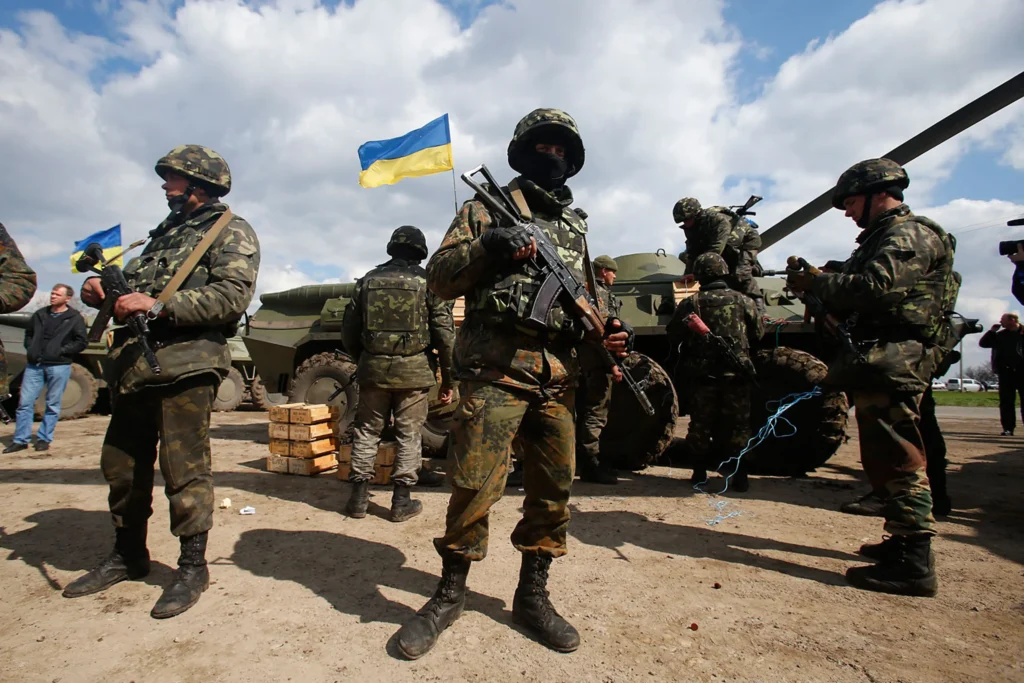
Ministers from several alliance members acknowledged delays in meeting pledged artillery-shell targets for Ukraine; the meeting reveals the gap between political commitment and industrial production capacity.
NATO · AMMUNITION · UKRAINE · DEFENSE MINISTERS · PRODUCTION
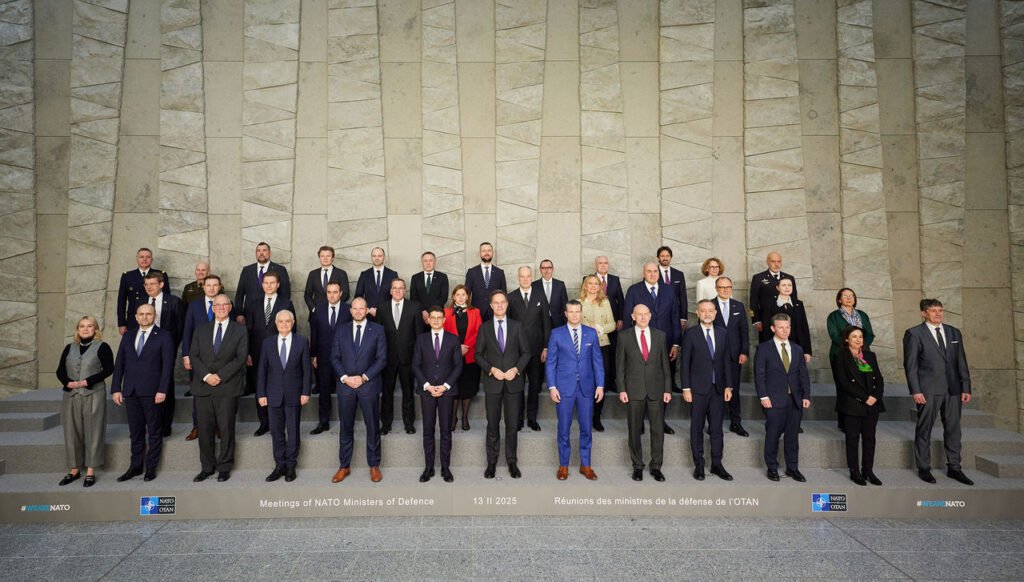
NATO defense ministers meeting in Brussels on Thursday acknowledged delays in meeting pledged artillery-shell production targets for Ukraine as the alliance confronts the gap between its political commitments to Ukrainian defense and the actual industrial production capacity of member nations, Reuters, BBC, and the Financial Times all confirmed. The specific shortfall figures — measuring actual shell production against the targets pledged at prior NATO summits — were described by multiple officials in terms that acknowledged the gap was real and that timelines for meeting the pledged targets had slipped. The acknowledgment comes as the Abu Dhabi ceasefire framework talks continue (November 10 and 11 Section A reporting), creating an ambiguous context in which NATO is simultaneously providing ammunition support to Ukraine while diplomatic processes that might reduce the military requirement are in progress.
Reuters provided detail on the specific nature of the ammunition production shortfall. The 155mm artillery shell, which is the primary artillery caliber used by Ukrainian forces equipped with Western systems, has been in production shortfall relative to Ukrainian consumption rates throughout the conflict. NATO members made specific pledges at the 2023 and 2024 summits to accelerate production, with targets set for the number of shells to be produced and delivered to Ukraine by specific dates. The Thursday acknowledgment by multiple ministers that those targets have not been met represents a candid admission that the European and American defense industrial bases have not scaled production at the rate required to match the pledged commitments.
The Industrial Base Dimension
The Financial Times provided the most detailed analysis of why the ammunition production shortfalls have persisted despite political commitments. Artillery shell production requires sustained investment in specific industrial capacity — the precise machinery for shell casing manufacture, the explosive fill facilities, and the quality control infrastructure — that takes years to build and cannot be accelerated purely through political decision. European defense industries that contracted their artillery shell production capacity after the Cold War have faced the structural challenge of trying to rebuild that capacity rapidly in response to wartime demand, a process that is proving to take longer than the political timelines set by summit pledges. The FT noted that some member nations have met or exceeded their pledges while others have fallen significantly short, creating an internal alliance credibility question alongside the Ukraine supply challenge.
BBC reported on the alliance unity dimension of the Thursday ministers meeting. The acknowledgment of shortfalls by some member nations creates internal alliance friction between nations that have met their commitments and those that have not, and it provides ammunition — in the political rather than literal sense — to critics of the NATO commitment to Ukraine who argue that Western support has been more rhetorical than substantive. The ministers meeting format is designed to create accountability by putting defense ministers in the same room to compare their performance against the pledged targets, and the Thursday meeting served that accountability function by producing explicit acknowledgments of which commitments had not been fulfilled.
“We made pledges. Some of us have kept them. Some of us have not. This meeting exists so we all know who is in which category.” — NATO defense minister cited by Reuters
The Ukraine Arc Linkage
Reuters noted the specific linkage between the ammunition shortfall and the Abu Dhabi diplomatic process. The rate of Ukrainian artillery ammunition consumption is partly a function of the intensity of battlefield operations, which in turn is affected by the status of diplomatic talks. If the Abu Dhabi process produces a ceasefire, the ammunition shortfall becomes less immediately critical — though the structural production capacity gap would remain relevant for any future deterrence requirement. If the diplomatic process stalls or collapses, the ammunition shortfall becomes a more urgent operational problem for Ukrainian forces whose consumption rates have been calibrated against the expectation that Western supply commitments would be met. The Thursday ministers meeting is therefore shaped by this uncertainty about whether the ammunition is for a continuing war or a deterrence posture.
WHAT HAPPENS NEXT
► NATO to publish specific shortfall data against pledged targets; member accountability to be named
► Underperforming members to present revised timelines for meeting pledged production targets
► Alliance to assess whether Abu Dhabi diplomatic process changes the near-term ammunition requirement calculus
► US and UK to assess bilateral supply to Ukraine outside alliance framework while pledges are caught up
| CONFIDENCE: HIGH | Reuters, BBC, and the Financial Times all confirmed the ministers’ meeting, the acknowledgment of production shortfalls, and the Ukraine supply context. Three-source convergence on a confirmed named-official public meeting with explicit acknowledgments. |
| Bias Check | ||
| Left-Lean | Center | Right-Lean |
| Shortfall framed as European free-riding; alliance members failing Ukraine through broken defense pledges. | Reports shortfall acknowledgment, industrial base constraints, alliance accountability, and Ukraine arc linkage factually. | Shortfall framed as industrial capacity reality; pledges set too ambitiously; production is being scaled. |
SOURCES
► Reuters — Ministers meeting, shortfall acknowledgment, alliance accountability, Ukraine arc linkage, November 12, 2026
► BBC — Alliance unity dimension, credibility question, member performance comparison
► Financial Times — Industrial base analysis, shell production capacity rebuild, member performance variation