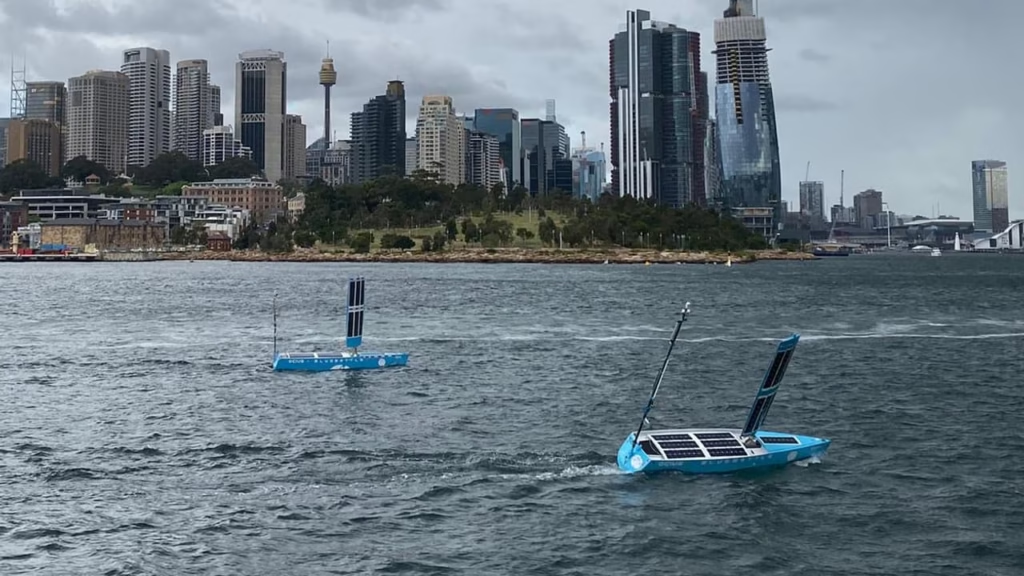
The document outlines funding priorities for coastal protection and agricultural resilience through 2035; the framework is a planning document rather than a funding commitment, but signals the adaptation priorities of the Albanese government.

AUSTRALIA · CLIMATE ADAPTATION · COASTAL PROTECTION · AGRICULTURE
The Australian government released a draft climate-adaptation framework on Thursday outlining funding priorities for coastal protection and agricultural resilience through 2035, Reuters, ABC News Australia, and The Guardian all confirmed. The framework, released for public consultation before a final version is adopted, identifies the adaptation investment priorities the government considers most urgent given projected climate impacts on Australian coastal communities and agricultural systems over the next decade. The draft document is a planning framework rather than a confirmed budget commitment — it identifies priorities without specifying the precise funding amounts that will be allocated in future budget cycles — but it signals the adaptation agenda the Albanese government is building toward and provides a basis for public consultation on Australian climate adaptation priorities.
Reuters provided detail on the specific adaptation priorities outlined in the framework. Coastal protection measures identified in the draft include investment in coastal monitoring and modeling, funding for local government adaptation planning in flood and erosion risk areas, and support for managed retreat programs in coastal communities facing accelerating sea-level rise impacts. The agricultural resilience component addresses drought preparedness, water security investment in the Murray-Darling Basin, and support for the development and adoption of climate-adapted crop varieties. Reuters noted that both the coastal and agricultural components represent areas where Australia faces documented and projectable climate impacts that make adaptation investment analytically justified regardless of the specific global emissions trajectory.
The Australian Climate Context
ABC News Australia provided the most detailed account of the Australian-specific climate context that the framework is designed to address. Australia has experienced a succession of extreme climate events — the 2019-2020 Black Summer bushfires, the 2022 Queensland and New South Wales floods, and recurring drought conditions in agricultural regions — that have made climate adaptation a lived experience for large segments of the Australian population rather than an abstract policy concept. The Australian public response to these events has consistently shown high support for adaptation investment, and the framework is designed to translate that public support into a structured investment agenda. ABC noted that the consultation process will include regional engagement with coastal and agricultural communities whose adaptation needs vary significantly by geography.
The Guardian provided critical analysis of what the framework does and does not commit the government to. As a draft planning document rather than a budget commitment, the framework creates no legal or financial obligation for the Australian government to actually fund the priorities it identifies. The Guardian noted that Australian climate adaptation policy has historically produced planning documents with longer time horizons than the budget cycles in which funding is actually determined, creating a pattern in which adaptation priorities are identified in frameworks but not fully funded in actual appropriations. The consultation process may produce a stronger commitment in the final version, or it may produce a document that remains aspirational without binding funding obligations.
“Australia is a continent on the front line of climate change. We are not planning for a hypothetical future. We are adapting to conditions that our communities are already experiencing.” — Australian Climate Minister cited by ABC News
The Agricultural Resilience Dimension
Reuters noted the specific significance of the agricultural resilience component given the economic and food security stakes. Australian agriculture is a major component of the national export economy, with grain, beef, and other agricultural products representing significant export revenue and contributing to global food supply, particularly in Asian markets. Climate impacts on Australian agricultural productivity — through drought, heat stress, changing rainfall patterns, and pest and disease dynamics that shift with temperature — have direct economic consequences that go beyond the Australian agricultural sector to global food markets. The framework agricultural resilience investment priorities are therefore analytically significant both for domestic food security and for Australia’s trade relationships with agricultural importing nations.
WHAT HAPPENS NEXT
► Public consultation period to run; regional community input from coastal and agricultural areas to be collected
► Final framework to be released with any strengthened funding commitments from consultation process
► Budget cycle to determine actual allocation against framework priorities
► States and territories to respond to framework with their own adaptation planning alignment
| CONFIDENCE: HIGH | Reuters, ABC News Australia, and The Guardian all confirmed the framework release, the coastal and agricultural priority areas, and the consultation context. Three-source convergence on a confirmed government policy release. |
| Bias Check | ||
| Left-Lean | Center | Right-Lean |
| Framework framed as inadequate planning document; communities need funding commitments, not consultation. | Reports framework content, adaptation priorities, consultation process, and commitment limitation factually. | Framework framed as responsible staged approach; consultation before commitment is correct governance. |
SOURCES
► Reuters — Framework release, coastal and agricultural priorities, 2035 timeline, consultation context, November 12, 2026
► ABC News Australia — Australian climate impact context, regional community engagement, public consultation detail
► The Guardian — Commitment limitation analysis, planning vs funding distinction, historical adaptation pattern