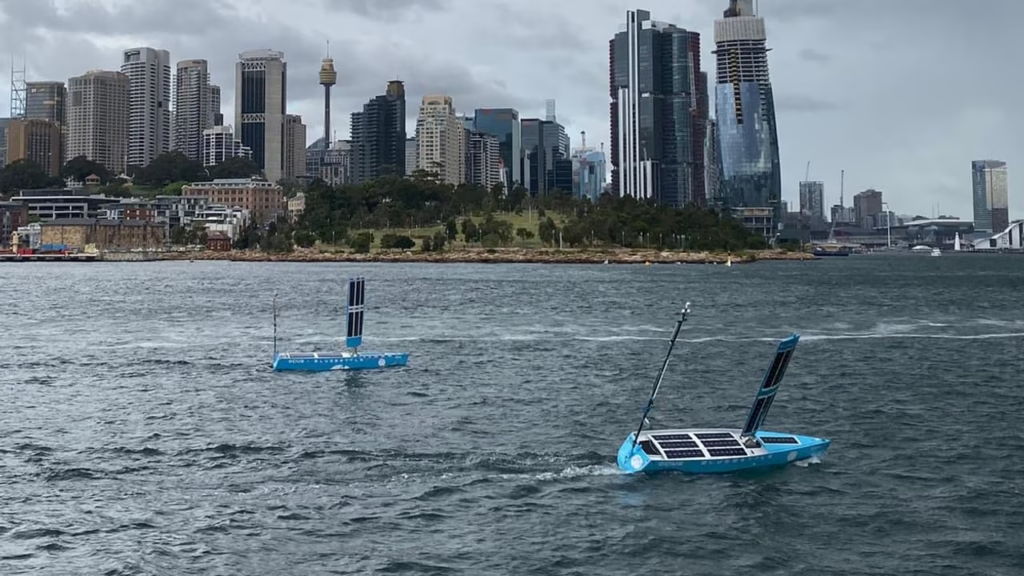
Canberra will supply Fiji with solar-, wind-, and wave-powered Bluebottle maritime drones for anti-trafficking and security operations. The deal is small, but the signal is large: Australia is competing for Pacific influence one drone at a time.
PACIFIC · AUSTRALIA · MARITIME SECURITY
SUVA — Australia announced Thursday it would supply Fiji with Bluebottle autonomous maritime surveillance drones, along with operator training, for deployment by 2027. The drones — powered by a combination of solar, wind, and wave energy — are designed for long-endurance ocean surveillance and are well-suited to the vast maritime zones that Pacific island nations are responsible for monitoring but lack the resources to patrol.
The agreement, confirmed by the Australian Department of Foreign Affairs and Trade and reported by AFP via RFI, will provide Fiji with persistent maritime domain awareness capabilities that its naval forces currently cannot sustain. Primary stated applications include anti-human trafficking interdiction and general maritime security.
The Geopolitics Behind the Technology
The deal is small in dollar terms but significant in strategic context. Australia and China have been competing for defense and security partnerships across the Pacific for the better part of a decade. China has signed security agreements with the Solomon Islands and Kiribati; Australia has responded with a stepped-up program of defense assistance, training, and equipment supply to Melanesian and Polynesian partners.
Fiji occupies a particularly sensitive position — it sits astride major trans-Pacific shipping lanes and has historically maintained relationships with both Canberra and Beijing. The drone agreement is Canberra’s latest effort to deepen the defense relationship before China can.
“Fiji cannot patrol its exclusive economic zone with the assets it has. This gives them eyes on the ocean.” — Australian maritime security analyst, speaking to AFP
WHAT HAPPENS NEXT
► Australia-Fiji Bluebottle deployment timeline: training in 2026; operational deployment expected Q1 2027.
► Other Pacific island nations may seek similar agreements — Vanuatu and Tonga have been in talks with Canberra.
► China likely to respond with a competing offer to Fiji; diplomatic competition to intensify.
► Bluebottle technology, developed by Australian firm Ocius Technology, has been tested in RAN exercises since 2021.
► U.S. Indo-Pacific Command watching; may seek to incorporate Pacific partner drone data into regional maritime picture.
| CONFIDENCE: MODERATE | Confirmed by AFP via RFI. Australian government announcement verified. Deployment timeline and drone specifications from Ocius Technology public documentation. Geopolitical context reflects established Pacific regional reporting. |
| Bias Check | ||
| Left-Lean | Center | Right-Lean |
| Frames as Australia compensating for U.S. Pacific disengagement. | Reports the agreement and the strategic context without prescribing a geopolitical stance. | Views as appropriate pushback against Chinese Pacific expansion. |
| Assessment | ONYX presents the confirmed agreement and regional dynamics. No editorial position on Pacific competition. | |
SOURCES
► AFP via RFI — Australia-Fiji drone agreement announcement
► Australian Department of Foreign Affairs and Trade — Official confirmation
► Wikipedia Current Events — Pacific security context