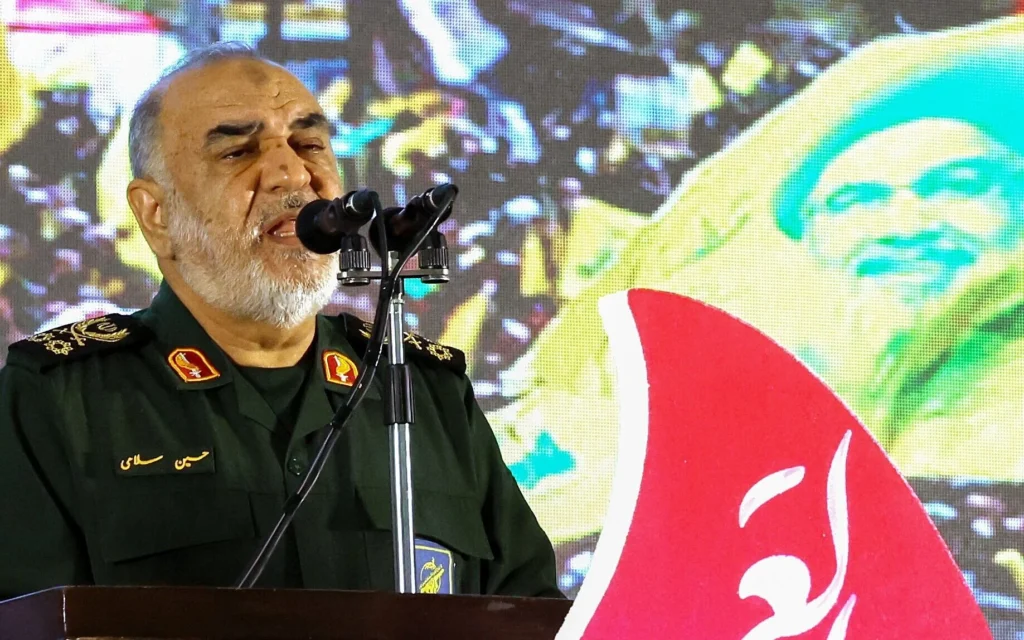
On Saturday night, President Trump announced he had called off what he described as one of the most powerful bombing campaigns ever prepared against Iran — a planned operation targeting Iranian power plants, oil refineries, and potentially the entire electricity grid of Tehran — because, he said, Iran and regional actors had agreed to the “perimeters of a deal.” Within hours, Iran denied any deal had been struck. Saudi Crown Prince Mohammed bin Salman had placed a direct personal call to Trump hours before the announcement. The operation, according to CBS News, could have begun as soon as that weekend.
2-MINUTE CONTEXT — HOW DID WE GET HERE?
The US-Iran war began February 28, 2026, with US-Israeli strikes on Iranian nuclear facilities and military infrastructure. Since then, the conflict has followed a rhythm: strikes, partial de-escalation, diplomatic failure, more strikes. The Strait of Hormuz — carrying 20% of global seaborne oil — has remained restricted, devastating global energy markets and Trump’s domestic approval ratings.
By early August, the conflict had reached a critical juncture. The April ceasefire memorandum had collapsed without producing Hormuz reopening or nuclear progress. Diplomatic channels were publicly stalled. Trump and his team — particularly Secretary of State Rubio — had escalated their rhetoric significantly, with Rubio explicitly telling Iranian leadership they were dealing with “a different kind of president.” The military had prepared what CBS described as a comprehensive strike package including Iranian power plants, oil refineries, and infrastructure capable of cutting electricity to Tehran.
Then, on Saturday evening, it all stopped.
TRUMP’S OWN WORDS — WHAT HE ACTUALLY POSTED
“The United States was locked and loaded and ready to go against the Islamic Republic of Iran, at levels of Military Terror, Strength, and Power not seen since World War II. I held back… because Iran and other Middle Eastern countries asked me to hold off because the perimeters of a deal has been agreed to.”
— President Trump, Truth Social, Saturday August 2, 2026
Several elements of this statement require unpacking. “Locked and loaded” and “ready to go” establishes the operation was active, not theoretical. “Levels of Military Terror… not seen since World War II” is specific and historically weighted language for a Truth Social post — it is designed to convey maximum threat credibility. The phrase “perimeters of a deal” is grammatically unusual — it presumably means “parameters” — and is vague enough to be interpreted multiple ways. Most critically: “Iran and other Middle Eastern countries asked me to hold off” attributes the decision to hold back entirely to external request, not to a decision Trump made independently.
The Truth Social post also added: “The Country of Israel joins me in this commitment.” No Israeli government confirmation of this statement was published separately.
WHAT CBS NEWS REPORTED THE OPERATION WOULD HAVE DONE
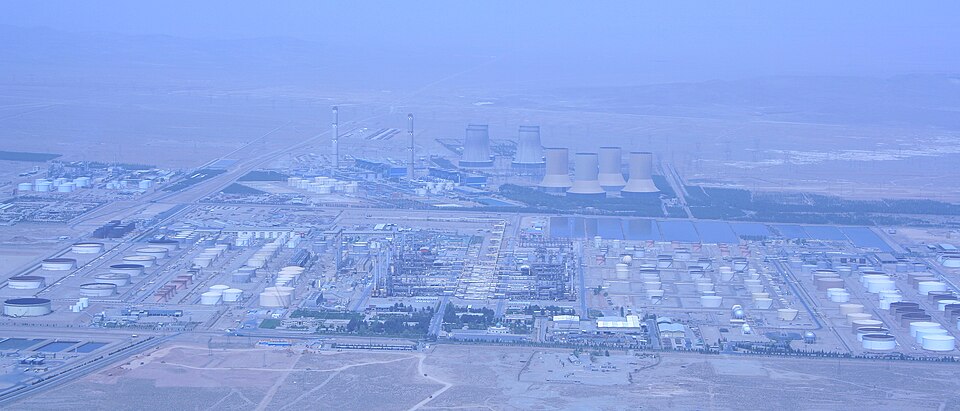
CBS News’s reporting on the specific operation Trump canceled is among the most significant journalism of the entire Iran war to date. The network reported officials had discussed targeting Iranian power plants and oil refineries — physical infrastructure attacks that go beyond military assets into civilian-essential systems. The most striking detail: officials were discussing cutting electricity across Tehran entirely.
A citywide electricity blackout in Tehran — a city of approximately 10 million people — in summer would have humanitarian consequences of significant scale. It would also represent an expansion of the conflict into infrastructure warfare that, under international humanitarian law, carries specific legal standards regarding civilian impact.
Axios separately reported the proposed operation “would have been one of the harshest strikes of the war” — suggesting the specific target set went meaningfully beyond prior US strike packages against Iranian military assets.
“You’ve got fires burning in towns. You’ve got level 3 evacuations like I haven’t seen before… This is a very dangerous and very complex series of events.”
— Note: this quote is from the Washington emergency director re: Spokane fires — not Iran. The convergence of multiple crises on the same night was literal.
THE MBS INTERVENTION — WHY IT MATTERS
Axios confirmed that Saudi Crown Prince Mohammed bin Salman placed a direct personal call to Trump expressing serious concern about the planned strikes — and that this call happened just hours before Trump’s announcement. This detail is significant for several reasons.
First: MBS is not an interlocutor who makes urgent personal calls to heads of state over minor concerns. If he called Trump directly, hours before a strike was set to launch, it signals Saudi Arabia had specific, credible intelligence about what the operation would target and concluded it was dangerous enough to warrant personal intervention.
Second: the call worked. Whatever MBS said in that conversation contributed to a decision that stopped a bombing campaign. That is a demonstration of extraordinary Saudi leverage over US military decision-making in real time — leverage that MBS now knows exists and can be exercised.
Third: Qatar, the UAE, Turkey, and Pakistan also pressed both sides to de-escalate, according to Axios. A five-nation diplomatic coalition working in parallel to prevent a single military operation is remarkable. It suggests the regional consensus about the strike’s consequences was significantly negative.
| 🔍 ONYX REALITY CHECK VERDICT: UNVERIFIED WHY? Trump’s claim that “the perimeters of a deal has been agreed to” is directly contradicted by a source close to Iran’s negotiating team, who told Fars News Agency within hours that there were no plans to reopen the Strait of Hormuz and that it would remain closed “as long as the US continues its hostile actions.” This is not a dispute about framing or interpretation — it is a flat contradiction of the existence of a deal. Whether a genuine framework exists that both sides describe differently, or whether Trump announced a deal that doesn’t exist, cannot be resolved from public information alone. ONYX rates this UNVERIFIED, not False, because a genuine but non-public diplomatic contact may exist — the absence of Iranian public confirmation does not definitively prove the absence of private discussion. |
WHY THIS MATTERS
The canceled strike matters at three levels simultaneously.
The immediate level: a bombing campaign that would have caused a Tehran blackout and destroyed Iranian energy infrastructure — a potential humanitarian and economic disaster affecting tens of millions of people — did not happen Saturday night. That is consequential regardless of what happens next.
The strategic level: the cancelation reveals something important about the constraints on US military decision-making. Saudi Arabia, Qatar, the UAE, Turkey, and Pakistan all pressed against this operation. Gulf states’ energy infrastructure, shipping routes, and security architectures are directly exposed to Iranian retaliation. Their collective resistance to the strike suggests they calculated that Iran’s response would hit them, not just the US. This is a fundamental constraint on US escalation that the administration cannot ignore.
The political level: Trump framed the cancellation as a diplomatic win — he held back, and got a deal. Iran’s denial means that framing is publicly contested within hours. If negotiations “beginning tomorrow afternoon” (as Trump said Sunday) do not produce a concrete Hormuz reopening or nuclear commitment within days, the cancellation will look like a temporary pause rather than a diplomatic breakthrough — and the political cost of that narrative shift falls entirely on Trump.
| Strike impact (reported) Tehran electricity cut to 10M people — CBS News | Countries lobbying against strikes 5 Saudi Arabia, Qatar, UAE, Turkey, Pakistan |
| Trump approval at time of cancellation 34% career-low CNN poll — August 2, 2026 | Iran deal claim contradicted within <6hrs Fars News Agency denies Hormuz plans |
POLITICAL IMPACT
| WHO BENEFITS | WHO FACES PRESSURE |
| MBS — demonstrated direct leverage over US military decisions | Trump — if deal doesn’t materialize, cancellation looks like backing down |
| Gulf states — avoided regional war and energy infrastructure damage | Iran — must either engage or face resumed strike threat |
| Anti-war Democrats — vindicated in questioning military escalation | Republicans (hawks) — see the pause as loss of resolve |
| Trump (if deal comes) — historic diplomatic win narrative available | Netanyahu — operation described as joint; silence on cancellation notable |
WHAT HAPPENS NEXT
▸ Negotiations were set to “begin tomorrow afternoon” per Trump Sunday — watch for any public confirmation or denial from Iran of talks
▸ The Hormuz strait remains the measurable indicator: if it does not reopen within days, the “deal” claim becomes untenable
▸ MBS’s personal intervention is now public knowledge — watch for Iranian response to the Saudi role
▸ Israel’s silence on the cancellation is as significant as Netanyahu’s silence on the Gaza deal — watch for Jerusalem statement
▸ If talks collapse, the same strike package remains available — Trump explicitly reserved this option
▸ Congressional war powers review is likely to intensify — Democrats will push for debate
GLOBAL IMPACT
Oil markets opened Monday with significant movement. Any credible path to Hormuz reopening reduces the energy supply premium — but Iran’s denial means markets are skeptical of the deal narrative. The 20% of global oil supply that transits Hormuz remains constrained.
For US allies in Europe and Asia: the five-month energy cost of the Hormuz closure is accumulating in their economies. A genuine deal would be welcomed. But the pattern — escalation to the brink, followed by a pause that doesn’t produce a deal — has been seen before in this conflict, and allies have begun hedging against its indefinite continuation.
| CONFIDENCE: MODERATE | Core facts are confirmed: Trump’s Truth Social post is documented; CBS News reporting on strike targets is from named officials; Axios confirmation of MBS call is from named sources; Iran’s denial via Fars News is documented. What remains unverified: whether a genuine deal framework exists; what was actually discussed in the Trump-MBS call; what the negotiations “beginning tomorrow” actually involve. |
| ⚖️ BIAS CHECK — WHO IS SAYING WHAT | |
| Trump / White House | Framing as diplomatic triumph; “locked and loaded” demonstrates strength; held back to allow diplomacy; expects a deal |
| Iran / State Media | Flat denial — no deal exists; Hormuz will not reopen while US “hostile actions” continue; Trump statement described as propaganda |
| Saudi Arabia / Gulf States | Not publicly commenting; MBS intervention confirms they view the strike as a regional threat, not just a US-Iran bilateral issue |
| Democrats | Skeptical of deal; noting the contradiction with Iran’s denial; demanding congressional war powers involvement |
| Republican Hawks | Uncomfortable with the pause; language of “different kind of president” undermined if strikes don’t happen |
| CBS News / Axios | Detailed, sourced reporting on strike plans and MBS call; treating as a genuine near-miss escalation event |
| International Media | Watching the Iran denial closely; framing as a fragile, potentially illusory pause rather than a deal |
| Energy Markets | Skeptical — Hormuz remains closed; deal framing has not been confirmed by Iran; risk premium remains |
📅 NEWS EVOLUTION
Feb 28, 2026: US-Israeli strikes begin war on Iran
April 2026: Ceasefire MOU collapses; Hormuz remains closed; US naval blockade of Iranian ports begins April 13
July 2026: Rubio frames Iran as facing “different kind of president”; rhetoric escalates sharply
Aug 1, 2026: Trump announces Hamas Gaza deal — also disputed by Hamas immediately
Aug 2 (morning): Kuwait reports fresh Iranian drone attacks; State Dept. urges Americans to consider departing Middle East
Aug 2 (afternoon): MBS personally calls Trump to express concern over strike plans — Axios confirms
Aug 2 (Saturday night): Trump posts Truth Social cancellation announcement; claims deal parameters agreed to
Aug 3 (hours later): Iran’s Fars News Agency: no deal, Hormuz stays closed; Iranian official calls reports “madness” while confirming extensive retaliation plans
Aug 3 (Sunday): Trump says negotiations “begin tomorrow afternoon. We’ll see”
SOURCES
▸ Trump Truth Social post — August 2, 2026 (full text documented)
▸ CBS News — strike targets: power plants, oil refineries, Tehran electricity disruption
▸ Axios — MBS direct personal call to Trump confirmation, hours before announcement
▸ Axios — Qatar, UAE, Turkey, Pakistan also pressed both sides to de-escalate
▸ Fars News Agency — source close to Iran negotiating team denies Hormuz deal
▸ Tasnim News (Iran state-affiliated) — senior official calls reports “madness,” confirms retaliation plans
▸ Trump Sunday remarks — “negotiations begin tomorrow afternoon. We’ll see”
QUESTIONS YOU MAY STILL HAVE
Q: Was this actually a deal, or just a pause?
A: Based on publicly available information, no — Iran’s own state-affiliated media denied any deal on Hormuz or nuclear issues within hours. Whether a private diplomatic framework was communicated through back-channels that Iran publicly denies is genuinely unknown.
Q: What would the Tehran blackout have meant in practice?
A: Cutting electricity to a city of 10 million in August — peak summer heat — would have created an immediate public health and humanitarian crisis. Hospitals, water pumping stations, and refrigeration depend on electricity. Under international humanitarian law, attacks on civilian infrastructure require proportionality analysis that the administration has not publicly addressed.
Q: Why would Iran deny a deal if one exists?
A: Several possibilities: the “deal” is a Trump characterization of a private signal Iran sent through back-channels that Iran doesn’t want to own publicly; there is genuinely no deal and Trump overstated the outcome; or Iran is publicly denying to maintain domestic political credibility while privately accepting terms. All three are plausible.
Q: What does “locked and loaded at levels not seen since WWII” actually mean militarily?A: This appears to be rhetorical amplification rather than a specific military calibration. WWII-level destruction would require nuclear weapons, which no one is suggesting were planned. The language is designed to convey maximum deterrence credibility, not to accurately describe the strike package’s actual destructive scope.