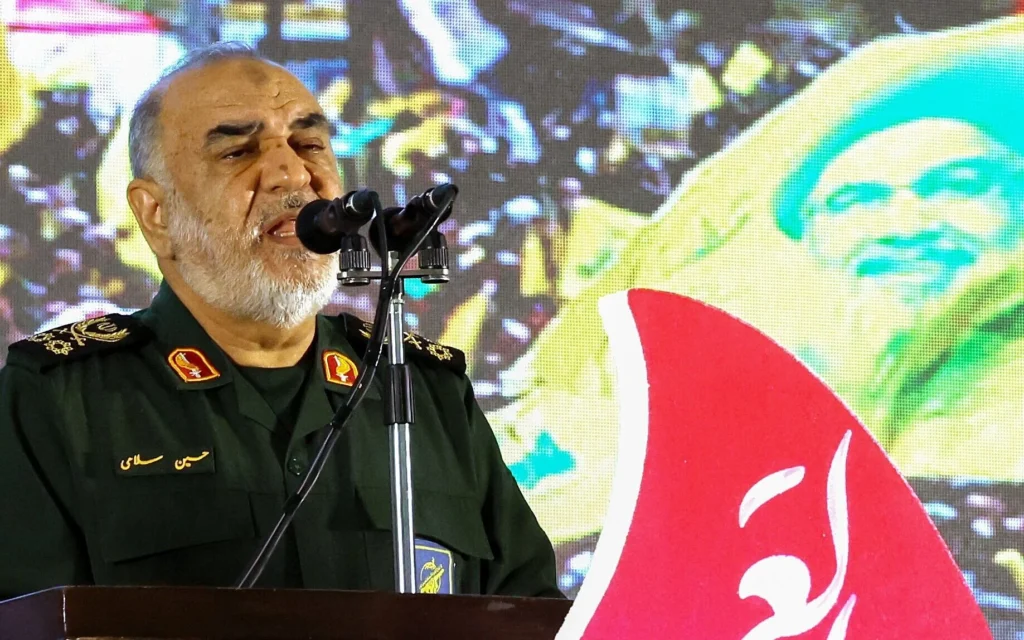
Within hours of Trump announcing that Iran had agreed to a deal and that this was why he was canceling a planned bombing campaign, a source close to Iran’s negotiating team told Fars News Agency there were no plans to reopen the Strait of Hormuz. Iran’s acting Defense Minister warned that every threat from the US is taken seriously and Iran is prepared to respond. State-affiliated Tasnim News quoted a senior Iranian security official calling US media reports of the planned strikes “a kind of madness” — while simultaneously confirming Iran has “extensive response plans” including strikes on Israeli infrastructure. This is not a dispute about framing. It is a simultaneous, parallel, mutually exclusive pair of claims about whether a deal exists.
2-MINUTE CONTEXT
This is the second time in three days that Trump has announced a diplomatic breakthrough that the other party immediately contradicted. On August 1, Trump announced Hamas had agreed to fully disarm in Gaza. Hamas said within hours that it would not begin any weapons steps until Israel withdrew. On August 2-3, Trump announced Iran agreed to the parameters of a deal. Iran said within hours there are no plans to reopen Hormuz.
This pattern raises a specific question that extends beyond any individual announcement: is the Trump administration announcing deals that don’t fully exist as a negotiating and political tactic — publicly crediting the other party with agreeing to something they haven’t formally agreed to, in order to create social and political pressure for them to follow through? Or are there genuine private communications that both sides frame differently for their own domestic audiences?
THE COMPETING CLAIMS — SIDE BY SIDE
| TRUMP’S CLAIM (Truth Social, Aug 2) | IRAN’S RESPONSE (hours later) |
| “Perimeters of a deal has been agreed to” | No deal on Hormuz — Fars News source near negotiating team |
| “Iran and other Middle Eastern countries asked me to hold off” | “We consider every threat to be real and take it seriously” — acting Defense Minister |
| “The Country of Israel joins me in this commitment” | No Israeli government statement issued separately |
| “Negotiations begin tomorrow afternoon. We’ll see” — Trump Sunday | No public Iranian confirmation of scheduled negotiations |
| Hormuz reopening implied by deal | Strait will remain closed “as long as US continues hostile actions” — Fars News source |
WHAT IRAN’S MEDIA SAID — AND WHAT IT REVEALS
Tasnim News Agency — state-affiliated, therefore reflecting official or semi-official thinking — published the specific quote from a senior Iranian security official calling US media reports of the planned strikes “a kind of madness.” The choice of “madness” is pointed: it is designed to convey that Iran is unimpressed by the threat, possibly to deny that the threat had any effect on Iranian decision-making.
The same official, in the same statement, confirmed that Tehran has prepared “extensive response plans” including strikes on Israeli infrastructure. This juxtaposition — dismissing the threat as madness while confirming serious preparation to counter it — is classic Iranian strategic communication: maintain public resolve while privately remaining cautious about provoking a larger US response.
“We consider every threat to be real and take it seriously.”
— Iran’s Acting Defense Minister, August 3, 2026
Iran’s acting Defense Minister’s statement is worth reading carefully. “We consider every threat to be real and take it seriously” is not a dismissal. It is an acknowledgment that the US threat was credible — and a signal that Iran is calibrating its response carefully rather than dismissing the possibility of resumed strikes.
| 🔍 ONYX REALITY CHECK VERDICT: MISLEADING CONTEXT WHY? Trump’s framing that “the perimeters of a deal has been agreed to” presents an unconfirmed and publicly disputed claim as established fact. Iran’s immediate denial does not definitively prove no private communication occurred — diplomatic back-channels sometimes produce statements both sides frame entirely differently for domestic audiences. However, “perimeters of a deal has been agreed to” is a specific factual claim that Iran’s own state-affiliated media has specifically denied. Absent any corroborating evidence of what was actually agreed to, or by whom, the claim rates as Misleading Context: it may reflect something real, but its framing overstates certainty about an outcome that remains genuinely disputed. |
WHY THIS MATTERS — THE CREDIBILITY QUESTION
Presidential statements about diplomatic breakthroughs carry enormous weight. They move markets. They affect military readiness decisions by allies. They shape public perception of whether a conflict is heading toward resolution or continuation. When those statements are publicly contradicted by the other party within hours — for the second time in three days — the gap between announcement and reality creates specific harms.
The most immediate harm is to the credibility of any future announcement. If Trump announces a deal and Iran denies it, the next announcement faces an immediate credibility deficit — people discount it before the details are known. This is the “boy who cried deal” problem: each unverified announcement makes the next one harder to move markets, shape behavior, or build public confidence.
The second harm is to negotiation itself. Publicly announcing the “parameters of a deal” before terms are finalized boxes Iran into either publicly accepting something they haven’t fully agreed to — which would be a loss of face domestically — or publicly denying the deal, which is what happened. Neither outcome creates conditions favorable to reaching an actual agreement.
WHAT HAPPENS NEXT
▸ Watch for whether negotiations actually begin as Trump said — Iranian public confirmation or denial of scheduled talks is the first test
▸ The Hormuz strait is the concrete, measurable indicator — any ship transit data showing normalization would validate the deal framing
▸ Iran’s “extensive response plans” for Israeli infrastructure remain on the table — watch for any movement signaling they are being stood down or maintained
▸ Trump’s Sunday “We’ll see” framing is itself a hedge — it suggests he knows the deal is not finalized
| CONFIDENCE: HIGH | Iran’s denial is documented from multiple state-affiliated sources. Trump’s statement is documented. The specific contradiction is factual. What remains uncertain is the nature of any private communications and whether those communications constitute a deal framework neither side is fully acknowledging publicly. |
| ⚖️ BIAS CHECK — WHO IS SAYING WHAT | |
| Trump / White House | Maintaining deal framing; “negotiations begin tomorrow”; pointing to cancellation as evidence of diplomatic success |
| Iran / State Media | Flat denial of Hormuz deal; Tasnim and Fars both reporting Iranian strength and readiness narrative |
| US Democrats | Treating the Iran denial as evidence Trump is announcing things that don’t exist; second time in three days with Gaza |
| Republican Hawks | Concerned the pause is unreciprocated; want evidence Iran is actually complying with anything |
| Market Analysts | Skeptical — Hormuz remains closed; deal announcement hasn’t moved oil meaningfully because Iran denied it within hours |
| Diplomatic Experts | Noting the pattern: announcement precedes agreement; may be a tactic, may be overreach; not unique to this administration but unusually transparent |
| International Allies | Watching the Iran denial carefully; no confirmation of talks = no adjustment to their energy hedging strategies |
SOURCES
▸ Trump Truth Social post — deal announcement, August 2, 2026
▸ Fars News Agency — source close to Iran negotiating team denial, August 3, 2026
▸ Tasnim News Agency — senior Iranian security official quote (“madness” + response plans)
▸ Iran Acting Defense Minister — “take every threat seriously” statement
▸ Trump Sunday remarks — “negotiations begin tomorrow afternoon. We’ll see”
QUESTIONS YOU MAY STILL HAVE
Q: Is there any scenario where both sides are telling the truth?
A: Yes. If Trump received a private signal — from MBS relaying an Iranian message, or from a third-party back-channel — that Iran was open to talks, he may have characterized that as “parameters of a deal.” Iran, not wanting to appear to have capitulated to US military pressure, publicly denies any deal while privately engaging. Both sides could be describing the same limited private communication in maximally different terms for their respective domestic audiences.
Q: Why doesn’t the US just publish the terms of the deal?
A: If there are no formal terms — if Trump’s “deal” is based on a private assurance or a preliminary signal rather than an agreed document — there is nothing to publish. Releasing private diplomatic communications would also violate the confidentiality that makes back-channel diplomacy possible.
Q: What does it mean that Trump is the one announcing deals that the other party denies?
A: It suggests either that Trump’s characterization outpaces what was actually agreed, that Trump is using announcements as a negotiating tactic to lock the other party into a public posture, or some combination. It has also happened on both the Gaza and Iran tracks in the same week, which suggests it may be a deliberate communication strategy rather than a series of accidents.